
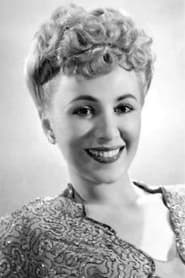
Claudia Drake
Actor
Born: January 30, 1918 in San Francisco, California, USA Died: October 19, 1988 Active: 1944-1947 Birth Name: Claudia Mae Smith
Films
1 film
About Claudia Drake
American actress: brief but impactful career in Hollywood on film noir history. Born in San Francisco in 1918, she began her acting career in the early 1940s, signing with Producers Releasing Corporation (PRC), one of the smaller poverty row studios. Her most significant and enduring performance came in 1945 when she was cast as Vera, the manipulative and dangerous female lead in Edgar G. Ulmer's masterpiece of film noir, 'Detour.' Despite the film's extremely low budget and short shooting schedule, Drake's portrayal of the cynical, opportunistic Vera opposite Tom Neal created one of cinema's most memorable femme fatales. Her performance in 'Detour' demonstrated a remarkable ability to convey complexity and menace with minimal dialogue and limited screen time. Following this career-defining role, she appeared in a few additional B-movies throughout the mid-1940s but gradually stepped away from acting by the end of the decade. Though her filmography was brief, her work in 'Detour' has ensured her lasting place in cinema history, with the film being preserved in the National Film Registry and studied as a quintessential example of American film noir.
The Craft
On Screen
Drake specialized in playing hard-boiled, cynical characters with an underlying vulnerability. Her acting style was naturalistic yet heightened, perfectly suited for the film noir genre. She had a distinctive ability to convey menace and manipulation through subtle facial expressions and body language, making her portrayal of Vera in 'Detour' particularly chilling and memorable. Her delivery was sharp and precise, with a world-weary quality that suggested deep-seated disillusionment beneath her character's hardened exterior.
Milestones
- Breakthrough role as Vera in 'Detour' (1945)
- Signed with Producers Releasing Corporation (PRC)
- Created one of cinema's most memorable femme fatales
- Appeared in several film noir and B-movie productions
Best Known For
Iconic Roles
Must-See Films
Accolades
Special Recognition
- 'Detour' selected for preservation in the National Film Registry (1992)
- Cult status among film noir enthusiasts
Working Relationships
Worked Often With
Studios
Why They Matter
Impact on Culture
Claudia Drake's portrayal of Vera in 'Detour' has had a profound and lasting impact on film noir and the archetype of the femme fatale in American cinema. Her performance helped establish the template for the manipulative, dangerous female character who would become a staple of the noir genre. The character she created influenced countless subsequent portrayals of femme fatales in both classic and contemporary cinema. 'Detour' itself has become. Her work has been analyzed in numerous film studies books and academic papers examining the representation of women in classic Hollywood cinema.
Lasting Legacy
Claudia Drake's legacy is inextricably linked to her iconic performance in 'Detour,' which has ensured her place in cinema history despite her brief career. The film's selection for preservation in the National Film Registry has cemented its status as an American classic, and by extension, Drake's contribution to film noir. Her portrayal of Vera continues to be studied by film scholars and appreciated by cinema enthusiasts as a masterclass in creating a complex, menacing character with limited resources. While she may not have had the extensive filmography of many of her contemporaries, the quality and impact of her work in 'Detour' have given her a permanent place in the pantheon of classic Hollywood actresses who defined the film noir genre.
Who They Inspired
Drake's performance as Vera influenced subsequent generations of actresses playing femme fatale roles. Her naturalistic yet menacing approach to the character demonstrated how to create a truly dangerous female antagonist without resorting to caricature. Many later noir actresses, including those in neo-noir films, have drawn inspiration from her ability to convey both allure and threat simultaneously. Directors studying film noir often reference her performance as an example of how to create memorable characters even within the constraints of low-budget production.
Off Screen
Claudia Drake married twice during her lifetime. She married her first husband, William Hogan, in 1940, though the marriage ended in divorce. In 1950, she married Robert W. Anderson, with whom she remained until his death. After retiring from acting in the late 1940s, she largely withdrew from public life and focused on her family. She spent her later years in Orange County, California, away from the Hollywood spotlight she had briefly inhabited.
Education
Limited information available about her formal education, though she likely attended schools in the San Francisco area during her youth.
Family
- William Hogan (1940-1948)
- Robert W. Anderson (1950-1976)
Did You Know?
- Despite her memorable performance in 'Detour,' Claudia Drake's entire film active years covered only about three years
- 'Detour' was filmed in just six days on an extremely low budget of approximately $20,000
- Her birth name was Claudia Mae Smith, but she used the stage name Claudia Drake professionally
- She was paid only $200 per week for her role in 'Detour'
- The film 'Detour' was not initially successful but gained recognition and cult status years after its release
- Drake retired from acting before she turned 30 years old
- Her performance in 'Detour' was so convincing that many viewers believed she was actually as manipulative as her character
- The film's director, Edgar G. Ulmer, considered Drake's performance essential to the film's success
- Despite her brief career, she appeared in films with several notable character actors of the era
- Her role in 'Detour' has been referenced and parodied in numerous films and television shows over the decades
In Their Own Words
Frequently Asked Questions
Who was Claudia Drake?
American actress best known for her role as the manipulative femme fatale Vera in the 1945 film noir classic 'Detour.' Despite her brief career spanning only a few years in the mid-1940s, her performance in this influential film has ensured her lasting place in cinema history as.
What films is Claudia Drake best known for?
Titles linked here include Detour (1945), The Missing Corpse (1945).
When was Claudia Drake born and when did she die?
Born January 30, 1918; died October 19, 1988.
What awards did Claudia Drake win?
Claudia Drake did not receive any major awards or nominations during her brief acting career. However, her most famous film 'Detour' was selected for preservation in the United States National Film Registry in 1992, recognizing its cultural, historical, and aesthetic significance, which indirectly honors her contribution to cinema history.
What was Claudia Drake's acting style?
Claudia Drake's acting style was naturalistic yet heightened, perfectly suited for the film noir genre. She specialized in portraying hard-boiled, cynical characters with underlying vulnerability, using subtle facial expressions and sharp dialogue delivery to convey menace and manipulation. Her performance as Vera in 'Detour' demonstrated her ability to create complex, dangerous characters with minimal resources and limited screen time.