Films
1 film
About Doris Doscher
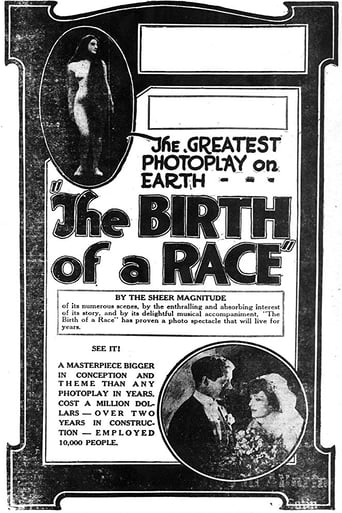
Doris Doscher was cast in 1918 film 'The Birth of a Race. ' Her career appears to have been extremely brief, with this single film representing her entire known filmography. 'The Birth of a Race' was a significant production of its time, created as a progressive response to D.W. Griffith's controversial 'The Birth of a Nation' (1915), aiming to present a more positive and dignified portrayal of African Americans. The film was an ambitious project that sought to counter the racist stereotypes perpetuated by Griffith's work. Unfortunately, like many performers from the silent era who had brief careers, detailed biographical information about Doris Doscher is scarce, and her life beyond this single film credit remains largely undocumented in film history archives.
The Craft
Milestones
- Appeared in the 1918 silent film 'The Birth of a Race'
Best Known For
Must-See Films
Why They Matter
Impact on Culture
Doris Doscher's cultural impact is primarily tied to her participation in 'The Birth of a Race' (1918), a historically significant film that represented an early attempt at counter-narrative filmmaking in response to the racist content of D.W. Griffith's 'The Birth of a Nation.' While her individual contribution to cinema was minimal due to her brief career, the film itself was part of an important movement in early American cinema that sought to challenge prevailing racial stereotypes and present more progressive representations of African Americans. The film, though not commercially successful at the time, has been recognized by film historians as an important artifact of early African American representation and resistance in Hollywood.
Lasting Legacy
Doris Doscher's legacy is that of a representative figure from the countless minor actors who populated silent films but left little trace in historical records. Her participation in 'The Birth of a Race' connects her to an important moment in early cinema history when filmmakers began challenging racist representations. While she did not achieve lasting fame or recognition, her contribution to this historically significant film places her within the broader narrative of cinema's evolution toward more inclusive storytelling. Her story exemplifies the challenges film historians face in documenting the lives of performers who had brief or minor roles in early cinema.
Who They Inspired
Due to her extremely brief film career with only one documented appearance, Doris Doscher's influence on other actors or directors appears to be negligible. Like many minor players in silent cinema, she likely did not have the opportunity to establish a significant body of work that could influence subsequent generations of performers or filmmakers.
Off Screen
Very little is known about Doris Doscher's personal life, as she appears to have had a brief career in cinema with only one documented film credit. Like many minor actors from the silent era, detailed records of her life beyond her film work have not been preserved or are not readily accessible in historical archives.
Did You Know?
- 'The Birth of a Race' was created as a direct response to D.W. Griffith's controversial 'The Birth of a Nation' (1915)
- The film was produced by the Emmett J. Scott Company and was one of the earliest films to feature an all-black cast in principal roles
- Despite its progressive intentions, the film faced numerous production problems and was not commercially successful
- Doris Doscher's role in the film is not well-documented, reflecting the limited preservation of records for minor actors of the silent era
- The film's original running time was reportedly over 3 hours, but most existing versions are significantly shorter
- Many actors from 'The Birth of a Race' remain unidentified in surviving prints of the film
Frequently Asked Questions
Who was Doris Doscher?
Screen credits include only one known film, 'The Birth of a Race' in 1918. She represents the many minor actors from early cinema whose careers were brief and whose lives remain largely undocumented in film history.
What films is Doris Doscher best known for?
Titles linked here include The Birth of a Race (1918).
When was Doris Doscher born and when did she die?
Unfortunately, the birth and death dates for Doris Doscher are not documented in available historical records. This is common for minor actors from the silent era whose personal information was not preserved in film archives or public records.
What awards did Doris Doscher win?
There are no records of Doris Doscher receiving any awards or nominations. Given her brief career with only one known film credit, she would not have been eligible for the major film awards that were just beginning to be established during her active period.
What was Doris Doscher's acting style?
There is no available information about Doris Doscher's specific acting style or technique. Without surviving detailed reviews of her performance or additional film work to analyze, her artistic approach cannot be determined by film historians.
Why is 'The Birth of a Race' historically significant?
'The Birth of a Race' is historically significant as one of the earliest cinematic responses to D.W. Griffith's racist 'The Birth of a Nation.' It represented an attempt to present more positive portrayals of African Americans and challenge the harmful stereotypes prevalent in early American cinema.
What happened to Doris Doscher after 1918?
There is no documented information about what happened to Doris Doscher after her appearance in 'The Birth of a Race.' Like many minor actors from the silent era, she appears to have left the film industry with no trace of her subsequent life preserved in historical records.