
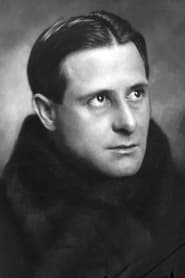
Carl Auen
Actor
- Active
- 1920-1920
Films 1
About Carl Auen
Carl Auen was a German film actor active in the silent era, appearing in a small number of productions at the dawn of the 1920s. He is credited in the 1920 film Johann Baptiste Lingg, but surviving reference material on his life and career is extremely limited, and he appears to have left no substantial public record beyond his screen credit. Because of the scarcity of documentation, little is known about his training, his personal background, or whether he continued working in theatre or film after his brief screen activity. His known film career places him within the early Weimar-era silent cinema period, when many performers worked in one or only a few productions before disappearing from the historical record. No verified evidence currently establishes a broader body of work, major stardom, or a later transition into sound film. As a result, Carl Auen is best understood as a minor but documented participant in early German cinema whose name survives chiefly through film credits and archival indexing.
More about Carl Auen
In film history
Carl Auen's cultural impact is modest and largely archival rather than popular, because he is known from a surviving credit rather than from an extensive star career. Nevertheless, performers like Auen are important to film history because they represent the broad supporting and incidental talent that made early silent cinema possible. His name contributes to the documented personnel of Weimar-era film production and helps researchers reconstruct otherwise fragmentary production histories. In that sense, his significance lies in preservation and historical completeness rather than celebrity.
Later reputation
Carl Auen's legacy is that of a documented but obscure silent-era actor whose existence is preserved in film records. While he does not appear to have left behind a widely recognized body of work, his credit in Johann Baptiste Lingg ensures that he remains part of the historical record of German cinema. For scholars and database compilers, even a single verified credit can be valuable in tracing casting networks, production personnel, and the many lesser-known figures who contributed to early film culture. His surviving footprint illustrates how much of silent cinema history depends on fragmentary sources and archival reconstruction.
Influence
There is no evidence that Carl Auen had a documented influence on major actors or directors, nor that he served as a mentor to later performers. Any influence he may have had would have been limited to his immediate working environment and is not captured in surviving sources. His historical importance is therefore indirect: he helps illustrate the breadth of early German screen talent beyond the famous names that dominate film histories.
Off screen
No reliable biographical information about Carl Auen's personal life has been located in standard film-reference sources. His birth details, family background, marriages, and any later-life circumstances are currently undocumented in accessible public records. This is not unusual for lesser-known silent-era performers whose careers were brief and whose personal histories were not widely reported. As of the available evidence, his private life remains unknown.
Credits
- Screen credit for the 1920 silent film Johann Baptiste Lingg
- Participation in early Weimar-era German cinema
Roles
- Role in Johann Baptiste Lingg (1920)
Films
- Johann Baptiste Lingg (1920)
Notes
- Carl Auen is currently best known for a single verified screen credit rather than for a long film career.
- His documented activity falls in 1920, placing him in the silent-film era of the early Weimar Republic.
- He appears in film-reference records primarily through archival filmography rather than through biographical coverage.
- Because his personal details are obscure, he is an example of how many early film workers remain partially anonymous to modern viewers.
- His surviving credit makes him relevant to historians studying lesser-known cast members in German silent cinema.
Questions
Who was Carl Auen?
Carl Auen was a German actor known from the silent-film era, with a surviving credit in Johann Baptiste Lingg (1920). Beyond that screen appearance, very little verified biographical information has survived in accessible reference sources.
What films is Carl Auen best known for?
He is currently best known for Johann Baptiste Lingg (1920), the film in which he is documented to have acted. No broader, securely verified filmography is readily available in standard references.
When was Carl Auen born and when did he die?
Carl Auen's birth and death dates are not currently documented in the available sources consulted for classic-cinema reference work. His life dates remain unknown unless new archival material is found.
What awards did Carl Auen win?
No awards or nominations are currently documented for Carl Auen. His known historical footprint is limited to a small number of film credits rather than a decorated public career.
What was Carl Auen's acting style?
No detailed critical descriptions of Carl Auen's acting style have survived in accessible sources. Given his period, he would have worked within the expressive conventions of silent cinema, but there is no verified commentary that allows a more specific assessment.
What is Carl Auen's legacy in film history?
Carl Auen's legacy is primarily archival: he is one of the many lesser-known performers whose names remain attached to early German silent films. His credit helps preserve the completeness of film history, even though he was not a major star.