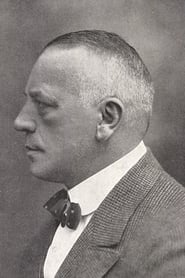
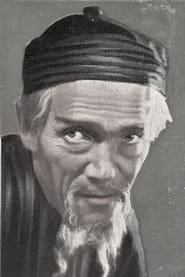
Johann Baptiste Lingg
Plot
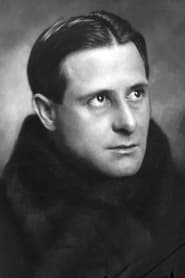
Johann Baptiste Lingg is a German costume drama set against the turbulent backdrop of the Napoleonic era. The story centers on Johann Baptiste Lingg, played by Carl Auen, a figure whose personal loyalties and sense of duty are tested by the political and military upheavals of the time. As the conflict surrounding Napoleon’s campaigns shapes the lives of those around him, Lingg becomes caught between private obligations, shifting allegiances, and the pressures of a society under foreign domination. The drama unfolds in a manner typical of early historical films, emphasizing honor, sacrifice, and the moral burdens placed on individuals by history. While detailed surviving plot documentation is limited, the film is understood as a period melodrama in which the title character’s experience is intertwined with the broader struggle of the era.
About the Production
Johann Baptiste Lingg was produced during the immediate post-World War I period, when German historical films and costume dramas were especially prominent. Like many films from 1920, it was made in a cinematic environment shaped by inflation, studio consolidation, and the artistic experimentation of the Weimar years. The film’s visual and dramatic style would likely have relied on studio-built sets, period costumes, and expressive acting to evoke the Napoleonic period, as location shooting was less common for productions of this type. Surviving production documentation is sparse, and many details such as shooting schedule, set designers, and exact filming locations are no longer readily verifiable from accessible records.
Historical Background
Johann Baptiste Lingg was produced in Germany in 1920, at a moment when the country’s film industry was emerging as one of the most creative in the world. The early Weimar years saw a strong appetite for historical dramas, costume pictures, and nationalist or regional subjects, partly because such films offered audiences a sense of cultural continuity after the trauma of World War I and the collapse of the German Empire. Setting a film in the Napoleonic era would have resonated with themes of occupation, resistance, loyalty, and identity, all of which had contemporary emotional force in postwar Germany. In this sense, the film belongs to a broader tendency in German silent cinema to use the past as a mirror for the present, presenting historical struggle through a distinctly melodramatic lens. It matters historically because it demonstrates how even lesser-known productions participated in the shaping of Weimar cultural memory and the popularity of prestige historical storytelling.
Why This Film Matters
Although Johann Baptiste Lingg does not appear to be among the best-known survivors of silent German cinema, it is culturally significant as part of the large body of early Weimar historical filmmaking that helped define the era. Films like this contributed to the popularization of costume drama as a serious cinematic form, combining pageantry, patriotism, and emotional spectacle. Even when such films are now obscure, they are valuable evidence of how German audiences were invited to engage with history through film at a time of political uncertainty and national redefinition. The film also reflects the industry’s reliance on recognizable historical settings and morally legible narratives, both of which were important to building cinema as a respected cultural medium. For modern scholars, titles like this help fill in the less glamorous but essential middle layer of silent-film production that existed alongside the canonical masterpieces.
Making Of
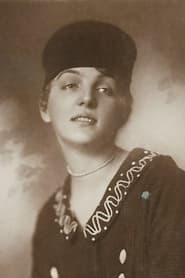
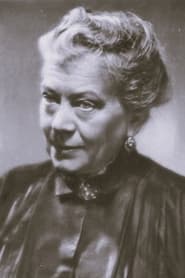
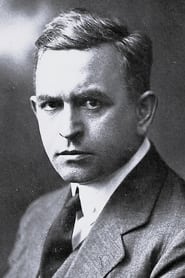
Available behind-the-scenes information on Johann Baptiste Lingg is limited, which is common for many silent German films that were not heavily preserved in trade press or later archival documentation. What can be said with confidence is that the film was made in 1920, a year in which German cinema was rapidly expanding its artistic ambitions while also dealing with the economic instability of the early Weimar Republic. Arthur Teuber’s direction likely emphasized theatrical staging, expressive performance, and historical atmosphere, all hallmarks of the period’s costume dramas. The involvement of performers such as Carl Auen, Irmgard Bern, and Frida Richard suggests a cast drawn from the experienced silent-era acting pool capable of handling melodramatic historical material. Beyond that, specific anecdotes, set construction details, or casting controversies are not securely documented in the sources currently available.
Visual Style
Specific cinematographer credit and detailed shot analysis are not securely established from the accessible records for this film, but as a 1920 German silent costume drama it would almost certainly have relied on strong tableau composition, carefully arranged period settings, and actor-centered framing. Films of this type often used crisp staging to emphasize costume detail, facial expression, and spatial relationships within the frame, especially in scenes of confrontation or historical pageantry. The visual style would likely have favored painted backdrops, controlled studio lighting, and carefully composed interiors or exteriors designed to evoke the Napoleonic age. Because the film predates the fully developed Expressionist stylization associated with some contemporaneous German cinema, it may have leaned more toward pictorial realism and theatrical historicism than overt visual distortion. Unfortunately, without a surviving print or detailed production still set widely available, exact camera techniques cannot be verified.
Innovations
No specific technical innovations are securely documented for Johann Baptiste Lingg, and it does not appear to be known for a landmark advance in film technology. Its notable achievement is instead its participation in the mature silent-era German historical-drama tradition, which demanded skillful art direction, costume design, and visual storytelling. Productions of this kind often required coordinated crowd staging, historically suggestive set construction, and expressive performance calibration to communicate plot and emotion without dialogue. In the broader context of 1920 German cinema, even a relatively modest costume drama would have benefited from the industry’s growing sophistication in production design and visual composition. If the film survives, further technical details would depend on archival inspection rather than published documentation.
Music
As a silent film, Johann Baptiste Lingg did not have a synchronized recorded soundtrack at the time of release. It would originally have been accompanied by live music in theaters, which could have ranged from a solo pianist to a small ensemble or full orchestra depending on the venue. No authoritative record of a specific commissioned score has been verified in the available sources. Any modern presentation would therefore depend on local archival accompaniment or newly created music for revival screenings, if the film is screened at all. The film’s musical identity is thus tied more to exhibition practice than to a fixed original recording.
Memorable Scenes
- Johann Baptiste Lingg’s likely central confrontations as he navigates the pressures of the Napoleonic period and the demands of loyalty.
- Historical set-pieces that would have staged the costume drama’s period atmosphere through uniforms, interiors, and formal tableaux.
- Emotionally charged scenes between the title character and the supporting roles played by Irmgard Bern and Frida Richard, which likely anchor the film’s melodramatic structure.
Did You Know?
- The film is a 1920 German historical costume drama, placing it within the boom period of Weimar-era prestige productions.
- It is directed by Arthur Teuber, a filmmaker who worked in German silent cinema and is less widely remembered today than some of his contemporaries.
- Carl Auen stars in the title role as Johann Baptiste Lingg, giving the film its name and central dramatic focus.
- The cast also includes Irmgard Bern and Frida Richard, both of whom were active in German silent-era productions.
- The film’s subject matter is tied to the Napoleonic period, a popular setting for German historical dramas after World War I.
- Compared with better-known German silent films of the era, this title survives in far less public documentation, which is typical of many mid-level releases from the period.
- Its existence is important to film historians because it reflects the breadth of German studio production beyond the canonical masterpieces that dominate discussion of silent cinema.
- The film is cataloged under the Wikidata identifier Q22000674 and TMDb ID 270992, helping confirm its identity despite limited surviving publicity information.
- Like many silent films from the era, it would originally have been accompanied by live music in theaters rather than a fixed soundtrack.
- The title suggests a biographical or historical figure at its center, though detailed surviving plot summaries are scarce.
What Critics Said
Contemporary critical reception is not well documented in the readily available surviving sources for this film, and no widely cited review corpus appears to have been preserved. It is likely that the film received the sort of routine trade coverage typical of many 1920 German releases, with attention paid to the direction, costumes, and dramatic seriousness rather than to star-driven publicity alone. In modern times, the film is discussed primarily by database catalogs and silent-cinema historians rather than through a broad critical reassessment, largely because it is not widely circulated and may not be easily accessible. As a result, its reputation today is one of archival interest rather than canonical acclaim. Its critical standing is therefore shaped more by its historical category and surviving metadata than by a robust body of preserved criticism.
What Audiences Thought
Direct evidence of audience response is scarce, which is not unusual for a silent film from 1920 that has not remained in regular distribution. Given the popularity of historical costume dramas in Germany at the time, it is reasonable to infer that the film was intended for audiences that enjoyed patriotic, romantic, and melodramatic period stories. The presence of a title character and a Napoleonic setting would likely have appealed to viewers interested in historical heroes and moral conflict. However, no reliable box office figures or audience surveys are currently known from surviving records. Today, the film is likely encountered mainly by researchers, archivists, and silent-film enthusiasts rather than general audiences.
Film Connections
Influenced By
- German historical costume dramas of the 1910s and early 1920s
- Napoleonic-era stage melodramas and historical fiction
- Theatrical heritage in early German silent performance
- Post-World War I German nationalist and historical storytelling traditions
This Film Influenced
- null
You Might Also Like
Film Restoration
The film appears to be incompletely documented and may be lost or survive only in limited archival references; no widely confirmed restored print is commonly cited in accessible public sources.