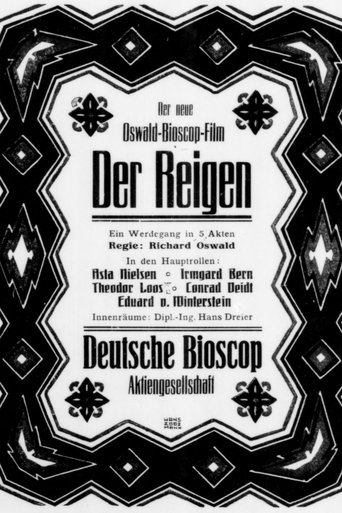
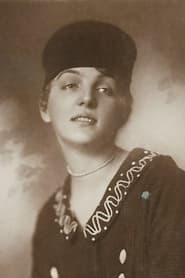
Irmgard Bern
Actor
- Active
- 1920-1920
Films 2

About Irmgard Bern
Irmgard Bern is a little-documented screen performer from the silent era, known from surviving filmographies for appearing in at least two 1920 productions: The Merry-Go-Round and Johann Baptiste Lingg. Her brief recorded activity places her in the early years of Weimar-era cinema, a period when many performers worked intermittently and were often credited in only a small number of films. Because extant reference sources provide very limited biographical detail, her life outside these film appearances is not well documented in standard film histories. It is possible that she worked primarily in German-language cinema, but available evidence is too sparse to reconstruct a fuller career with confidence. Unlike major silent stars whose personal histories were preserved in studio publicity and fan magazines, Bern appears to have left only fragmentary traces in surviving records. As a result, she is best understood today as one of many supporting or episodic performers who contributed to the texture of early European cinema, even if their names did not become widely known. Her presence in film databases remains important for preserving the historical record of silent-era production and cast lists.
More about Irmgard Bern
In film history
Irmgard Bern's cultural impact is best understood in archival and historical terms rather than through celebrity status or star-driven influence. Performers like Bern helped populate the silent cinema world, contributing to ensemble storytelling, atmospheric realism, and the industrial output that defined early film production in Europe. Even when an actor's name is not widely remembered, their credited presence in surviving records is valuable because it helps historians map production networks, casting practices, and the working lives of lesser-known performers. Her name also underscores how many contributors to early cinema remain under-represented in popular film history despite having participated in important transitional years for the medium. In this sense, her legacy lies in preservation: she is part of the evidentiary record that allows scholars to study silent-era film culture more accurately.
Later reputation
Irmgard Bern's legacy is primarily one of documentation and historical continuity. She belongs to the class of early film performers whose careers were brief, lightly recorded, or incompletely preserved, yet who are essential to understanding the broader ecology of silent cinema. For researchers and database curators, names like hers matter because they help maintain accurate cast records and prevent the erasure of small but real contributions to film history. While she does not appear to have achieved star recognition, her surviving credits ensure that she remains part of the historical memory of 1920s screen acting. Her enduring significance is therefore archival: she represents the thousands of early film workers whose labor helped build national cinemas even when later fame did not follow.
Influence
There is no evidence that Irmgard Bern directly influenced major later performers or directors in a documented, traceable way. Her influence is more indirect, through her participation in the silent-era system that shaped performance conventions, casting structures, and the development of screen acting in early European cinema. As part of the historical record, she contributes to the understanding of how modestly credited actors supported narrative filmmaking during the transition from stage-influenced performance to more naturalistic screen styles. Her recorded presence also helps later historians and archivists trace lineages of production practice and actor participation during the Weimar period. In that sense, her influence is cumulative and historical rather than personal or stylistically famous.
Off screen
No reliable public information is currently available about Irmgard Bern's personal life, including family background, marriages, or later life. Standard reference sources do not provide enough verified material to reconstruct her private biography with confidence. She appears to be one of the many silent-era screen figures whose career survives mainly through cast lists rather than interviews, studio publicity, or memoirs. Because of that, any claims about relationships, domestic life, or later occupation would be speculative and are not included here.
Credits
- Appeared in the silent film The Merry-Go-Round (1920), one of the few surviving recorded credits associated with her name
- Appeared in Johann Baptiste Lingg (1920), confirming her participation in early 1920s silent cinema
- Represents the kind of lightly documented supporting performer whose work is preserved mainly through filmographies and cast records
- Her surviving credits place her in the formative post-World War I German film landscape
- Her record contributes to the reconstruction of cast and personnel information for early European silent films
Films
- The Merry-Go-Round (1920)
- Johann Baptiste Lingg (1920)
Notes
- Her known screen career is extremely short in surviving records, with only 1920 credits currently associated with her name.
- She is credited in two silent-era films, which makes her a useful figure for database accuracy and archival research.
- Because so little biographical information survives, she is representative of many early film workers whose careers are only partially documented.
- Her credits place her in the Weimar-era German film environment, a highly productive period for silent cinema.
- The scarcity of information about her is typical of lesser-known silent-era performers whose publicity materials did not survive or were never widely circulated.
- Her name may appear in variant archival listings, so careful identification is important when cataloging early film personnel.
- Her surviving filmography helps historians reconstruct cast lists and production histories from a period in which records can be incomplete.
Questions
Who was Irmgard Bern?
Irmgard Bern was a little-documented silent-era actor whose surviving film credits place her in 1920 German cinema. She is known today primarily through archival filmography rather than through extensive biographical records. Her case is typical of many early film performers whose work survives in cast lists even when personal details do not.
What films is Irmgard Bern best known for?
She is currently documented for appearing in The Merry-Go-Round (1920) and Johann Baptiste Lingg (1920). These are the key surviving credits linked to her name in available records. If additional films existed, they are not reliably documented in the sources currently available.
When was Irmgard Bern born and when did she die?
Her birth and death dates are not presently available in reliable public sources. Likewise, her birthplace and later life remain undocumented in the standard records consulted for early cinema personnel. She is therefore best described as an actor whose life details are largely unknown.
What awards did Irmgard Bern win?
No awards or nominations are currently documented for Irmgard Bern. This is not unusual for many silent-era supporting performers, especially those whose careers were brief or insufficiently publicized. Her historical importance lies more in her preserved credits than in honors or accolades.
What was Irmgard Bern's acting style?
Her specific acting style is not described in surviving sources. Given her era, she would have worked within silent-film performance conventions, which often relied on expressive gesture, facial clarity, and visually legible emotion. However, without reviews or production notes, any more precise characterization would be speculative.
What is Irmgard Bern's legacy in film history?
Her legacy is archival and historical: she remains part of the documented workforce of early silent cinema. Even without star status, her name helps preserve the completeness of film history and supports accurate cataloging of early productions. That makes her valuable to historians, databases, and restoration research.