

Madame DuBarry
"From Versailles splendor to the scaffold"
Keys: Space play/pause · ←/→ 10s · F fullscreen · M mute · </> speed
About this film
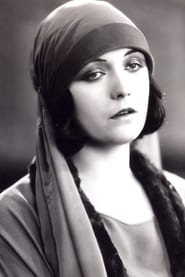
Jeanne Bécu rises from a modest Paris shopgirl to become Madame du Barry, the last official mistress of King Louis XV at Versailles. Pola Negri plays her as a woman caught between court intrigue, aristocratic hostility, and a dangerous attachment to the young nobleman Armand de Foix. Ernst Lubitsch stages the splendor of the ancien régime with UFA's lavish resources, then drives the narrative toward the gathering storm of revolution. As political order collapses, Jeanne's royal protection evaporates and she faces the guillotine in 1793.
Cast & crew
More films like this

More Drama films
View all →







More from Ernst Lubitsch
View all →
More about this film
About the production
Release dateSeptember 18, 1919 (Germany)
BudgetApproximately 2 million marks, making it among the costliest German films of its time
Box officeHighly successful internationally, particularly in the United States where it earned significant revenue for its distributor
ProductionUniversum Film AG (UFA)
Filmed inTempelhof Studios, Berlin, Germany
The film featured extraordinarily elaborate sets and costumes, with the court scenes requiring hundreds of extras. The production was so ambitious that it took nearly six months to complete, an unusually long period for films of the era. The guillotine scene was particularly controversial for its graphic depiction. Lubitsch insisted on historical accuracy in costumes and set design, consulting historical experts to recreate Versailles authentically.
Themes
Power and corruptionLove versus dutyClass struggleThe inevitability of historical changeThe price of ambition
Themes & topics
18th century FranceLouis XVFrench RevolutionRoyal mistressCourt intrigueHistorical dramaTragedyLove triangleExecutionVersaillesGuillotineRise and fall
Historical background
Silent-era production in 1919 relied on intertitles, live accompaniment, and studio systems that were rapidly consolidating into national industries.
Why this film matters
Early works like Madame DuBarry help map how filmmakers, exhibitors, and viewers developed the visual language of cinema during the medium's first decades. Later revivals, archive screenings, and digitization have kept such titles accessible to researchers and dedicated viewers long after their first commercial runs.
Making of
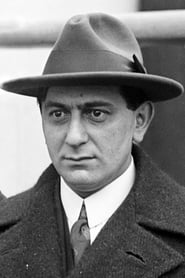
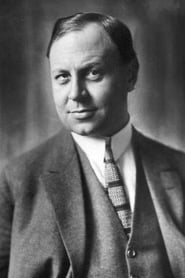
The production of 'Madame DuBarry' was a monumental undertaking for post-WWI German cinema. Director Ernst Lubitsch, then only 26 years old, demonstrated extraordinary ambition in recreating the splendor of 18th-century Versailles on studio sets. The relationship between Lubitsch and star Pola Negri during filming was intense and complicated, with both professional collaboration and romantic involvement. Emil Jannings, who played King Louis XV, was known for his method approach to acting and reportedly stayed in character throughout the entire shoot. The production employed hundreds of craftsmen to create the elaborate costumes and sets, with some costumes requiring months of work by specialized tailors and embroiderers. The film's most challenging sequence was the revolutionary mob scene, which required coordinating hundreds of extras while maintaining period authenticity. Lubitsch's attention to detail extended to requiring that all background actors learn proper 18th-century court etiquette and mannerisms.
What critics said
Trade and newspaper reviews from the silent period for Madame DuBarry survive only in fragments, making precise reception history difficult to reconstruct. Modern assessment tends to emphasize historical value, craft, and cultural context rather than box-office performance.
Did you know?
- This was the film that launched Pola Negri's international career and led to her contract with Paramount Pictures in 1922
- Emil Jannings' portrayal of Louis XV was so convincing that he became the first actor to win an Academy Award for Best Actor (though for later films)
- The film was so successful in America that it led to Ernst Lubitsch being recruited by Hollywood, where he would become among the leading respected directors of his generation
- A different version was released in the United States titled 'Passion' with some scenes altered to appeal to American audiences
- The film's lavish production values set a new standard for historical epics and influenced many subsequent films in the genre
- The guillotine scene was considered so shocking that some countries required it to be cut from the theatrical release
- Pola Negri and Ernst Lubitsch were romantically involved during production, which added tension to the set given her character's romantic entanglements
- The film was one of the first major productions of the newly formed UFA studio, established in 1917
- Despite being a silent film, the production employed a full orchestra during filming to help actors with timing and emotional expression
- The original negative was thought lost for decades but was discovered and restored in the 1990s
Awards & recognition
- Best Foreign Film - Photoplay Magazine (1920)
- Best Artistic Production - German Film Critics Association (1919)
Visual style
The cinematography by Theodor Sparkuhl was revolutionary for its time, employing innovative lighting techniques to create dramatic depth and atmosphere. The film used sophisticated camera movements, including tracking shots that followed characters through the elaborate palace sets. The lighting design was particularly noteworthy, with Sparkuhl using chiaroscuro effects to enhance the emotional intensity of key scenes. The film employed multiple camera setups for complex scenes, a technique that was still relatively rare in 1919. The cinematography successfully balanced the need to showcase the spectacular sets with intimate character moments, using varying focal lengths to achieve both effects. The color tinting of different scenes (amber for daylight, blue for night, red for dramatic moments) added emotional depth to the black and white photography.
Innovations
The film pioneered several technical innovations that would become standard in later historical epics. The production developed new techniques for creating realistic period costumes that allowed for freedom of movement while maintaining historical accuracy. The set design introduced modular construction methods that allowed for quick changes between different palace locations. The film employed early forms of matte painting to extend the apparent size of the Versailles sets. The guillotine sequence featured innovative special effects that created a convincing illusion of the execution without actual danger to the performer. The production also developed new lighting equipment that could be hidden within the elaborate sets to create more naturalistic lighting while maintaining the period aesthetic.
Music
As a silent film, 'Madame DuBarry' was originally accompanied by a full orchestral score composed by Giuseppe Becce. The score incorporated period-appropriate music, including adaptations of 18th-century French compositions and original pieces that reflected the film's dramatic arc. Different theaters used various approaches to musical accompaniment, ranging from full orchestras in prestigious cinemas to single pianists in smaller venues. The music was carefully synchronized with the on-screen action, with specific leitmotifs for main characters and emotional themes. The score emphasized the contrast between the opulence of court life and the terror of the revolution, using musical styles to reinforce these opposing worlds.
Famous quotes
I would rather die on the scaffold than live without love." - Madame Du Barry
The king's favor is as fleeting as spring flowers." - Court Advisor
Revolution comes not from the poor, but from the hearts of those who have known injustice." - Armand de Foix
Even queens must bow before the guillotine." - Revolutionary Leader
Memorable scenes
- The grand entrance of Madame Du Barry at Versailles, with her descending a magnificent staircase in an elaborate gown while the court watches in stunned silence
- The intimate balcony scene where Du Barry and Armand declare their love while fireworks illuminate the night sky over Paris
- The tense confrontation scene between Du Barry and the future Louis XVI, where political tensions and personal animosities explode
- The revolutionary mob storming the palace, with chaos and destruction captured in sweeping camera movements
- The final guillotine sequence, filmed with stark realism and emotional intensity, showing Du Barry's courage in facing death
What audiences thought
The film was enormously popular with audiences worldwide, breaking box office records in many countries. In Germany, it became a cultural phenomenon, with audiences returning multiple times to see its splendor. American audiences were particularly captivated by Pola Negri's performance, making her an instant star in the United States. The film's romantic elements and historical spectacle appealed to a broad demographic, from working-class audiences to the cultural elite. In some countries, the film's political undertones resonated with audiences experiencing their own revolutionary changes. The film's success led to increased demand for European films in international markets and helped establish the global film distribution system.
Film connections
Influenced by
- The historical novels of Alexandre Dumas
- Italian historical epics of the 1910s
- German Romantic literature
- French Revolutionary history
- Stage melodramas of the 19th century
This film influenced
- The Merry Widow (1925)
- The Love Parade (1929)
- Marie Antoinette (1938)
- Gone with the Wind (1939)
- The Adventures of Robin Hood (1938)
Film restoration
The film was partially lost for several decades, with only incomplete versions surviving. However, a nearly complete print was discovered in the 1990s in a Russian archive and has since been restored by the Munich Film Museum. The restoration included reconstructing missing scenes from production stills and script fragments. The restored version premiered at the 1998 Berlin International Film Festival to critical acclaim. The film is now preserved in several archives worldwide, including the Museum of Modern Art in New York and the British Film Institute.
Where to watch
- Available on DVD from Kino Lorber Classics
- Streaming on The Criterion Channel
- Available for digital rental on Amazon Prime Video
- Screened occasionally at film festivals and cinematheques
- Available in the collection of several film archives for research purposes