Rosar
Actor
- Active
- 1924-1924
Films 1
About Rosar
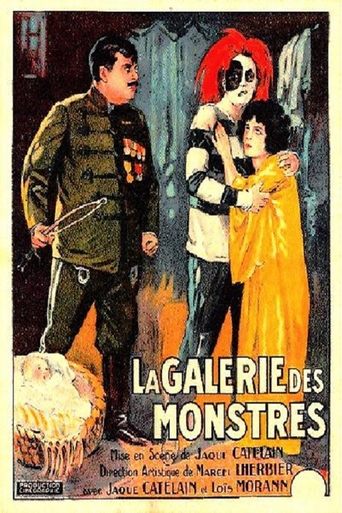
Rosar is a very obscure silent-era screen performer whose surviving documentation is extremely limited. The available film record identifies Rosar as an actor in The Gallery of Monsters (1924), but does not securely preserve fuller biographical information such as a verified birth name, dates of birth and death, or a detailed career chronology. Because the name is so sparsely documented in surviving reference sources, it is possible that Rosar was a minor credited or uncredited performer associated with early-1920s cinema rather than a major star with an extensive documented career. No reliable evidence currently confirms additional feature-film appearances, stage history, studio contracts, or later life details. As a result, Rosar is best understood today as one of the many fleeting names preserved by silent-film credit listings rather than as a widely documented historical figure. Until more archival evidence emerges from trade papers, studio records, or restored film materials, their broader biography remains largely unavailable.
More about Rosar
In film history
Rosar’s cultural impact is primarily archival rather than celebrity-driven. The performer’s presence in The Gallery of Monsters (1924) places the name within the silent-film historical record, contributing to our understanding of the many supporting and background players who helped populate early American cinema. Even when a performer leaves behind no substantial biography, the surviving credit helps scholars reconstruct casting practices, production networks, and the broader ecosystem of silent-era filmmaking. In that sense, Rosar’s importance lies in representation of the many obscured contributors whose work supported the film industry’s development.
Later reputation
Rosar’s legacy is that of a traceable but enigmatic silent-era screen presence. For film historians, such names are valuable because they remind us how much of early cinema remains incomplete, fragmentary, and dependent on surviving paper records rather than comprehensive studio archives. Rosar is part of the historical fabric of silent cinema, even if the available documentation does not yet permit a full biographical profile. The name endures primarily through filmography databases and reference compilations that preserve otherwise lost or overlooked participants in early film production.
Influence
There is no documented evidence that Rosar directly influenced other actors or filmmakers in a measurable way. However, as part of the early silent-film workforce, Rosar contributed to the ensemble tradition that shaped screen performance before synchronized sound, when gesture, facial expression, and visual presence carried narrative weight. The broader influence is therefore indirect: performers like Rosar helped establish the acting labor pool that made the silent studio system function. Their surviving credit also provides modern researchers with a data point for mapping early casting and performance practices.
Off screen
No reliable, verifiable personal-life information has been found for Rosar in the available classic-cinema record. Details about family background, marriages, residence, education, or later life are not currently documented in standard film-reference sources. Because the name appears only sparsely in surviving filmography data, any claim about private life would be speculative and should be avoided for database accuracy. If archival evidence surfaces in trade publications, census records, or studio paperwork, this field could potentially be expanded in the future.
Credits
- Appeared in the silent film The Gallery of Monsters (1924)
- Is documented in surviving filmography records from the silent era
- Represents one of the many lesser-known performers whose names persist through early-cinema credit listings
Roles
- Role in The Gallery of Monsters (1924)
Films
- The Gallery of Monsters (1924)
Notes
- Rosar is documented as appearing in The Gallery of Monsters (1924), a silent-era film.
- No verified birth or death information is currently established in standard reference sources.
- The name is so obscure that it may refer to a minor credited performer rather than a major star.
- Rosar’s surviving film record appears to be limited to 1924 in the available filmography data.
- Unlike many silent-era performers, Rosar does not currently have a well-developed public biographical profile.
- Rosar is an example of how many early film contributors survive only through sparse credit listings.
- Archival trade-paper research may be necessary to identify whether Rosar used a stage name or had additional uncredited work.
Questions
Who was Rosar?
Rosar was a very obscure silent-era film actor known from surviving records for appearing in The Gallery of Monsters (1924). Beyond that film credit, reliable biographical information is currently very limited. The name survives mainly in filmography listings rather than in detailed historical profiles.
What films is Rosar best known for?
Rosar is best known for The Gallery of Monsters (1924), the only film currently securely associated with the name in the available record. No other verified screen credits are confidently established here. If additional archival sources are found, that film list could expand.
When was Rosar born and when did Rosar die?
At present, Rosar’s birth and death dates are not reliably documented in the available classic-cinema references. The surviving record does not provide confirmed biographical dates or a verified birthplace. Because of that, any precise date would be speculative.
What awards did Rosar win?
No awards or nominations are currently known for Rosar. This is not unusual for minor or undocumented silent-era performers, many of whom worked in films without surviving recognition records. The available evidence does not support attributing any formal honors.
What was Rosar's acting style?
Rosar’s specific acting style is not documented in surviving reference material. Since the performer is only securely linked to a single silent-era film credit, there is not enough evidence to describe a distinctive technique with confidence. Any assessment would require viewing surviving footage or consulting contemporary reviews.
What is Rosar’s legacy in film history?
Rosar’s legacy is mainly archival: the name preserves a small but real trace of silent-era screen labor. For historians, such obscure credits are important because they help reconstruct the personnel who made early cinema possible. Rosar stands as one of many forgotten contributors whose existence is still recorded in the film historical record.