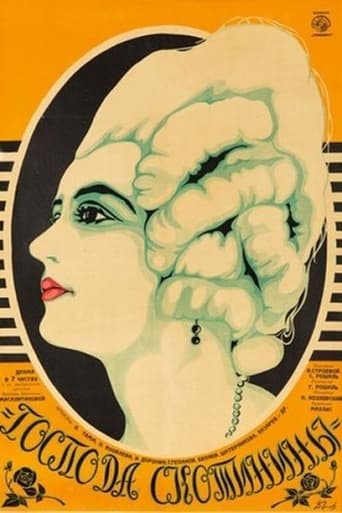
Films
1 film
About Mikhail Stepanov
Mikhail Stepanov worked on one surviving credit: The Gentlefolks of Skotinin (1927). His career was notably brief, with his only known film credit being in the 1927 production 'The Gentlefolks of Skotinin.' This film was produced during the golden age of Soviet silent cinema, a period when the Russian film industry was creating works that would influence cinema worldwide. Stepanov, like many actors of this era, was likely discovered for a specific role or type that fit the needs of Soviet filmmakers of the time. His single known appearance suggests he may have been a non-professional actor, a theater actor who briefly ventured into film, or someone whose career was cut short by the dramatic political and social changes occurring in the Soviet Union during the late 1920s. The transition to sound films in the late 1920s and early 1930s also ended the careers of many silent era actors whose voices or acting styles did not adapt well to the new medium.
The Craft
Milestones
- Appeared in 'The Gentlefolks of Skotinin' (1927)
Best Known For
Must-See Films
Why They Matter
Impact on Culture
Mikhail Stepanov's contribution to cinema, while minimal in scope, represents the collective effort of countless actors who participated in the early Soviet film industry. His appearance in 'The Gentlefolks of Skotinin' places him within the context of a period in Russian cinema when filmmakers were experimenting with new techniques and storytelling methods. The film itself, likely based on Russian literary themes, was part of the Soviet effort to create a distinctly national cinema that would both educate and entertain the masses. Though his individual impact was small, actors like Stepanov formed the essential foundation upon which the great Soviet directors built their masterpieces.
Lasting Legacy
Mikhail Stepanov's legacy is primarily that of a representative figure from the vast pool of talent that populated early Soviet cinema. While he did not achieve lasting fame or recognition, his participation in film during this crucial historical period makes him part of the broader story of how cinema developed as an art form and cultural medium in the Soviet Union. His brief career serves as a reminder of the many anonymous contributors who helped shape the golden age of silent film.
Who They Inspired
Due to the limited nature of his film career, there is no documented evidence of Mikhail Stepanov's influence on other actors or filmmakers. His influence, if any, would have been limited to his immediate circle during the production of his single known film in 1927.
Off Screen
Very little is known about Mikhail Stepanov's personal life, which is typical for many supporting actors and bit players from the early Soviet cinema period. The lack of documented information about his background, family, or life outside of his single film appearance suggests he was not a prominent public figure even during his brief time in the film industry.
Did You Know?
- Mikhail Stepanov's entire known film career consists of a single appearance in 1927
- He worked during the transition period between silent films and early sound cinema
- His film 'The Gentlefolks of Skotinin' was produced during the peak of Soviet silent cinema
- Like many early Soviet actors, detailed biographical information about him has been lost to time
- His career coincided with major political and cultural changes in the Soviet Union
- The film he appeared in was likely based on Russian literary themes, common in early Soviet cinema
Frequently Asked Questions
Who was Mikhail Stepanov?
Soviet with credits in this catalog.' His career was extremely brief, spanning only the year 1927, and very little biographical information about him survives today.
What films is Mikhail Stepanov best known for?
Titles linked here include The Gentlefolks of Skotinin (1927).
When was Mikhail Stepanov born and when did he die?
Unfortunately, the birth and death dates of Mikhail Stepanov are not documented in available historical records. This lack of biographical information is common for many supporting actors from the early Soviet film period whose contributions were not extensively documented.
What awards did Mikhail Stepanov win?
There are no records of Mikhail Stepanov receiving any awards or nominations for his work in cinema. Given his brief film career and the limited documentation of his life, any recognition he may have received during his lifetime has not been preserved in historical records.
What was Mikhail Stepanov's acting style?
Due to the lack of surviving films or detailed documentation about his performance, Mikhail Stepanov's specific acting style cannot be determined. As a silent film actor in 1927, he would have worked within the conventions of that era, relying heavily on physical expression and gesture to convey emotion and character.