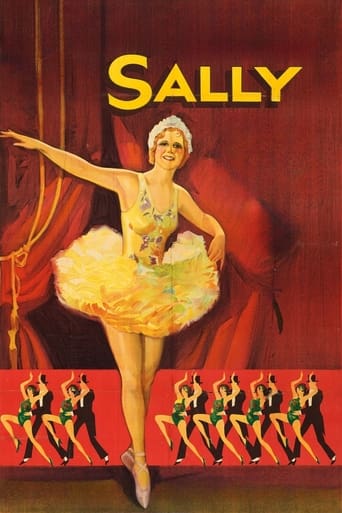

Marilyn Miller
Actor
Born: September 1, 1898 in Evansville, Indiana, USA Died: April 7, 1936 Active: 1908-1936 Birth Name: Mary Ellen Reynolds
Films
2 films

About Marilyn Miller
Marilyn Miller was Broadway and film stars of the 1920s and early 1930s, renowned for her exceptional talent in musical comedy. Born Mary Ellen Reynolds, she began her career in vaudeville as a child performer alongside her parents, quickly developing her signature style of graceful dancing and clear soprano voice. Her breakthrough came when Florenz Ziegfeld discovered her and cast her in his Follies, leading to her starring role in the blockbuster Broadway hit 'Sally' (1920), which ran for 570 performances. Miller became the highest-paid performer on Broadway, commanding unprecedented salaries for her era, with subsequent hits like 'Sunny' (1925) and 'Rosie' (1928) cementing her status as America's sweetheart. She successfully transitioned to films with the advent of sound pictures, starring in adaptations of her stage triumphs, though her film career was brief compared to her stage dominance. Despite her enormous popularity and critical acclaim, Miller struggled with health issues throughout her life and died tragically young at age 37, leaving behind a legacy as one of the last great stars of the Broadway golden age.
The Craft
On Screen
Miller possessed a unique combination of ethereal grace and energetic charm, characterized by her light, floating dance style that seemed to defy gravity. Her clear soprano singing voice was perfectly suited to the light operatic style of 1920s musical comedy, and she had an innate ability to connect with audiences through her genuine warmth and vulnerability. Unlike many of her contemporaries, Miller never overplayed her emotions, instead using subtle facial expressions and natural gestures to convey her characters' feelings. Her stage presence was both delicate and commanding, allowing her to dominate massive Broadway stages while maintaining an intimate connection with individual audience members.
Milestones
- Starred in Broadway hit 'Sally' (1920) with 570 performances
- Highest-paid Broadway performer of the 1920s
- Successful transition from silent stage to talking pictures
- Starred in 'Sunny' (1925) which ran for 517 performances
- Film debut in 'Sally' (1929), one of the first successful movie musicals
- Received $3,000 per week for 'Sally' - unprecedented salary at the time
Best Known For
Iconic Roles
Must-See Films
Accolades
Won
- No formal awards during her lifetime, as most major acting awards were established after her death
Special Recognition
- Inducted into the American Theatre Hall of Fame (1979, posthumously)
- Featured on a U.S. Postage stamp in the 'Legends of Hollywood' series (1999)
- Star on the Hollywood Walk of Fame (6304 Hollywood Boulevard)
Working Relationships
Worked Often With
Studios
Why They Matter
Impact on Culture
Marilyn Miller represented the pinnacle of Broadway stardom during the golden age of American musical theater, embodying the transition from the bawdy vaudeville era to the sophisticated musical comedy of the 1920s. Her success helped establish the musical as a legitimate art form in American theater, proving that song and dance could be combined with compelling storytelling to create blockbuster hits. Miller's films were among the earliest successful movie musicals, helping to convince Hollywood studios that musicals could be commercially viable in the new era of sound pictures. Her image as the wholesome, all-American girl next door contrasted with the more scandalous flapper stereotypes of the era, offering audiences a model of feminine virtue combined with professional achievement.
Lasting Legacy
Marilyn Miller's legacy endures as one of Broadway's first true superstars and a figure in American musical theater. She helped establish the template for the modern musical comedy star, combining singing, dancing, and acting skills with star power that could guarantee box office success. Her successful transition from stage to screen demonstrated that theatrical performers could adapt to the new medium of sound film, paving the way for later Broadway-to-Hollywood crossovers. Miller's premature death at the height of her fame cemented her legendary status, making her a symbol of the golden age of Broadway that would soon fade with the Great Depression and changing theatrical tastes.
Who They Inspired
Miller influenced generations of musical theater performers through her technical precision and emotional authenticity. Her light, ethereal dance style influenced later performers like Eleanor Powell and even Fred Astaire, who admired her grace and technical skill. The template she established for the musical comedy star—combining vocal ability, dance technique, and acting talent—became the standard for Broadway leading ladies. Her success demonstrated that women could be the primary box office draw in musical productions, opening doors for future female stars to command equal billing and pay with their male counterparts.
Off Screen
Marilyn Miller's personal life was marked by three marriages and ongoing health struggles that ultimately cut her career short. Despite her public image as America's sweetheart, her private life was tumultuous, including a highly publicized marriage to Jack Pickford, brother of Mary Pickford, which ended in divorce due to his alcoholism and infidelity. She suffered from chronic sinus infections and other health problems throughout her adult life, which were exacerbated by her demanding performance schedule. Miller was known for her generosity and kindness to fellow performers, often helping young actors get their start in show business. Her final years were marked by declining health and a brief but happy marriage to Frank 'Buster' Kenny before her untimely death from complications following sinus surgery.
Education
Limited formal education due to early career in vaudeville; primarily trained in dance and performance through practical experience with her family's traveling act
Family
- Jack Pickford (1922-1927)
- Chester O'Brien (1928-1930)
- Frank 'Buster' Kenny (1931-1936, until her death)
Did You Know?
- Was the highest-paid performer on Broadway in the 1920s, earning up to $3,000 per week
- Her birth name was Mary Ellen Reynolds, but she chose Marilyn as a stage name
- Began performing at age 5 in her family's vaudeville act
- Florenz Ziegfeld discovered her when she was 21 and immediately put her in his Follies
- The song 'Look for the Silver Lining' became her signature tune from 'Sally'
- She was one of the few Broadway stars who successfully made the transition to talking pictures
- Her 1936 funeral was attended by thousands of fans and was one of the largest celebrity funerals of the decade
- Despite her fame, she only made three films before her death
- She was known for her extreme generosity, often giving money to struggling actors
- Her death certificate listed the cause as 'nasal sinus operation complications'
In Their Own Words
I'm just a simple girl from Indiana who loves to dance and sing. The rest is all Ziegfeld's magic.
The stage is my home, but the audience is my family. Without them, I'm just a girl singing to herself.
Every performance is my first and my last. I give it everything because it might be the last time someone sees me.
Success isn't about the money or the fame. It's about making someone forget their troubles for a few hours.
Frequently Asked Questions
Who was Marilyn Miller?
What films is Marilyn Miller best known for?
When was Marilyn Miller born and when did she die?
Born September 1, 1898; died April 7, 1936.
What awards did Marilyn Miller win?
During her lifetime, Marilyn Miller did not receive formal acting awards as most major awards like the Oscars and Tonys were established after her death. However, she was posthumously honored with induction into the American Theatre Hall of Fame in 1979 and received a star on the Hollywood Walk of Fame.
What was Marilyn Miller's acting style?
Marilyn Miller's style was characterized by ethereal grace and natural charm, combining light, floating dance movements with a clear soprano voice and understated emotional expression. She was known for never overplaying her emotions, using subtle gestures and facial expressions to connect authentically with audiences while dominating both stage and screen.
How did Marilyn Miller impact Broadway?
Marilyn Miller helped establish the modern musical comedy as a legitimate theatrical art form and became Broadway's first true superstar. Her success proved that musicals could be both artistically significant and commercially successful, while her record-breaking salaries established that performers could command substantial compensation, paving the way for future theater stars.