

Sally
"Switchboard name, stage dreams"
Keys: Space play/pause · ←/→ 10s · F fullscreen · M mute · </> speed
About this film
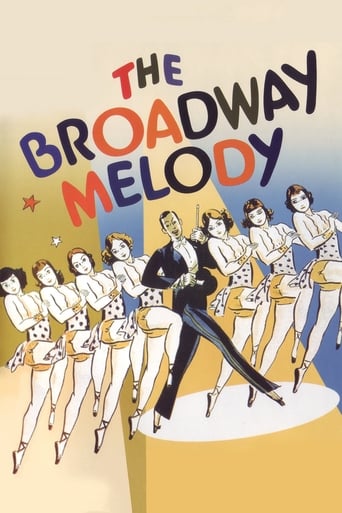
Orphan Sally, named by the telephone exchange where she was abandoned, works as a waitress and dances her way toward love with Blair despite his engagement to Marcia in this 1929 Warner musical starring Marilyn Miller.
Cast & crew
More films like this
More Music films
View all →
More from John Francis Dillon
View all →

More about this film
About the production
Release dateDecember 23, 1929
Budget$723,000
Box office$1,500,000 (domestic)
ProductionWarner Bros. Pictures, The Vitaphone Corporation
Filmed inWarner Brothers Studios, Burbank, California
Sally was one of Warner Bros.' most expensive productions of 1929, featuring both black and white and Technicolor sequences. The film required extensive sound stage construction to accommodate the early Vitaphone sound recording equipment. The production faced significant challenges with the new sound technology, often requiring multiple takes due to audio issues. The famous 'Look for the Silver Lining' number was filmed using early Technicolor process No. 2, which required special lighting and longer exposure times.
Themes
Rags to richesThe power of optimismLove across social classesThe American DreamPerseverance in adversity
Themes & topics
orphandancerwaitressimpersonationBroadwaylove trianglesocial classdeceptionshow businesstelephone exchangeRussian dancerrags to riches
Historical background
Sally adapted a hit Broadway show for early talkie musicals; Miller's tap dancing showcased Warner's sound promotion.
Why this film matters
Sally represents a crucial bridge between Broadway and Hollywood musical traditions, helping to establish many conventions of the film musical genre. The film's success demonstrated that Broadway stars could successfully transition to cinema, paving the way for future adaptations. The song 'Look for the Silver Lining' became an enduring standard, embodying the optimistic spirit that audiences sought during the Depression era. The film's rags-to-riches storyline resonated deeply with American audiences during a time of economic uncertainty. Sally also helped establish Warner Bros. as a major force in musical films, competing with MGM and Paramount for dominance in the genre. The movie's technical achievements in early sound and color recording contributed to the rapid advancement of film technology.
Making of
The production of Sally — massive undertaking for Warner Bros., representing their commitment to the new sound technology. The studio had to construct special soundproof stages and invest heavily in Vitaphone recording equipment. Marilyn Miller, despite being a Broadway veteran, was initially nervous about the new medium of sound film and required extensive coaching for camera work. The casting of Alexander Gray was controversial as he was relatively unknown, but studio executives believed he had the right look for the romantic lead. The Technicolor sequences presented enormous technical challenges, requiring actors to perform under extremely hot lights and often needing multiple takes due to color registration issues. The dance numbers were choreographed by Jack Haskell, who had to adapt Broadway choreography for the camera's static positioning required by early sound recording.
What critics said
Contemporary audiences enjoyed Miller; only fragments survive, limiting modern assessment.
Did you know?
- This was Marilyn Miller's first all-talking film, though she had appeared in one silent film before
- The film's famous song 'Look for the Silver Lining' became Marilyn Miller's signature tune throughout her career
- The Broadway production of Sally ran for 570 performances from 1920-1921, making it a major hit
- Joe E. Brown's role was significantly expanded for the film version to capitalize on his growing popularity
- The Technicolor sequences were among the first color sequences in a sound film
- Marilyn Miller was paid $100,000 for her role, making her one of the highest-paid actresses of 1929
- The film was originally intended to be entirely in Technicolor but was reduced to only two sequences due to technical difficulties
- The telephone exchange opening sequence was based on a true story of a baby found at a New York telephone exchange in the 1910s
- Director John Francis Dillon was primarily known for silent films and this was one of his first sound productions
- The film's success helped establish Warner Bros. as a major player in the musical film genre
Awards & recognition
- Academy Award for Best Art Direction (nomination)
- Photoplay Medal of Honor (nomination)
Visual style
The cinematography of Sally reflects the transitional nature of early sound filmmaking. Director of Photography Sol Polito had to work within the severe limitations imposed by the cumbersome sound recording equipment, which restricted camera movement. The film employs relatively static compositions typical of early talkies, but Polito manages to create visual interest through careful lighting and composition. The Technicolor sequences, photographed by Ray Rennahan, represent some of the earliest use of color in a sound film. These sequences demonstrate the two-color Technicolor process, which could only reproduce certain hues effectively, resulting in a distinctive pastel palette. The black and white portions showcase the high-contrast lighting style popular in late 1920s cinema, with careful attention to lighting Miller to maximize her star presence.
Innovations
Sally was at the forefront of several technical innovations in early cinema. The film utilized Warner Bros.' Vitaphone sound-on-disc system, which was among the most advanced sound recording technologies of its time. The synchronization of sound and picture was particularly challenging for musical numbers, requiring precise timing between orchestra recording and on-screen performance. The Technicolor sequences employed the two-color process, which involved dye-transfer techniques that were cutting-edge for 1929. The production pioneered techniques for recording dance numbers with live musical accompaniment, solving problems of echo and sound reflection that plagued early musical films. The film also experimented with early microphone placement techniques to capture singing and dialogue while minimizing visual obstructions.
Music
The film's soundtrack features music by Jerome Kern, with lyrics by Buddy DeSylva and B.G. DeSylva. The most famous song, 'Look for the Silver Lining,' became Marilyn Miller's signature tune and a standard of the Great American Songbook. Other notable numbers include 'You Can't Keep a Good Girl Down,' 'Whip-poor-will,' and 'The Varsity Drag.' The musical arrangements were adapted for the Vitaphone sound-on-disc system, which provided higher audio fidelity than early sound-on-film processes. The soundtrack was recorded at the Warner Bros. Vitaphone studios, with live orchestra accompaniment during filming. The musical numbers demonstrate Kern's sophisticated blend of Broadway showmanship and emerging jazz influences, reflecting the popular music styles of the late 1920s.
Famous quotes
Look for the silver lining whenever a cloud appears in the blue. Remember somewhere the sun is shining and so the right thing to do is make it shine for you.
You can't keep a good girl down, no matter how you try. You can't keep a good girl down, she'll always reach the sky.
A heart full of joy is better than a pocket full of gold.
When life hands you shadows, look for the light.
Every cloud has a silver lining, if you only look up high enough.
Memorable scenes
- The opening sequence showing baby Sally being abandoned at the telephone exchange, establishing her origin story with visual poetry
- The 'Look for the Silver Lining' musical number performed by Marilyn Miller in full Technicolor, representing the film's emotional and technical high point
- The disastrous Noskerova impersonation scene where Sally's deception is dramatically exposed during her performance
- The final Broadway production number showing Sally's triumph and success, featuring elaborate choreography and staging
- The restaurant scene where Sally first meets Blair, establishing their romantic connection across class boundaries
What audiences thought
Audiences embraced Sally enthusiastically upon its release, with the film grossing over $1.5 million domestically - a substantial sum for 1929. The film's success was particularly impressive given that it was released during the early months of the Great Depression. Moviegoers were drawn to Marilyn Miller's star power and the film's optimistic message. The 'Look for the Silver Lining' number became so popular that sheet music sales soared, and the song was played frequently on radio programs. The film ran for extended engagements in major cities, with theaters often adding extra showings to meet demand. Audience feedback cards from the period show particular appreciation for the Technicolor sequences and Joe E. Brown's comic relief.
Film connections
Influenced by
- The Broadway musical Sally (1920)
- Earlier silent film adaptations of stage shows
- The Ziegfeld Follies tradition
- Vaudeville performance style
- European operetta conventions
This film influenced
- 42nd Street (1933)
- Gold Diggers of 1933
- The Great Ziegfeld (1936)
- Stage Door (1937)
- Cover Girl (1944)
Film restoration
Sally is preserved in the UCLA Film and Television Archive and the Library of Congress. The film survives in its complete form, including both the black and white and Technicolor sequences. A restoration was completed in the 1990s by the UCLA Film Archive, which digitally enhanced the soundtrack and color sequences. The Vitaphone discs for the soundtrack are preserved at the Library of Congress. The film is considered to be in good condition for its age, with minimal deterioration of the picture elements. The Technicolor sequences have survived remarkably well, maintaining much of their original color saturation.
Where to watch
- The film is occasionally screened at classic film festivals and special cinema events
- Available on DVD through Warner Archive Collection
- Streaming on The Criterion Channel (availability varies by region)
- Can be accessed through some university film archives for academic purposes
- Occasionally broadcast on Turner Classic Movies