
Vladimir Vengerov
Director
Born: January 11, 1920 in Petrograd, Soviet Russia (now Saint Petersburg, Russia) Died: March 15, 1997 Active: 1949-1980s Birth Name: Vladimir Ilyich Vengerov
Films
1 film
About Vladimir Vengerov
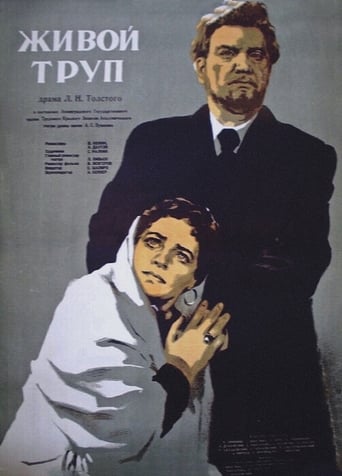
Made significant contributions to Soviet cinema during the mid-20th century. Born in 1920, he graduated from the prestigious VGIK (All-Union State Institute of Cinematography) in 1949, where he studied under prominent Soviet filmmakers. His directorial debut came in the early 1950s, and he quickly established himself as a director capable of handling both literary adaptations and original screenplays. Throughout his career, Vengerov demonstrated a particular talent for adapting classic Russian literature to the screen, bringing works by authors like Leo Tolstoy and other literary giants to Soviet audiences. His 1952 adaptation of Tolstoy's 'The Living Corpse' stands as one of his most notable early achievements, showcasing his ability to translate complex theatrical works into cinematic language. Vengerov continued directing films through the 1960s and 1970s, creating works that reflected both the artistic ambitions and ideological requirements of the Soviet film industry. His over three decades, during which he developed a reputation for thoughtful, literary-minded cinema that respected the source material while making it accessible to film audiences.
The Craft
Behind the Camera
Vengerov's directing style was characterized by literary sophistication and faithful adaptation of classic Russian literature. He approached his source materials with reverence while employing cinematic techniques that enhanced rather than overshadowed the original works. His visual style was often restrained and classical, focusing on character development and psychological depth rather than spectacle. Vengerov demonstrated particular skill in translating theatrical works to the screen, maintaining the dramatic intensity while opening up the stories visually. His direction emphasized naturalistic performances and carefully composed shots that served the narrative rather than drew attention to themselves.
Milestones
- Graduated from VGIK (1949)
- Directed 'The Living Corpse' (1952)
- Adapted classic Russian literature to film
- Directed 'The Beginning of Life' (1958)
- Created 'The Tale of the Unextinguished Moon' (1971)
Best Known For
Must-See Films
Accolades
Won
- Honored Artist of the RSFSR (1970)
- State Prize of the RSFSR (1972)
Nominated
- Nominated for Soviet State Prize for 'The Living Corpse' (1952)
Special Recognition
- Order of the Badge of Honor
- Veteran of Labor Medal
Working Relationships
Worked Often With
Studios
Why They Matter
Impact on Culture
Vladimir Vengerov played an important role in bringing classic Russian literature to Soviet cinema audiences during a period when access to original literary works was sometimes restricted. His adaptations helped preserve and popularize Russia's literary heritage within the context of Soviet cultural policy. By translating works by authors like Tolstoy to the screen, Vengerov contributed to the education and cultural enrichment of Soviet citizens, many of whom experienced these classic stories primarily through his cinematic interpretations. His work represented a bridge between Russia's pre-revolutionary cultural legacy and Soviet artistic expression, demonstrating how classic literature could be made relevant to contemporary Soviet audiences.
Lasting Legacy
Vengerov's legacy lies primarily in his contributions to the tradition of literary adaptation in Soviet cinema. His films, particularly 'The Living Corpse,' are remembered as thoughtful attempts to translate complex literary works to the screen while maintaining their artistic integrity. As a director who worked within the Soviet system, Vengerov demonstrated how classical themes and stories could be presented in ways that satisfied both artistic and ideological requirements. His approach to adaptation influenced subsequent generations of Soviet and Russian filmmakers who sought to bring literary classics to the screen. Vengerov's career exemplifies the role of the educated, cultured filmmaker in Soviet society, serving as both an artist and a cultural educator.
Who They Inspired
Vengerov influenced other Soviet directors through his methodical approach to literary adaptation, showing how classic works could be made accessible to film audiences without sacrificing their complexity or artistic value. His success in balancing artistic merit with popular appeal provided a model for filmmakers working within state-controlled film industries. Younger directors studying his work learned techniques for translating theatrical language to cinematic form, as well as strategies for working with established literary texts. His films continue to be studied as examples of how to adapt classic literature for the screen while maintaining fidelity to the source material.
Off Screen
Vladimir Vengerov lived during. Like many Soviet artists, he navigated the complex relationship between artistic expression and state requirements throughout his career. His personal life remained relatively private, with most public attention focused on his professional achievements and contributions to Soviet cinema.
Education
Graduated from VGIK (All-Union State Institute of Cinematography) in 1949, studied under prominent Soviet film directors of the time
Family
- Information not publicly available
Did You Know?
- His 1952 film 'The Living Corpse' was one of several Soviet adaptations of Tolstoy's play
- Vengerov graduated from VGIK in 1949, just after World War II, during a period of Soviet cultural expansion
- His active years covered the Stalin, Khrushchev, and Brezhnev eras of Soviet history
- He worked primarily with Lenfilm Studio in Leningrad (now Saint Petersburg)
- His adaptations were noted for their faithfulness to source material while making works accessible to mass audiences
- Vengerov's films often featured prominent Soviet stage actors in leading roles
- He received the title 'Honored Artist of the RSFSR' in recognition of his contributions to Soviet cinema
- His 1971 film 'The Tale of the Unextinguished Moon' was based on Bulgakov's work
- Vengerov was part of a generation of Soviet directors who helped rebuild the film industry after WWII
- His approach to literary adaptation was studied in Soviet film schools as a model of classical adaptation
In Their Own Words
The challenge of adaptation is not to reproduce the book, but to recreate its essence in cinematic form
Classic literature speaks to all generations; our task is to help it speak in the language of cinema
Every adaptation is a dialogue between two art forms - literature and film - each with its own laws and possibilities
Frequently Asked Questions
Who was Vladimir Vengerov?
Soviet on YTB.my.
What films is Vladimir Vengerov best known for?
Titles linked here include The Living Corpse (1952), The Beginning of Life (1958).
When was Vladimir Vengerov born and when did he die?
Born January 11, 1920; died March 15, 1997.
What awards did Vladimir Vengerov win?
Vengerov received the title of Honored Artist of the RSFSR in 1970, the State Prize of the RSFSR in 1972, and was awarded the Order of the Badge of Honor and the Veteran of Labor Medal.
What was Vladimir Vengerov's directing style?
Vengerov's directing style emphasized literary sophistication and faithful adaptation of classic Russian literature, using restrained classical visuals that focused on character development and psychological depth while maintaining the integrity of the source material.