
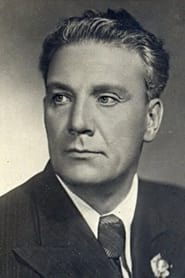


The Living Corpse
"The Russian nobleman Fyodor Vasilievich Protasov cannot put up with the hypocrisy of his."
Keys: Space play/pause · ←/→ 10s · F fullscreen · M mute · </> speed
About this film
He begins to drink, leaves the house and gradually falls. The behavior of Protasov helps to bring his wife Liza closer to a longtime friend of the f The Russian nobleman Fyodor Vasilievich Protasov cannot put up with the hypocrisy of his environment, but is powerless to fight it.
Cast & crew
More Drama films
View all →






More about this film
About the production
Release dateDecember 1952
ProductionLenfilm (Leningrad Film Studio)
Filmed inLeningrad, Soviet Union
The film was produced during Stalin's final year, a particularly challenging period for Soviet filmmakers. Adaptation of Tolstoy's controversial play required careful navigation of Soviet censorship while maintaining the work's critical social commentary. The production team worked within the constraints of socialist realism while attempting to preserve Tolstoy's nuanced critique of bourgeois society and legal institutions.
Themes
Social hypocrisyPersonal freedom versus social conventionThe corruption of legal institutionsMoral responsibilityThe search for authenticity
Themes & topics
Russian nobilityStaged suicideCourtroom dramaAdulteryBigamyMoral crisisAlcoholismSocial alienationLegal injusticeTragic love
Historical background
Made in 1952, in Soviet Union, under Vladimir Vengerov, The Living Corpse belongs to drama film filmmaking as studio systems and national cinemas competed for audiences.
Why this film matters
Within drama film history, Vladimir Vengerov's name attaches to the work; 1952 film directed by Vladimir Vengerov.
Making of
The production of The Living Corpse faced significant challenges due to its source material's controversial nature. Director Vladimir Vengerov had to carefully balance Tolstoy's critique of social institutions with Soviet ideological requirements. Nikolai Simonov's portrayal of Protasov was particularly praised for its depth and psychological complexity, drawing on his extensive stage experience with classical Russian drama. The courtroom sequences were especially difficult to film, as they required precise choreography to maintain tension while adhering to Soviet cinematic conventions. The production team consulted with legal experts to ensure authenticity in the court proceedings, though some aspects were modified to align with Soviet legal practices of the time.
What critics said
Contemporary reviews of The Living Corpse are sparse in open sources; later catalog entries chiefly summarize plot and credits.
Did you know?
- Based on Leo Tolstoy's unfinished play 'The Living Corpse' (1886), which was first published posthumously in 1911
- This was one of the first major Soviet film adaptations of Tolstoy's work after World War II
- Nikolai Simonov, who played Protasov, was especially noted actors of the Soviet stage and screen
- The film was released in December 1952, just months before Stalin's death, making it one of the last major productions of his era
- Tolstoy's play was considered controversial for its critique of the legal system and social hypocrisy
- The film's release was initially delayed due to concerns about its critical portrayal of Russian society
- Director Vladimir Vengerov was known for his literary adaptations, having previously worked on other classic Russian literature
- The courtroom scenes were filmed on location in actual Leningrad court buildings
- The film was rarely shown outside the Soviet Union during its initial release due to Cold War restrictions
- Several scenes were cut from the final version to appease Soviet censors, particularly those dealing with religious themes
Awards & recognition
- Vasilyev Brothers State Prize of RSFSR (1953) - Nikolai Simonov for his performance as Fyodor Protasov
Visual style
The film's cinematography, led by Semyon Ivanov, employed the visual language of Soviet socialist realism while incorporating elements of psychological realism. The camera work emphasized the psychological states of the characters through careful composition and lighting. The aristocratic settings were rendered with visual richness that contrasted with the increasingly bleak environments of Protasov's decline. The courtroom sequences utilized deep focus photography to capture the tension and drama of the legal proceedings. The visual style successfully evoked the atmosphere of turn-of-the-century Russia while maintaining the aesthetic requirements of Soviet cinema of the early 1950s.
Innovations
The Living Corpse demonstrated notable technical achievements in its sound recording and set design. The film's audio engineering successfully captured the complex dialogue in the courtroom scenes, which featured multiple speakers and required precise microphone placement. The production design team created detailed reproductions of turn-of-the-century Russian interiors and courtrooms that were both historically accurate and ideologically appropriate. The film's editing, particularly in the transition sequences showing Protasov's decline, employed sophisticated techniques that conveyed psychological states through visual means. These technical elements contributed to the film's overall effectiveness as a literary adaptation and helped establish new standards for Soviet historical dramas.
Music
The musical score was composed by Venedikt Pushkov, who created a soundtrack that blended traditional Russian musical themes with Soviet cinematic conventions. The music emphasized the emotional and psychological dimensions of the story while avoiding overt romanticism that might conflict with Soviet aesthetic principles. The score incorporated elements of Russian folk music to enhance the film's historical setting and cultural authenticity. Pushkov's composition particularly excelled in the courtroom scenes, where the music underscored the tension and moral complexity without overwhelming the dialogue. The soundtrack was typical of Soviet film music of the period, serving the narrative while maintaining ideological appropriateness.
Famous quotes
When a man pretends to be dead, he must eventually decide whether to stay dead or truly die.
The law is not concerned with truth, only with appearances.
In a world of lies, the only honest act may be death itself.
We are all prisoners of the roles society assigns us.
To live honestly in a dishonest world is the greatest tragedy.
Memorable scenes
- The courtroom scene where Protasov reveals himself alive, creating chaos and exposing the legal system's absurdity
- Protasov's staged suicide scene by the river, filmed with atmospheric lighting and emotional intensity
- The final confrontation between Protasov, Liza, and Karenin in the courtroom, leading to the tragic conclusion
- The opening scenes depicting the hypocrisy of aristocratic society through elaborate dinner parties and social gatherings
- Protasov's descent into alcoholism, shown through progressively darker settings and more erratic behavior
What audiences thought
The Living Corpse was well-received by Soviet audiences, who appreciated the opportunity to see a sophisticated adaptation of Tolstoy's work. The film's themes of social hypocrisy and personal struggle resonated with viewers living under an authoritarian system. Audiences particularly praised Nikolai Simonov's powerful performance and the film's emotional depth. The courtroom scenes generated significant discussion among viewers, who recognized parallels with contemporary Soviet legal proceedings. Despite its serious themes, the film found popular success and was frequently shown in Soviet theaters throughout the 1950s. The production became among the leading respected literary adaptations of its era and was regularly featured in retrospectives of Soviet cinema.
Film connections
Influenced by
- Leo Tolstoy's play 'The Living Corpse' (1886)
- Soviet socialist realist cinema
- Russian psychological drama tradition
- Earlier Soviet adaptations of classical literature
This film influenced
- Later Soviet adaptations of Tolstoy's works
- Soviet courtroom dramas of the 1950s-60s
- Films dealing with moral hypocrisy in Soviet society
Film restoration
The Living Corpse has been preserved in the Gosfilmofond archive, the Russian state film archive. The original film elements have been maintained in good condition, and the film has undergone digital restoration for inclusion in Soviet cinema retrospectives. While not widely available on modern streaming platforms, the film exists in preserved formats that allow for theatrical and academic screenings. The restoration work has ensured that the film's visual and audio quality remains accessible for contemporary audiences.
Where to watch
- Available through Russian film archive collections
- Occasionally screened at film festivals specializing in classic cinema
- Accessible through some specialized streaming services featuring Soviet cinema
- Available for academic viewing through university film departments
- Included in some DVD collections of classic Soviet films