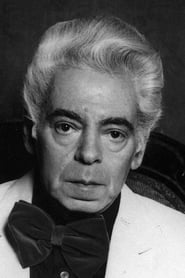
Arkadiy Raykin
Actor
Born: October 24, 1911 in Riga, Russian Empire (now Latvia) Died: December 17, 1987 Active: 1939-1987 Birth Name: Arkadiy Isaakovich Raykin
Films
1 film
About Arkadiy Raykin
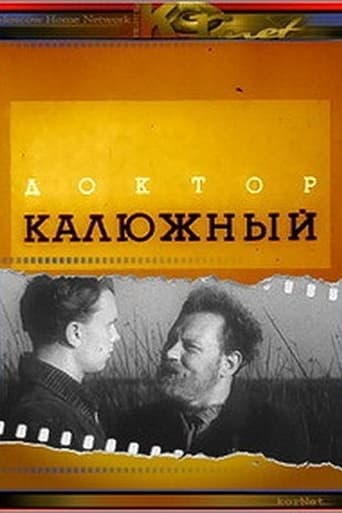
Arkadiy Isaakovich Raykin — Soviet actor, satirist, and comedian who revolutionized Russian theatrical performance through his innovative one-man shows and character transformations. Born into a Jewish family in Riga, he began his artistic journey in the 1930s, studying at the Leningrad Theatre of Working Youth before making his film debut in 'Doktor Kalyuzhnyy' (1939). While his film career was brief, Raykin found his true calling on the stage, creating the genre of theatrical satire through his famous 'Estradnye Miniatures' (variety miniatures). Over his decades-long career, he developed an extraordinary ability to transform into dozens of different characters, from politicians to ordinary citizens, using minimal props but maximum psychological depth. His satirical works, though carefully crafted to navigate Soviet censorship, brilliantly exposed human follies and social contradictions through humor and keen observation. Raykin's influence extended beyond performance into writing and directing, as he authored most of his own material and mentored generations of Soviet performers. His legacy as the 'king of Soviet satire' endures through his recorded performances and the continued influence on Russian comedy and theatrical arts.
The Craft
On Screen
Raykin's acting style was characterized by extraordinary physical transformation and psychological depth, enabling him to embody dozens of distinct characters within a single performance. His technique relied heavily on subtle changes in voice, posture, and facial expression rather than elaborate costumes or makeup, creating what critics called 'theater of the soul.' He mastered the art of rapid character switches, often transitioning between multiple personalities within minutes, each with unique mannerisms and speech patterns. His satirical approach blended sharp social commentary with humanistic warmth, using comedy as a vehicle for exposing societal contradictions while maintaining an underlying empathy for his characters. Raykin's performances were noted for their intellectual sophistication combined with broad accessibility, making complex social critiques understandable to mass audiences.
Milestones
- Film debut in 'Doktor Kalyuzhnyy' (1939)
- Founded Leningrad Theatre of Miniatures (1939)
- Created the genre of Soviet theatrical satire
- Awarded People's Artist of the USSR (1968)
- Performed internationally in over 30 countries
- Pioneered one-man theatrical shows in Soviet Union
- Mentored numerous Soviet comedians and actors
- Authored books on satire and performance
Best Known For
Iconic Roles
Must-See Films
Accolades
Won
- People's Artist of the USSR (1968)
- Hero of Socialist Labor (1981)
- Order of Lenin (1981)
- Order of the October Revolution (1971)
- Order of the Red Banner of Labour (1957)
- Lenin Prize (1971)
- State Prize of the RSFSR (1979)
- Vasilyev Brothers State Prize of the RSFSR (1986)
Special Recognition
- Honored Artist of the RSFSR (1951)
- People's Artist of the RSFSR (1957)
- Monument in St. Petersburg (2002)
- Theatre named after him in St. Petersburg
- Star on Moscow's Star Alley
- Russian State Satire Award named in his honor
Working Relationships
Worked Often With
Studios
Why They Matter
Impact on Culture
Arkadiy Raykin fundamentally transformed Soviet entertainment by creating a unique form of theatrical satire that navigated the complex landscape of Soviet censorship while speaking truth to power through humor. His one-man shows revolutionized Russian performance art, demonstrating how a single performer could embody an entire society's contradictions and aspirations. Raykin's work provided Soviet citizens with a rare outlet for critical thinking and social commentary, using laughter as a tool for psychological relief and social awareness. His influence extended beyond entertainment into the broader cultural discourse, helping shape how Soviet society viewed itself and its institutions. Raykin's international success also served as cultural diplomacy, showcasing Soviet artistic achievement while humanizing the Soviet image abroad. His techniques of character transformation and satirical observation continue to influence Russian comedy, theater, and even political commentary today.
Lasting Legacy
Raykin's legacy endures through multiple dimensions: the Satirikon Theatre in Moscow, led by his son Konstantin, continues to be one of Russia's most important theatrical institutions. His performance recordings remain cultural touchstones, studied by actors and comedians as masterclasses in character work and satirical timing. The annual 'Raykin Festival' celebrates his contributions to Russian culture, while numerous books and documentaries analyze his artistic methods and social impact. His grandson Arkady Raykin continues the family tradition as a successful actor and comedian. Raykin's approach to satire—using humor to explore social truths while maintaining humanistic warmth—has influenced generations of Russian performers and thinkers. The concept of the 'Raykin style'—intelligent, sophisticated satire with mass appeal—remains a benchmark for Russian comedic performance.
Who They Inspired
Raykin's influence on Russian performing arts is immeasurable, establishing a template for intellectual comedy that balances social critique with entertainment value. His work in one-man theater inspired performers like Mikhail Zhvanetsky and Klara Novikova, while his satirical approach influenced political commentators and even modern Russian television comedy. Theaters across Russia and former Soviet states continue to produce works in the Raykin tradition, blending sharp social observation with theatrical innovation. His techniques of rapid character transformation influenced not only comedians but also dramatic actors studying psychological realism. Raykin's success proved that sophisticated, intellectually demanding entertainment could achieve mass popularity in the Soviet context, opening doors for subsequent generations of artists. His work continues to be studied in Russian theater schools as exemplary of how to navigate political constraints while maintaining artistic integrity and social relevance.
Off Screen
Arkadiy Raykin married Raya Nosova in 1939, who became his lifelong partner and artistic collaborator. Their son Konstantin Raykin followed in his father's footsteps, becoming one of Russia's most acclaimed theater directors and actors. Despite his immense popularity, Raykin maintained a relatively private personal life, focusing intensely on his craft and artistic development. He was known for his intellectual pursuits outside of performance, maintaining an extensive library and engaging in philosophical discussions with fellow artists. Raykin's Jewish heritage occasionally presented challenges in Soviet society, though his artistic genius largely protected him from overt discrimination. He lived primarily in Leningrad (now St. Petersburg) throughout his life, considering the city his spiritual and creative home.
Education
Leningrad Theatre of Working Youth (graduated 1938), Studied under Boris Zon
Family
- Raya Nosova (1939-1987)
Did You Know?
- Despite his fame, Raykin appeared in only a handful of films, preferring the intimacy and control of live theater
- He could portray over 100 different characters in a single evening performance
- His satirical monologues were carefully crafted to avoid crossing Soviet censorship lines while still making sharp social points
- Raykin performed for Soviet leaders including Khrushchev and Brezhnev, who were reportedly both amused and unsettled by his work
- He maintained extensive notebooks of character observations, collecting mannerisms and speech patterns from everyday Soviet life
- Raykin's international performances required special permission from Soviet authorities, which was rarely granted to artists
- He turned down numerous offers to defect to the West, remaining loyal to his Soviet audience
- His son Konstantin initially resisted following his father's career path, wanting to be a scientist
- Raykin's performances were often sold out months in advance, with tickets becoming valuable commodities
- He continued performing even after serious health problems in his later years, driven by his dedication to his audience
In Their Own Words
Satire is the mirror that society holds up to itself, but I make sure it's a funhouse mirror that makes us laugh at our own reflections
Every person is a theater in themselves; I just help them stage their performance
To make people laugh at their weaknesses is to give them strength to overcome them
The most dangerous censorship is the one we impose on ourselves
In a world of official truths, comedy becomes the unofficial reality
I don't create characters—I discover them in the people around us
Laughter is the only weapon that disarms both the oppressor and the oppressed
The stage is my laboratory where I experiment with human nature
Frequently Asked Questions
Who was Arkadiy Raykin?
Legendary Soviet with credits in this catalog. He is widely regarded as the 'king of Soviet satire' and pioneered the genre of theatrical miniatures, creating dozens of distinct characters in single performances.
What films is Arkadiy Raykin best known for?
Titles linked here include Doktor Kalyuzhnyy (1939), Lyudi na mostu (1959).
When was Arkadiy Raykin born and when did he die?
Born October 24, 1911; died December 17, 1987.
What awards did Arkadiy Raykin win?
Raykin received numerous prestigious awards including People's Artist of the USSR (1968), Hero of Socialist Labor (1981), the Lenin Prize (1971), and multiple Orders of Lenin. He was also recognized with the State Prize of the RSFSR and various other honors recognizing his contributions to Soviet culture and arts.
What was Arkadiy Raykin's acting style?
Raykin's acting style featured extraordinary physical transformation and psychological depth, enabling him to embody dozens of distinct characters using minimal props but maximum psychological insight. He mastered rapid character switches through subtle changes in voice, posture, and expression, creating what critics called 'theater of the soul' with sharp social commentary combined with humanistic warmth.
How did Arkadiy Raykin influence Soviet culture?
Raykin fundamentally transformed Soviet entertainment by creating a unique form of theatrical satire that navigated censorship while speaking truth to power through humor. His work provided Soviet citizens with rare critical thinking opportunities, used laughter for psychological relief, and served as cultural diplomacy during international performances.
Did Arkadiy Raykin have any famous family members?
Yes, his son Konstantin Raykin became one of Russia's most acclaimed theater directors and actors, currently leading the Satirikon Theatre. His grandson Arkady Raykin also followed the family tradition as a successful actor and comedian.
Why did Arkadiy Raykin focus on theater rather than films?
Raykin preferred theater because it offered greater artistic control and immediacy with audiences. Film production in the Soviet Union was heavily controlled by state studios, while theater allowed him more creative freedom to develop his satirical material and maintain direct contact with his audience.