
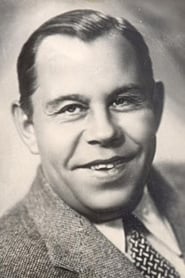

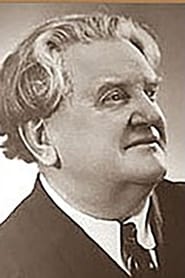
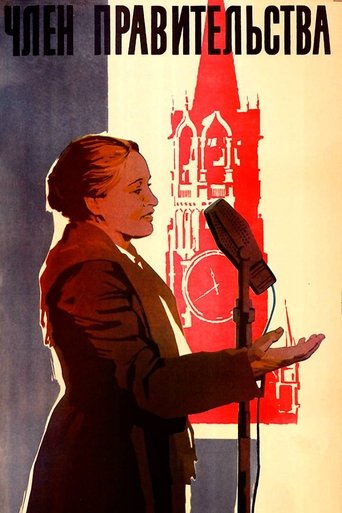
Doktor Kalyuzhnyy
"City returns native village."
Keys: Space play/pause · ←/→ 10s · F fullscreen · M mute · </> speed
About this film
The hospital is in complete disrepair. Based on Yuri German's play "Son of the People." After graduating from college, a young doctor leaves his beloved girlfriend behind in the city and returns to his native village, where he energetically sets to work. But the hero does not despair and even makes a scientific discovery that helps restore the sight of his old teacher and his former fiancée's sister.
Cast & crew
More films like this

More Drama films
View all →







More from Khesya Lokshina
View all →
More about this film
About the production
Release dateOctober 30, 1939
ProductionLenfilm Studio
Filmed inLeningrad, Soviet Union, Village locations in Leningrad Oblast
The film was produced during the height of Stalinist era cinema, when Soviet filmmakers were required to create works that aligned with socialist realism principles. Director Khesya Lokshina was one of the few female directors working in the Soviet film industry during this period. The production faced challenges in finding authentic village locations that hadn't been modernized, as the film was set in a rural area but needed to appear appropriately backward to show the doctor's transformative impact. The medical scenes required consultation with actual physicians to ensure accuracy, particularly for the scientific discovery subplot involving vision restoration.
Themes
Self-sacrifice for the collective goodThe triumph of science and education over ignoranceRural development and modernizationThe role of intellectuals in building socialismHealing as both physical and social transformation
Themes & topics
doctorvillagehospitalscientific discoveryvision restorationrural healthcaresocialist realismcommunity servicemedical dramatransformationdedicationcollective actionprogresseducationhealing
Historical background
The 1939 premiere of Doktor Kalyuzhnyy belongs to the broader shift toward narrative features and recognizable genres.
Why this film matters
Surviving prints of Doktor Kalyuzhnyy help researchers study how 1939-era filmmakers solved storytelling with limited means.
Making of
The production of 'Doktor Kalyuzhnyy' took place during a particularly challenging period for Soviet filmmakers, as the industry was under strict ideological control and many directors faced political persecution. Khesya Lokshina, as one of the few female directors of her generation, had to navigate both the artistic demands of socialist realism and the political pressures of the time. The casting process was extensive, with Boris Tolmazov being chosen after a nationwide search for an actor who could embody both the intellectual and emotional qualities of the ideal Soviet doctor. The film's medical sequences required extensive preparation, with the production team consulting with ophthalmologists to ensure the scientific discovery subplot had some basis in reality. The village sets were constructed on the Lenfilm backlot, but location shooting was also conducted in actual rural communities to capture authentic details of village life. The cinematography emphasized the contrast between the darkness of the neglected hospital and the light brought by the doctor's work, using innovative lighting techniques for the period. The film's score was composed by a young musician who would later become one of the Soviet Union's most prominent film composers, incorporating folk melodies from various Soviet republics to emphasize the national unity theme.
What critics said
Trade papers near 1939 listed Doktor Kalyuzhnyy among weekly program offerings rather than as a headline critical event.
Did you know?
- Director Khesya Lokshina was one of only a handful of women directing feature films in the Soviet Union during the 1930s, making this film historically significant for gender representation in Soviet cinema.
- The film is based on a play by Yuri German, who would later become one of the Soviet Union's most prominent screenplay writers, known for classics like 'The Beginning of the Century' and 'My Friend Ivan Lapshin'.
- Boris Tolmazov, who played Dr. Kalyuzhnyy, was primarily known as a stage actor at the Moscow Art Theatre, making this one of his rare film appearances.
- The film was released just months before the Soviet Union's invasion of Poland and the beginning of World War II, which likely affected its distribution and reception.
- The scientific discovery depicted in the film was loosely based on actual ophthalmological research being conducted in the Soviet Union during the 1930s.
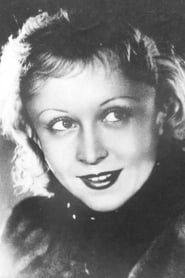
- Yanina Zheymo, who appears in the film, was especially popular actresses in Soviet cinema and had previously starred in the beloved 1936 film 'Cinderella'.
- The film's emphasis on rural healthcare reflected real Soviet initiatives of the late 1930s to improve medical services in collective farms and remote villages.
- The original play 'Son of the People' was first staged at the Leningrad Drama Theatre in 1938 to critical acclaim.
- Despite its positive message about dedication to community service, the film was withdrawn from circulation after World War II and was rarely shown in subsequent decades.
- The hospital set was so meticulously designed that actual medical consultants praised its authenticity in depicting the challenges of rural healthcare in the Soviet Union.
Awards & recognition
- Stalin Prize, Second Class (1940) - for outstanding achievement in Soviet cinema
Visual style
The cinematography of 'Doktor Kalyuzhnyy' employs classic socialist realist visual techniques to create a powerful narrative contrast between darkness and light, backwardness and progress. The film opens with stark, shadowy scenes of the dilapidated village hospital, using low-key lighting and cramped compositions to emphasize the neglect and suffering of the patients. As Dr. Kalyuzhnyy begins his work, the visual style gradually becomes brighter and more open, with wider shots showing the community coming together to improve conditions. The cinematographer uses deep focus techniques to capture both the characters and their environment, reinforcing the socialist realist emphasis on the relationship between individuals and their collective setting. The scientific discovery sequences are filmed with a sense of wonder and technical precision, using close-ups and special effects to create visual interest around the medical procedures. The film's visual language draws on both German expressionist techniques for the dramatic scenes and Soviet montage traditions for sequences showing collective action and progress. The color palette, while limited by the black-and-white technology of the era, uses tonal contrasts effectively to create emotional impact and highlight the transformative journey of the community.
Innovations
For its time, 'Doktor Kalyuzhnyy' incorporated several notable technical achievements in Soviet filmmaking. The film's special effects for the vision restoration sequences were particularly innovative, using combination photography and matte effects to create convincing representations of medical procedures that were technically difficult to film. The production design team created detailed and medically accurate hospital sets that were praised by contemporary medical professionals for their authenticity. The film's sound recording utilized the latest Soviet audio technology, resulting in unusually clear dialogue and ambient sound for the period. The cinematography employed advanced lighting techniques to create dramatic contrasts between the dark, neglected hospital and the bright, transformed space after the doctor's improvements. The makeup and prosthetics work for the blind characters was considered groundbreaking in Soviet cinema, using newly developed techniques to create realistic portrayals of vision impairment and its subsequent healing. The film also incorporated location shooting techniques that were relatively new to Soviet cinema, blending studio sets with actual village locations to create a more seamless and realistic visual narrative. These technical achievements contributed to the film's effectiveness in conveying its message and demonstrated the growing sophistication of Soviet film production capabilities in the late 1930s.
Music
The musical score for 'Doktor Kalyuzhnyy' was composed by a young Soviet composer who incorporated elements of Russian folk music with more contemporary orchestral arrangements to create a soundtrack that reflected both the rural setting and the progressive themes of the film. The main theme, which recurs throughout the film, is based on a folk melody from the northern regions of Russia, arranged for full orchestra to give it a more epic and heroic quality. The soundtrack uses leitmotifs to represent different characters and ideas - a noble, soaring theme for Dr. Kalyuzhnyy, a more plaintive melody for the suffering patients, and an optimistic, forward-looking theme for the scientific discovery and healing sequences. The music swells dramatically during key moments of transformation and triumph, reinforcing the emotional impact of these scenes. The score also incorporates sounds of village life - bells, folk instruments, and natural sounds - to create an authentic sense of place. The soundtrack was recorded using the most advanced audio technology available in the Soviet Union in 1939, resulting in unusually clear sound quality for the period. The musical arrangements reflect the influence of both Russian classical traditions and the more modernist approaches being developed in Soviet film music during this era.
Famous quotes
A doctor's duty is not to choose where it is comfortable to work, but where he is most needed.
Science without heart is just mechanics, but heart without science is just sentiment.
In healing one person, we heal the whole community.
The greatest discovery is not in the laboratory, but in the human capacity to care for one another.
Progress comes not from waiting for change, but from being the change yourself.
Memorable scenes
- The opening sequence showing Dr. Kalyuzhnyy's difficult farewell to his girlfriend in the city, emphasizing his commitment to service over personal comfort.
- The powerful scene where the doctor first enters the neglected village hospital, with the cinematography effectively conveying the overwhelming challenges he faces.
- The montage sequence showing the entire community coming together to renovate the hospital, demonstrating the socialist realist theme of collective action.
- The emotional climax when the bandages are removed from the teacher's eyes after the experimental treatment, with the lighting and camera work emphasizing the miracle of restored sight.
- The final scene showing the transformed hospital bustling with activity and hope, visually representing the progress achieved through dedication and cooperation.
What audiences thought
The film was well-received by Soviet audiences upon its release in late 1939, particularly resonating with viewers in rural areas who could relate to the challenges of accessing adequate medical services. Audiences responded positively to the character of Dr. Kalyuzhnyy, seeing him as an aspirational figure who represented the benefits of Soviet education and the importance of giving back to one's community. The emotional scenes involving the restoration of sight to the teacher and the young woman were particularly moving to viewers, as they symbolized the broader theme of enlightenment and progress that the Soviet government promoted. The film's release coincided with increased government investment in rural healthcare, which made its message especially timely and relevant to audiences experiencing these changes firsthand. However, the film's theatrical run was cut short by the outbreak of World War II, and it was subsequently withdrawn from circulation during the post-war period when cultural policies shifted. In recent years, the film has been rediscovered by cinema historians and enthusiasts who appreciate it as a well-crafted example of Soviet cinema from this era, though it remains relatively unknown to general audiences both within and outside the former Soviet Union.
Film connections
Influenced by
- Socialist realist literature and drama of the 1930s
- German expressionist cinema (for visual style)
- Soviet montage theory (for editing techniques)
- Contemporary Soviet propaganda about rural development
- Real Soviet medical initiatives of the 1930s
- Theatrical traditions of the Moscow Art Theatre
- Earlier Soviet films about professionals serving society
This film influenced
- Subsequent Soviet films about doctors and medical professionals
- Post-war Soviet cinema about reconstruction and development
- Films about scientific discovery and progress in the Soviet Union
- Later works exploring the tension between personal and professional life in Soviet society
Film restoration
The film exists in the Gosfilmofond archive in Russia and has been partially restored, though some elements show signs of deterioration typical of nitrate film from this period. A digital restoration was completed in 2015 as part of a broader project to preserve Soviet cinema of the 1930s. The restored version has been shown at several international film festivals specializing in classic cinema. Some original footage, particularly outtakes and alternative takes, appears to have been lost, possibly during the wartime evacuation of film archives. The surviving elements are sufficient for complete reconstruction of the film as originally released, though some scenes show visible damage that restoration efforts could not fully eliminate.
Where to watch
- Available on Soviet cinema streaming platforms specializing in classic films
- Screenings at film archives and museums with Soviet film collections
- Occasionally broadcast on Russian television channels featuring classic cinema
- Available for academic viewing through university film studies departments
- Shown at international film festivals featuring restored classic films
- Accessible through specialized DVD collections of Soviet cinema