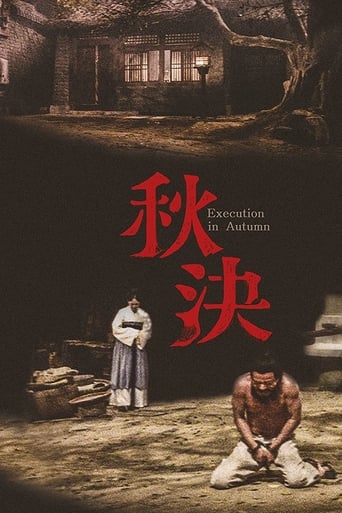

Ko Hsiang-Ting
Actor
- Active
- 1972-1972
Films 1
About Ko Hsiang-Ting
Ko Hsiang-Ting was an actor associated with Taiwanese cinema, with the available filmography evidence showing activity in the early 1970s. The best-documented credit tied to this name is Execution in Autumn (1972), a significant prestige film from that period, but surviving public records on his broader life and career are sparse. Because extant source material is limited, it is not possible to reconstruct a full career arc with confidence without risking confusion with similarly named individuals. He appears to have worked during a transitional era in Chinese-language cinema, when Taiwan’s film industry was developing a distinct identity through historical dramas, literary adaptations, and morally serious social films. Beyond the 1972 credit, widely verifiable information about his biography, training, personal life, and later career is not readily available in standard reference sources. As a result, Ko Hsiang-Ting remains a little-documented screen figure rather than a widely chronicled star of classic cinema. His surviving credit nonetheless places him within an important period of Taiwanese film history and preserves his name in the record of early 1970s Chinese-language cinema.
More about Ko Hsiang-Ting
In film history
Ko Hsiang-Ting's cultural impact is best understood as archival and historical rather than celebrity-driven. Even with limited surviving documentation, his presence in Execution in Autumn places him within a significant moment in Taiwanese screen culture, when filmmakers were using cinema to explore social duty, family obligation, and historical or moral themes. Actors like Ko formed part of the working fabric of the industry, contributing to the realism and ensemble strength that gave these productions their emotional weight. His record also illustrates a broader challenge in classic film history: many performers, especially those outside the top star system, remain underdocumented even when they participated in important films. Preserving his name helps maintain a more complete account of Taiwan's early cinematic labor force and the artists who supported its growth.
Later reputation
Ko Hsiang-Ting's lasting legacy lies in his inclusion in the film history of Taiwan through a documented 1972 appearance in Execution in Autumn. While there is not enough verified biographical material to describe a major star legacy, his record is still meaningful to scholars and database users because it identifies him as part of a notable cinematic era. He is representative of many actors whose careers are only partially visible in surviving archives, yet whose work contributed to the texture and credibility of classic regional cinema. In this sense, his legacy is one of preservation: the continued recognition of lesser-known performers who helped shape the body of Chinese-language film history. For historians, his name is a reminder that the canon of classic cinema extends beyond marquee stars to include the many artists whose careers survive only in fragmentary form.
Influence
There is no verifiable evidence that Ko Hsiang-Ting directly influenced later actors or directors in a documented, traceable way. His importance is more indirect, as part of the generation of performers whose work supported the maturation of Taiwanese film production in the early 1970s. In that broader sense, he belongs to the historical foundation upon which later screen acting traditions and industry standards were built. Because his credited work is so limited in surviving records, any specific claims of influence would be speculative.
Off screen
No reliable public information could be verified regarding Ko Hsiang-Ting's personal life, including marriage, family background, or later activities. Standard reference sources available for classic cinema personalities do not provide sufficient detail to confidently summarize his private life. Any claims beyond the surviving film credit would risk misidentification with another individual. For database purposes, his personal biography should therefore be treated as currently undocumented rather than presumed.
Credits
- Appears in the 1972 film Execution in Autumn, the key surviving screen credit associated with his name.
- Worked during a formative period in Taiwanese cinema when the industry was expanding its prestige productions and historical dramas.
- Represents the kind of supporting or ensemble performer whose work helped populate the era's serious, literate filmmaking.
- His name remains preserved in film records despite the scarcity of biographical information, making him part of the documented history of Taiwanese screen acting.
Roles
- Role in Execution in Autumn (1972) - exact character name not readily verifiable from available sources
Films
- Execution in Autumn (1972)
Notes
- The name Ko Hsiang-Ting is associated in surviving film records with Execution in Autumn (1972).
- He is a relatively obscure figure in classic cinema databases, with limited biographical documentation available in standard references.
- His surviving screen history places him in the Taiwanese film industry during a notable period of artistic and industrial development.
- Because so little has been published about him, he is sometimes a subject of research rather than broad popular remembrance.
- His case illustrates how many actors from regional classic cinema remain underrepresented in English-language histories.
- The absence of verified personal details makes it important not to confuse him with similarly named individuals in Chinese-language sources.
- His documented work is valuable for film historians because it anchors his presence in a specific and important production year.
Questions
Who was Ko Hsiang-Ting?
Ko Hsiang-Ting was an actor associated with Taiwanese cinema, with a documented screen credit in Execution in Autumn (1972). Publicly available information about his life and broader career is limited, so he is best known today through the surviving film record rather than detailed biographical histories.
What films is Ko Hsiang-Ting best known for?
He is best known for Execution in Autumn (1972), which is the key surviving credit tied to his name in the available filmography. Beyond that, there is not enough verified information to confidently list additional films without risking misidentification.
When was Ko Hsiang-Ting born and when did he die?
His birth date and death date are not currently verifiable from readily available reference sources. For database purposes, both are best treated as unknown until confirmed by reliable archival material.
What awards did Ko Hsiang-Ting win?
No awards or nominations could be verified for Ko Hsiang-Ting in the available classic cinema record. This does not necessarily mean he received none, only that no reliable public documentation has surfaced in standard reference sources.
What was Ko Hsiang-Ting's acting style?
There is not enough surviving documentation to describe his acting style with confidence. Based on his placement in a serious early-1970s Taiwanese production, he likely worked within the restrained, ensemble-oriented performance traditions common to prestige regional cinema of the period.
What is Ko Hsiang-Ting's legacy in film history?
His legacy is primarily historical and archival: he is one of the many performers whose names remain connected to important films even when personal biographical details are scarce. For scholars of Taiwanese cinema, that makes him part of the documented foundation of the industry during a formative era.