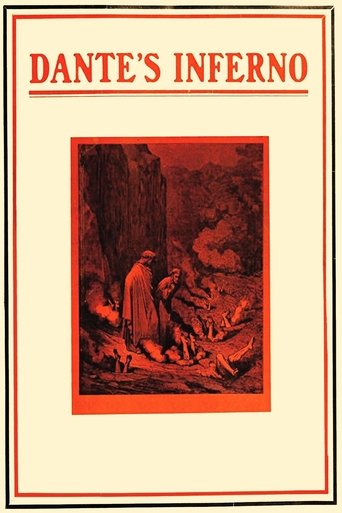
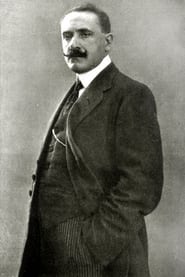
Giuseppe de Liguoro
Actor & Director
Born: 1869 in Naples, Italy Died: 1944 Active: 1911-1920s
Films
3 films
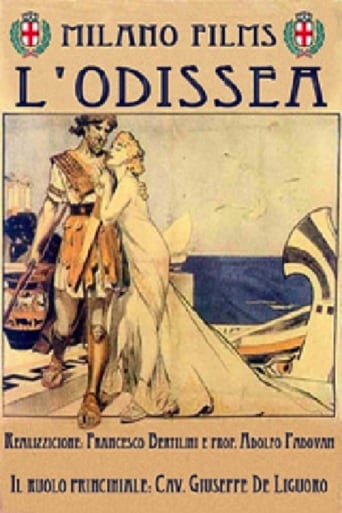

About Giuseppe de Liguoro
Figure in early Italian cinema during the silent era, serving as both an actor and director during the formative years of the film industry. He emerged as a significant creative force in 1911, a crucial year for Italian cinema's international emergence, directing and starring in ambitious literary adaptations that showcased the artistic potential of the new medium. His most celebrated work, 'Dante's Inferno' (1911), was one of the earliest feature-length films ever produced and represented a monumental achievement in early special effects and set design. De Liguoro also demonstrated his versatility by appearing in 'L'Odissea' (1911), another ambitious literary adaptation that highlighted Italy's dominance in epic productions during this period. His career, though brief in terms of documented works, coincided with the golden age of Italian silent cinema, when the country was producing some of the most technically advanced and artistically ambitious films in the world. As both a performer and filmmaker, he contributed to establishing conventions for literary adaptations that would influence cinema for decades to come.
The Craft
On Screen
De Liguoro's acting style was characteristic of the theatrical, exaggerated approach common in early silent cinema, emphasizing broad gestures and dramatic facial expressions to convey emotion without dialogue. His performances were rooted in the Italian theatrical tradition, using grand physical movements and intense facial expressions that could be clearly understood by audiences across language barriers. As an actor in epics like 'L'Odissea,' he embodied the heroic stature required for mythological and literary characters, bringing gravitas and theatrical presence to roles that demanded larger-than-life portrayals.
Behind the Camera
As a director, de Liguoro was known for his ambitious visual scope and innovative approach to bringing literary classics to the screen. His direction of 'Dante's Inferno' demonstrated remarkable technical sophistication for its time, featuring elaborate set designs and special effects that brought Dante's vision of Hell to life. He employed complex staging and composition techniques that elevated the medium beyond simple recording of theatrical performances, embracing cinema's unique visual storytelling capabilities. His work reflected the Italian tradition of spectacle and artistic ambition, combining literary respect with cinematic innovation.
Milestones
- Directed Dante's Inferno (1911), one of the earliest feature films
- Acted in L'Odissea (1911), another Italian epic
- Pioneered special effects techniques in early cinema
- Contributed to Italy's dominance in early international cinema
- Helped establish conventions for literary adaptations in film
Best Known For
Iconic Roles
Must-See Films
Accolades
Special Recognition
- Recognized as a pioneer of early Italian cinema
- Cited in film history books for contributions to early feature films
Working Relationships
Worked Often With
Studios
Why They Matter
Impact on Culture
Giuseppe de Liguoro's work, particularly 'Dante's Inferno,' had a profound impact on early cinema by demonstrating that film could handle complex literary adaptations with artistic integrity and technical sophistication. His contributions helped establish Italy as a dominant force in international cinema during the 1910s, influencing filmmakers worldwide who sought to elevate cinema beyond simple entertainment. The techniques and approaches he developed for bringing literary classics to the screen helped establish conventions that would be followed by filmmakers for decades. His work demonstrated that cinema could tackle serious, artistic subjects and not just trivial entertainments, contributing to the medium's cultural legitimacy.
Lasting Legacy
De Liguoro's legacy endures through his work in early feature films and literary adaptations, with 'Dante's Inferno' remaining a landmark achievement in cinema history. His films are studied by film historians as examples of early cinematic ambition and technical innovation, representing the artistic heights achieved by Italian cinema in its golden age. The visual techniques and storytelling approaches he helped develop influenced subsequent generations of filmmakers, particularly those working in epic and fantasy genres. His work shows the rapid artistic development of cinema in its first decades and the crucial role Italian filmmakers played in establishing cinema as an art form.
Who They Inspired
De Liguoro influenced early filmmakers through his ambitious approach to literary adaptation and his innovative use of special effects and set design. His work on 'Dante's Inferno' demonstrated the potential for cinema to handle complex, artistic subject matter, encouraging other directors to tackle ambitious literary projects. The technical solutions he developed for bringing fantastical visions to screen influenced subsequent filmmakers working in fantasy and horror genres. His success in creating internationally acclaimed Italian productions helped establish a model for artistic cinema that balanced commercial appeal with artistic integrity.
Off Screen
Giuseppe de Liguoro was born in Naples, Italy, in 1869, and came to filmmaking after likely having experience in the theatrical arts, which was common for early film pioneers. He was part of the vibrant Italian artistic community that helped establish cinema as a legitimate art form in the early 20th century. His active years covered the crucial period when Italian cinema was achieving international recognition for its artistic and technical achievements. De Liguoro lived through the dramatic changes in cinema from its primitive beginnings to the establishment of the studio system, passing away in 1944 as the film industry was undergoing another transformation during World War II.
Did You Know?
- Dante's Inferno (1911) was one of the first full-length feature films ever made
- The film featured special effects for its time, including innovative use of miniatures and forced perspective
- Dante's Inferno was an international success and helped establish Italian cinema's reputation for quality
- The film's sets were so elaborate that they became a tourist attraction in Italy
- De Liguoro was one of the first filmmakers to successfully adapt a major literary work to the screen
- His work coincided with what historians call the 'golden age' of Italian cinema (1910-1915)
- Dante's Inferno was reportedly over an hour long, exceptional for its time
- The film featured nude scenes that were controversial but also drew audiences
- De Liguoro worked during a period when Italian films dominated international markets
- His films helped establish conventions for visual storytelling that would influence cinema for decades
Frequently Asked Questions
Who was Giuseppe de Liguoro?
Italian actor and on YTB.my. He was a significant figure in early Italian cinema, contributing to the country's dominance in international film production during the 1910s through his ambitious literary adaptations and technical innovations.
What films is Giuseppe de Liguoro best known for?
Titles linked here include Dante's Inferno (1911), L'Odissea (1911).
When was Giuseppe de Liguoro born and when did he die?
Born 1869; died 1944.
What was significant about Dante's Inferno (1911)?
Dante's Inferno was as one of the first full-length feature films, running over an hour at a time when most films were much shorter. It featured innovative special effects, elaborate set designs, and was an international success that helped establish Italian cinema's reputation for artistic and technical excellence.
What was Giuseppe de Liguoro's directing style?
De Liguoro's directing style was characterized by ambition, visual sophistication, and innovation. He approached literary adaptations with artistic respect while embracing cinema's unique visual storytelling capabilities, employing complex staging, elaborate sets, and special effects that pushed the boundaries of what was possible in early film.
How did de Liguoro influence early cinema?
De Liguoro influenced early cinema by demonstrating that film could handle complex literary adaptations with artistic integrity, helping establish cinema as a legitimate art form. His technical innovations in special effects and set design influenced subsequent filmmakers, particularly in fantasy and epic genres, and his success helped establish Italy as a leader in international film production.
What was the context of Italian cinema during de Liguoro's career?
De Liguoro worked during what historians consider the golden age of Italian cinema (1910-1915), when Italian films dominated international markets and were known for their artistic ambition, technical sophistication, and epic scope. This period saw Italian filmmakers many techniques and approaches that would influence cinema worldwide.