Films
1 film
About V. Gopalakrishnan
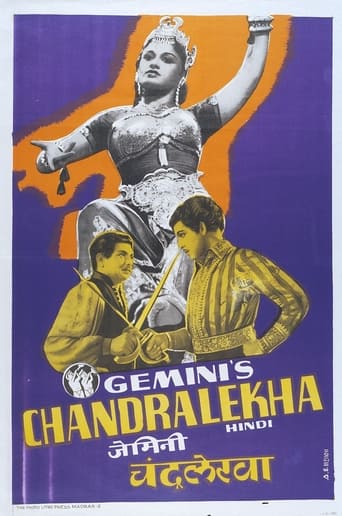
This archive lists one role for V. Gopalakrishnan: Chandralekha (1948). Primarily known for his role in the landmark 1948 film 'Chandralekha'. His career appears to have been brief, with his only documented film work being in this spectacular production that was expensive Indian films of its time. As an actor in the early Indian film industry, he was part of the transition period when Indian cinema was establishing its unique identity and storytelling traditions. His involvement in 'Chandralekha' placed him within the prestigious Gemini Studios, one of South India's most prominent film production houses of the era. The film itself was a massive production directed by S.S. Vasan that showcased the grandeur and technical sophistication that Indian cinema was achieving in the 1940s. While his screen time and specific character details are not well-documented in available film archives, his participation in this cinematic milestone connects him to an important period in Indian film history when the industry was moving toward more elaborate productions and establishing itself as a significant cultural force.
The Craft
Milestones
- Appeared in Chandralekha (1948),
Best Known For
Must-See Films
Working Relationships
Worked Often With
Studios
Why They Matter
Impact on Culture
V. Gopalakrishnan's contribution to Indian cinema, while brief, is significant through his participation in 'Chandralekha', a film that represented a major milestone in Indian cinematic history. The film was groundbreaking in its scale, production values, and technical achievements, setting new standards for Indian cinema and demonstrating the industry's capability to produce films that could compete internationally in terms of spectacle and entertainment value. His involvement in this production places him within the context of early Indian cinema's development, when actors were helping establish the foundations of what would become one of the world's largest film industries. The film itself was notable for its elaborate dance sequences, grand sets, and innovative cinematography, elements that would influence Indian filmmaking for decades to come.
Lasting Legacy
While V. Gopalakrishnan's individual legacy in cinema is limited due to his brief film career, his association with 'Chandralekha' ensures his place in the historical record of Indian cinema. The film itself remains a classic of Indian cinema, frequently referenced in film studies and retrospectives of the Golden Age of Indian filmmaking. His participation in this landmark production connects him to the generation of Indian actors who helped establish the country's film industry during its formative years. The film's restoration and continued appreciation by film historians and cinema enthusiasts means that his contribution, however small, is preserved as part of India's rich cinematic heritage.
Who They Inspired
Due to the limited scope of V. Gopalakrishnan's documented career, specific information about his influence on other actors or filmmakers is not available in existing film archives and historical records. However, actors who participated in major productions like 'Chandralekha' were part of the collective effort that elevated Indian cinema's artistic and technical standards during the 1940s.
Off Screen
Very limited information is available about V. Gopalakrishnan's personal life, which was common for many supporting actors in early Indian cinema whose lives were not extensively documented in film archives or press coverage of the era.
Did You Know?
- Chandralekha (1948) was produced at a cost of ₹3 million, making it
- The film was originally made in Tamil but also dubbed into Hindi, making it one of the earliest Indian films to have multiple language versions
- The famous drum dance sequence in Chandralekha took over a month to film and involved hundreds of extras
- Gemini Studios, where V. Gopalakrishnan worked, was one of South India's most prestigious film production houses in the 1940s
- Chandralekha was the first Indian film to have a nationwide release using a centralized distribution system
- The film's director, S.S. Vasan, was known as a film producer and distributor who revolutionized Indian cinema marketing
Frequently Asked Questions
Who was V. Gopalakrishnan?
Indian with credits in this catalog. He was associated with Gemini Studios, one of South India's most prominent production houses during the Golden Age of Indian cinema.
What films is V. Gopalakrishnan best known for?
Titles linked here include Chandralekha (1948).
When was V. Gopalakrishnan born and when did he die?
Specific birth and death dates for V. Gopalakrishnan are not available in existing film archives and historical records, which was common for many supporting actors in early Indian cinema.
What awards did V. Gopalakrishnan win?
There are no documented awards or nominations for V. Gopalakrishnan in available film archives, which was typical for many character actors in Indian cinema during the 1940s when formal award systems were still developing.
What was V. Gopalakrishnan's acting style?
Specific details about V. Gopalakrishnan's acting style are not documented in available sources. However, actors in Indian cinema of the 1940s typically worked within the theatrical traditions of the time, often incorporating elements of classical Indian performance arts.
What was the significance of Chandralekha in Indian cinema?
Chandralekha (1948) was a groundbreaking film that set new standards for Indian cinema in terms of production values, scale, and technical achievement. It was.
Was V. Gopalakrishnan associated with any particular film studio?
V. Gopalakrishnan was associated with Gemini Studios, one of South India's most prestigious film production houses during the 1940s. Gemini Studios was known for producing high-quality films and was instrumental in developing the South Indian film industry.