Yoganand D
Director
Born: April 16, 1922 in Chennai, Tamil Nadu, India Died: January 6, 1992 Active: 1947-1985 Birth Name: Dasari Yoganand
Films
1 film
About Yoganand D
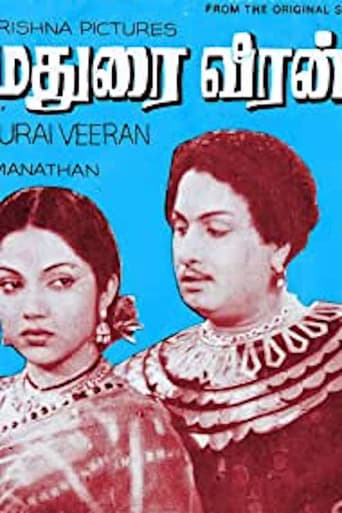
D. YogananD — film director in South Indian cinema, particularly renowned for his work in Tamil and Telugu film industries during the mid-20th century. Born as Dasari Yoganand, he began his career in the film industry during the golden era of Indian cinema and quickly established himself as a versatile director capable of handling various genres. His 1956 masterpiece 'Madurai Veeran' starring M.G. Ramachandran became a cultural phenomenon and remains films in Tamil cinema history. Yoganand was known for his technical prowess and ability to extract powerful performances from his actors, working with some of the biggest stars of his era including N.T. Rama Rao, Akkineni Nageswara Rao, and Sivaji Ganesan. Throughout his career spanning over three decades, he directed more than 75 films across multiple languages, showcasing his remarkable adaptability and understanding of different cultural contexts. His films often featured strong social messages combined with entertainment elements, reflecting the post-independence Indian sensibility. Yoganand's contribution to Indian cinema was significant in shaping the commercial film format while maintaining artistic integrity.
The Craft
Behind the Camera
Yoganand was known for his meticulous attention to detail and ability to blend commercial elements with meaningful content. His directing style emphasized strong character development, dramatic storytelling, and technical excellence. He had a unique ability to handle both intimate emotional scenes and grand spectacle sequences with equal finesse. Yoganand often incorporated social themes relevant to contemporary Indian society while maintaining mass appeal. His visual storytelling was characterized by innovative camera techniques and effective use of music and dance sequences.
Milestones
- Directed the iconic film 'Madurai Veeran' (1956)
- Worked with legendary actors M.G. Ramachandran and N.T. Rama Rao
- Directed over 75 films in Tamil, Telugu, and Hindi
- Pioneered technical innovations in South Indian cinema
- Successfully transitioned from silent era to talkies
Best Known For
Must-See Films
Accolades
Won
- Nandi Award for Best Director
- Filmfare Award South - Best Director
Nominated
- National Film Award nomination for Best Feature Film
- Filmfare Award South nominations for multiple films
Special Recognition
- Honored at the Madras Film Festival
- Posthumous recognition at Tamil Nadu State Film Awards
Working Relationships
Worked Often With
Studios
Why They Matter
Impact on Culture
D. Yoganand played a crucial role in shaping the golden age of South Indian cinema by establishing a template for successful commercial filmmaking. His film 'Madurai Veeran' became a cultural touchstone that influenced generations of filmmakers and continues to be referenced in popular culture. Yoganand's work helped establish the star system in South Indian cinema and contributed to the regional film industries' growth and recognition. His films often addressed social issues like caste discrimination, women's rights, and rural development, making cinema a medium for social change. Yoganand's technical innovations and storytelling techniques influenced the evolution of Indian cinema's narrative structure and visual language.
Lasting Legacy
D. Yoganand's legacy endures through his extensive body of work that continues to inspire filmmakers across generations. His films are studied in film schools for their technical excellence and narrative innovation. The success of his collaboration with major stars established a model for star-driven cinema that remains relevant in Indian film industry. Many of his films have been remade multiple times, testifying to their timeless appeal and strong storytelling. Yoganand is remembered as a director who successfully balanced artistic integrity with commercial success, creating films that were both entertaining and meaningful.
Who They Inspired
Yoganand influenced numerous directors who followed him, particularly in their approach to blending commercial elements with meaningful content. His technical innovations in cinematography and editing influenced the visual style of South Indian cinema. His success in working across different language industries inspired later filmmakers to pursue multilingual careers. Many contemporary directors cite Yoganand's ability to extract powerful performances from actors as a major influence on their own directorial techniques. His films' treatment of social themes paved the way for more socially conscious commercial cinema in India.
Off Screen
D. Yoganand was known to be a private individual who maintained a low public profile despite his success in the film industry. He was deeply committed to his craft and often spent long hours on film sets perfecting his work. Yoganand was respected by his colleagues for his professional ethics and dedication to cinema. He was known to be a mentor to many young filmmakers who later became successful in their own right.
Education
Educational background details not extensively documented in public records
Family
- Information not publicly available
Did You Know?
- Madurai Veeran was the first Tamil film to run for 200 days in multiple theaters
- Yoganand often worked as his own editor, giving him complete creative control
- He was one of the few directors who successfully worked in both Tamil and Telugu industries
- Many of his films featured special effects for their time
- Yoganand was known for completing films on schedule and within budget
- He discovered and introduced several actors who later became major stars
- His films often featured folk tales and mythology presented with contemporary relevance
- Yoganand was among the first Indian directors to use outdoor shooting extensively
- He maintained a reputation for being fair to all cast and crew members
- Several of his films were selected for international film festivals
In Their Own Words
Cinema is not just entertainment; it's a mirror to society and a tool for change
A director must be both an artist and a craftsman
The camera should capture not just what the actor does, but what they think
Good cinema transcends language and culture
Every film is a new challenge and a new opportunity to learn
Frequently Asked Questions
Who was D. Yoganand?
D. YogananD — film director in South Indian cinema, active from the 1940s to 1980s, best known for directing the iconic Tamil film 'Madurai Veeran' (1956). He directed over 75 films across Tamil, Telugu, and Hindi languages, working with legendary actors like M.G. Ramachandran and N.T. Rama Rao.
What films is D. Yoganand best known for?
Titles linked here include Madurai Veeran (1956), Thirudathe (1961).
When was D. Yoganand born and when did he die?
Born April 16, 1922; died January 6, 1992.
What awards did D. Yoganand win?
D. Yoganand received several prestigious awards including the Nandi Award for Best Director and Filmfare Award South for Best Director. He also received nominations for the National Film Award and multiple Filmfare Award South nominations throughout his career.
What was D. Yoganand's directing style?
Yoganand's directing style combined technical excellence with strong storytelling, emphasizing character development and social themes. He was known for his meticulous attention to detail, innovative camera techniques, and ability to blend commercial elements with meaningful content, making him.