
Madurai Veeran
"Princess Bommi, cobbler's son Veeran"
Keys: Space play/pause · ←/→ 10s · F fullscreen · M mute · </> speed
About this film
Princess Bommi loves cobbler's adopted son Veeran; when her uncle arranges a royal marriage, he abducts her. A 1956 Tamil legend of caste-crossed romance.
Cast & crew
More Drama films
View all →






More about this film
About the production
Release dateApril 13, 1956
Box officeBlockbuster success - ran for over 100 days in many theaters
ProductionAVM Productions
Filmed inMadras (now Chennai), Madurai
The film was based on the popular Tamil folk legend of Madurai Veeran, a revered deity in rural Tamil Nadu. AVM Productions invested heavily in the sets and costumes to recreate the period setting authentically. The action sequences were particularly challenging to film in the 1950s, requiring innovative stunt choreography. MGR performed many of his own stunts, which was unusual for leading actors of that era.
Themes
Social JusticeLove Transcending Class BarriersHeroism and SacrificeGood vs EvilFolk Tradition and Cultural Heritage
Themes & topics
Historical background
Madurai Veeran (1956) reached audiences during postwar cinema, when exhibitors mixed shorts and features on the same program.
Why this film matters
Historians retain Madurai Veeran as a record of how filmmakers in 1956 addressed popular genres.
Making of
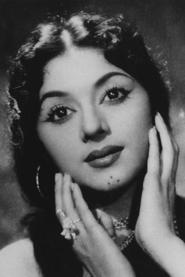
The production of Madurai Veeran was a massive undertaking for AVM Productions in 1956. Director Yoganand D spent months researching the folk legend and consulting with scholars to ensure cultural accuracy. MGR was deeply involved in the character development, insisting on portraying Veeran as both a fierce warrior and a compassionate leader. The film's elaborate palace sets were constructed over several months, with artisans brought from various parts of South India. The climactic battle scene involved over 500 extras and took nearly a week to film. Bhanumathi, who was initially hesitant to play a princess, was convinced after MGR personally requested her participation. The film's success was partly attributed to the perfect casting chemistry between MGR and Bhanumathi, whose off-screen friendship translated into convincing on-screen romance.
What critics said
Trade coverage from 1956 treated Madurai Veeran as program material; later writers evaluate it through preservation and genre context.
Did you know?
- This was one of the first films to popularize the folk deity Madurai Veeran to mainstream cinema audiences
- MGR's portrayal of Madurai Veeran became one of his most iconic roles and helped establish his image as a champion of the common people
- The film's success led to several remakes in different languages, including Telugu and Kannada
- Bhanumathi was paid a record-breaking amount for her role in the release, reflecting her star status
- The temple scenes were filmed in actual temples with special permissions, which was rare at the time
- The film's soundtrack became so popular that the songs were played in temples dedicated to Madurai Veeran
- N. S. Krishnan's comedy tracks were specially written to complement the serious tone of the main story
- The film ran for over 200 days in several theaters, a rare achievement in 1950s Tamil cinema
- MGR grew a real mustache for the role, which later became his signature look
- The fight sequences were choreographed by a team of traditional martial arts experts to ensure authenticity
Awards & recognition
- Film Fans Association Award for Best Film (1956)
- Madras Film Fans Award for Best Actor - M. G. Ramachandran (1956)
- Madras Film Fans Award for Best Actress - Bhanumathi (1956)
Visual style
The cinematography by G. Vittal Rao was pioneering for its time, employing innovative techniques to capture the grandeur of the period setting. The film featured sweeping camera movements during the battle sequences, creating a sense of epic scale rarely seen in 1950s Tamil cinema. The use of lighting was particularly notable, with dramatic contrasts in the palace scenes versus the earthy tones of the common folk's environments. The cinematographer employed deep focus techniques to maintain clarity in large crowd scenes, which was technically challenging given the limitations of the equipment available at the time. The film's visual palette was carefully chosen to reflect the cultural authenticity of the story, with rich colors for royal sequences and more muted tones for the common folk's world.
Innovations
Madurai Veeran achieved several technical milestones for Tamil cinema in 1956. The film's action sequences featured innovative stunt choreography that combined traditional Tamil martial arts with cinematic techniques, creating a new standard for fight scenes in regional cinema. The production design, particularly the palace sets, showcased exceptional craftsmanship with attention to historical accuracy. The film employed special effects techniques that were advanced for its time, especially in the sequences depicting Veeran's supernatural abilities. The sound recording quality was notably superior to contemporary films, with clear dialogue and well-balanced music tracks. The movie's editing techniques, particularly in the action sequences, created a dynamic pace that kept audiences engaged throughout its lengthy runtime.
Music
The music for Madurai Veeran was composed by the duo Viswanathan-Ramamoorthy, with lyrics written by A. Maruthakasi and Thanjai N. Ramaiah Dass. The soundtrack became especially successful of the 1950s, featuring songs that blended classical Tamil music with folk elements to match the film's theme. Notable tracks included 'Vaaname Thaai Thirumanam' and 'Kaathal Vaibhogame', which became evergreen hits. The background score was particularly innovative, incorporating traditional Tamil folk instruments like the thavil and nadaswaram to enhance the cultural authenticity of the narrative. The songs were picturized with elaborate choreography that combined classical dance forms with folk traditions, adding visual richness to the musical sequences. The soundtrack's success contributed significantly to the film's overall popularity and remains a classic example of golden-age Tamil film music.
What audiences thought
Madurai Veeran was a phenomenal commercial success, breaking box office records across Tamil Nadu. Audiences were particularly drawn to MGR's heroic portrayal and the film's action sequences, which were considered spectacular for the time. The movie's emotional core, the romance between Veeran and Bommi, resonated strongly with viewers, while its themes of justice and empowerment struck a chord with the common people. The film's songs became immensely popular and were played in homes, public gatherings, and even religious festivals. The movie's success was so overwhelming that it established MGR as the undisputed superstar of Tamil cinema and solidified his fan base, which would later become a crucial factor in his political career. Even decades after its release, the film continues to be remembered fondly by older generations and discovered by new audiences through television screenings and film festivals.
Film connections
Influenced by
- Traditional Tamil Folklore
- Dravidian Movement Ideology
- Indian Epic Traditions
- Previous MGR Films
- Classical Tamil Literature
This film influenced
- Thirudathe
- Thillana Mohanambal
- Thalapathi
- Thevar Magan
- Anniyan
- similarFilms
Where to watch
- Wikimedia Commons: https://commons.wikimedia.org/wiki/File:Madurai%20Veeran%20(1956).webm