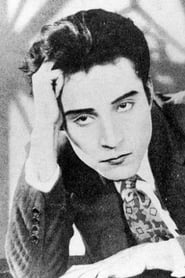
Tokihiko Okada
Actor
Born: February 18, 1903 in Tokyo, Japan Died: January 16, 1934 Active: 1920-1933 Birth Name: Eiichi Takahashi
Films
1 film
About Tokihiko Okada
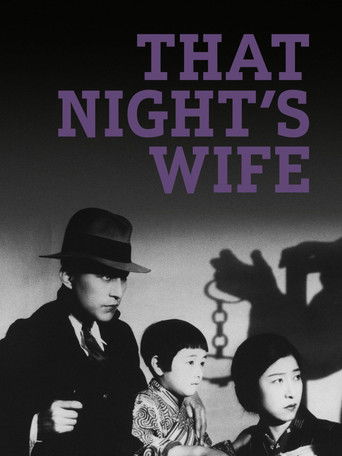
Preeminent star of the Japanese silent film era, celebrated for his refined good looks and sensitive acting style. Born Eiichi Takahashi in Tokyo, he dropped out of middle school to pursue a career in cinema after being deeply moved by the film 'Meikin.' He began his career at the Taikatsu studio in 1920 under the stage name Kurao Nora before the literary giant Jun'ichiro Tanizaki bestowed upon him the name Tokihiko Okada. Throughout the 1920s and early 1930s, he became a favorite of directors like Yasujirō Ozu and Kenji Mizoguchi, often portraying the 'nimaime'—a romantic, vulnerable leading man. His career reached its zenith with poignant performances in Ozu's 'That Night's Wife' and 'Tokyo Chorus,' where he displayed a modern, internalized acting technique that was ahead of its time. Tragically, his life and flourishing career were cut short when he succumbed to tuberculosis in 1934 at the age of 30, just as he was transitioning into the sound era.
The Craft
On Screen
Okada was the quintessential 'nimaime' actor, a term used in Japanese theater and film to describe the 'second line' or romantic, sensitive, and handsome lead. Unlike the rugged 'tateyaku' types, Okada specialized in portraying modern, urban men dealing with emotional and domestic crises. His style was noted for its naturalism and psychological depth, particularly in his collaborations with Ozu, where he moved away from the exaggerated gestures of early silent cinema toward a more subtle, internalized expression of pathos and humor.
Milestones
- Debuted in the 1920 film 'Amateur Club' directed by Thomas Kurihara
- Became a top star at Shochiku's Kamata Studios in the late 1920s
- Starred in Yasujirō Ozu's first major critical successes including 'That Night's Wife' (1930)
- Co-founded the short-lived Fuji Film Company in 1931 with fellow stars Denmei Suzuki and Minoru Takada
- Delivered a career-defining performance in 'Tokyo Chorus' (1931), widely considered one of the best silent films ever made
Best Known For
Iconic Roles
Must-See Films
Accolades
Won
- Kinema Junpo Best Ten - Multiple films ranked in the top 10 during his career
- Posthumously recognized as a legend of the Silent Era in various Japanese film retrospectives
Special Recognition
- Considered one of the 'Three Great Stars of Shochiku Kamata' alongside Denmei Suzuki and Minoru Takada
- Subject of numerous retrospectives at the Tokyo International Film Festival and the National Film Archive of Japan
Working Relationships
Worked Often With
Studios
Why They Matter
Impact on Culture
Central figure in the 'modernization' of Japanese film acting. He represented the 'Modern Boy' (Moga/Mobo) culture of the Taisho and early Showa eras, bringing a Westernized, sophisticated charm to the screen that appealed to the growing urban middle class. His collaboration with Ozu helped establish the 'shomin-geki' (common people drama) genre, which focused on the realistic struggles of ordinary families, a genre that would define Japanese cinema for decades.
Lasting Legacy
Though his career lasted only 14 years, Okada is remembered as one of the greatest actors of the silent era. His performance in 'Tokyo Chorus' remains a benchmark for early cinematic naturalism. His legacy is also carried on by his daughter, Mariko Okada, who became a screen icon in her own right. He remains a symbol of the 'lost potential' of the Japanese film industry due to his early death at the height of his powers.
Who They Inspired
His subtle, nuanced acting style influenced a generation of Japanese actors who sought to move away from Kabuki-influenced theatricality. Directors like Ozu used Okada to refine their own visual storytelling, relying on his expressive face to convey complex emotions without the need for intertitles.
Off Screen
Okada was married to Sonoko Tazuru, a former Takarazuka Revue actress. Their daughter, Mariko Okada, was born in 1933, just one year before Tokihiko's death. Mariko would eventually grow up to become.
Education
Attended Zushi Kaisei Junior High School but dropped out to pursue acting.
Family
- Sonoko Tazuru
Did You Know?
- His stage name was created by the famous novelist Jun'ichiro Tanizaki.
- He was known for his extreme dedication, once rehearsing a single scene all night for Ozu.
- He initially acted under the names Kurao Nora and Eiichi Takahashi before settling on Tokihiko Okada.
- His daughter, Mariko Okada, did not know him well as he died when she was only an infant.
- He was a close friend of the famous poet Chūya Nakahara.
- He was one of the few actors of his time who successfully transitioned between multiple major studios due to his immense popularity.
- His death from tuberculosis was part of a tragic trend among young Japanese artists of that era.
In Their Own Words
I want to be an actor who can express the soul of the modern Japanese man.
Frequently Asked Questions
Who was Tokihiko Okada?
Legendary Japanese silent film star active in the 1920s and early 1930s. He was known for his handsome features and his work with masters like Yasujirō Ozu and Kenji Mizoguchi.
What films is Tokihiko Okada best known for?
Titles linked here include That Night's Wife (1930), Tokyo Chorus (1931).
When was Tokihiko Okada born and when did he die?
Born February 18, 1903; died January 16, 1934.
Was Tokihiko Okada related to other famous actors?
Yes, he was the father of Mariko Okada, who became one of Japan's most famous actresses in the post-war era.
What was Tokihiko Okada's acting style?
He was a 'nimaime' actor, specializing in sensitive, romantic, and modern leading roles with a naturalistic approach that was revolutionary for the silent era.