That Night's Wife
"One night, one robbery"
Keys: Space play/pause · ←/→ 10s · F fullscreen · M mute · </> speed
About this film
Yasujirō Ozu's first talkie follows a father who robs to pay for his daughter's pneumonia medicine. In Depression-era Japan, a man commits a robbery to save his critically ill daughter and escapes with the funds, but complications arise.
Cast & crew
More films like this
More Drama films
View all →







More from Yasujirō Ozu
View all →
More about this film
About the production
Release dateJuly 6, 1930
ProductionShochiku Kamata
Filmed inShochiku Kamata Studios, Tokyo, Japan
The film was Ozu's sixteenth production and was shot rapidly between late May and early July 1930. The head of Kamata Studio, Shiro Kido, personally recommended the source material to screenwriter Kogo Noda. Ozu famously toiled over the continuity of the film because six of the seven reels take place within a single, cramped apartment set. This technical challenge was so taxing that Kido reportedly urged Ozu to take a vacation at a hot spring after filming wrapped. The film is notable for being one of the few Ozu works to feature a significant amount of action and suspense, contrasting with his later, more static 'home dramas.'
Themes
Moral AmbiguityFamily Loyalty vs. Legal DutyPoverty and Social InjusticeThe Passage of TimeRedemption and Self-Sacrifice
Themes & topics
Historical background
1930 placed That Night's Wife within Japan cinema as Shochiku Kamata navigated wartime markets, immigration audiences, and the shift from intertitles to sound.
Why this film matters
Archivists revisit That Night's Wife (1930) for Yasujirō Ozu style, genre norms at Shochiku Kamata, and the exhibition context of 65 programming.
Making of
The production was a 'labor of love' for Ozu, who was deeply immersed in American cinema at the time. He and screenwriter Kogo Noda condensed the original story—where the robbery occurred a week prior—into a single night to heighten the suspense and maintain a 'real-time' feel. Ozu experimented heavily with camera movement, including lateral tracking shots and sudden dollies, which he would later abandon for his signature static style. The set was designed to feel increasingly claustrophobic as the night progressed, using low-key lighting inspired by German Expressionism and early American crime films. Ozu's obsession with detail extended to the Western-style props and posters, which reflected his own 'cinephiliac' tendencies and the rapid Westernization of Tokyo.
What critics said
Retrospective writing on That Night's Wife stresses craft by Yasujirō Ozu, print survival, and repertory value rather than opening-week gross alone.
Did you know?
- The film is based on the short story 'From Nine to Nine' by American author Oscar Schisgall, which was published in the Japanese magazine 'Shin Seinen' (New Young Men).
- An American movie poster for a film starring Walter Huston is prominently displayed in the apartment, serving as a 'moral conscience' symbol as Huston was known for playing upright characters.
- Ozu used a rare 'overlap transition' in the reverse-angle shots of the apartment door, a technique he generally disliked and seldom used again.
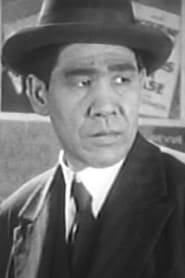
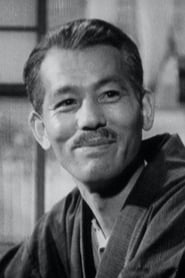
- The film features early appearances by Chishu Ryu, who would go on to become Ozu's most frequent collaborator and the face of his mature masterpieces.
- It is one of only three Ozu films that take place almost entirely at night, the others being 'Woman of Tokyo' (1933) and 'Tokyo Twilight' (1957).
- The original Japanese title 'Sono yo no tsuma' is more accurately translated as 'The Wife, On That Night.'
- Despite being a silent film, Ozu attempted to 'visualize sound' through rhythmic editing and specific object close-ups, a precursor to his later sound design theories.
- In 1952, the film was remade by Koro Ikeda; Ozu saw a preview and dryly noted in his diary that it was 'troublesome.'
- The film's protagonist is a commercial artist, reflecting the 'modern boy' (moga/mobo) culture prevalent in 1930s urban Japan.
Visual style
The cinematography by Hideo Mohara (with assistance from Yuharu Atsuta) is characterized by its heavy use of shadows and 'noirish' low-key lighting. Unlike Ozu's later work, this film features active camera movement, including diagonal tracking shots that follow characters through the dark streets and around the apartment. The 'tatami shot' (low camera angle) is already present here, though it is used more for dramatic tension than the contemplative stillness of his later career. The film also makes effective use of close-ups on mundane objects—clocks, lamps, and water buckets—to build a sense of impending doom and the slow passage of time.
Innovations
The film is a masterclass in 'single-location' filmmaking, managing to sustain high tension within a one-room set for nearly an hour. Ozu's precise continuity editing was considered a major achievement at the time, ensuring that the spatial relationship between the three characters remained clear despite the cramped quarters. The integration of Western-style lighting techniques with Japanese domestic architecture was also seen as a sophisticated technical feat that elevated the film above standard 'pulp' adaptations.
Music
As a silent film, there was no original recorded soundtrack; however, it was designed to be accompanied by a live 'benshi' (narrator) and a small pit orchestra or solo pianist. Modern restorations, such as those by the Criterion Collection, often feature newly commissioned scores that emphasize the film's suspenseful and melancholic atmosphere. Ozu's visual cues for sound (like the ringing of a telephone or the ticking of a clock) provide a rhythmic structure that guides the musical accompaniment.
Famous quotes
Intertitle: 'If she makes it through the night, the worst will be over.' (Context: The doctor's prognosis for the sick daughter, setting the stakes for the film.)
Intertitle: 'I'll turn myself in when the child is better.' (Context: Shuji's promise to his wife and the detective.)
Intertitle: 'A detective is a human being too.' (Context: Reflecting the moral softening of Detective Kagawa as he watches the family.)
Memorable scenes
- The opening heist and chase: A high-energy sequence through the dark, rain-slicked streets of Tokyo that feels like a direct homage to Hollywood noir.
- The Gun Grab: Mayumi suddenly seizing the detective's pistol to protect her husband, a rare moment of female-driven action in Ozu's cinema.
- The Dawn Resolution: As the sun rises, the tension evaporates, and the characters share a quiet moment of mutual understanding before the inevitable arrest.
What audiences thought
The film was a commercial success for Shochiku, appealing to urban audiences who were drawn to its mixture of Hollywood-style crime thrills and relatable family drama. The 'sick child' trope was a powerful emotional hook for 1930s audiences living through economic hardship. Today, it is a favorite at silent film festivals, often screened with live 'benshi' narration or new musical scores, where it is appreciated for its surprisingly fast pace compared to Ozu's later works.
Film connections
Influenced by
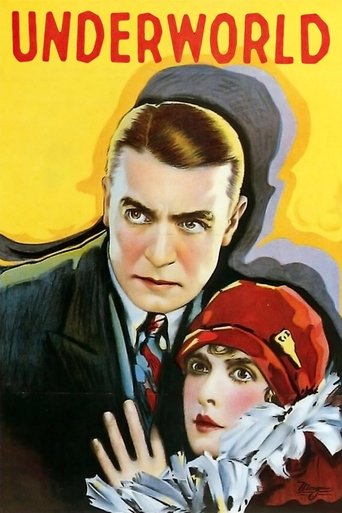
- Josef von Sternberg's 'Underworld' (1927)
- German Expressionist Cinema
- American Gangster Films of the 1920s
- The 'New Youth' (Shin Seinen) literary movement
This film influenced
- Stray Dog (1949) by Akira Kurosawa
- Woman of Tokyo (1933) by Yasujiro Ozu
- Dragnet Girl (1933) by Yasujiro Ozu
Film restoration
The film is well-preserved and has been digitally restored. It is part of the Shochiku archives and has been released as part of major Ozu retrospectives.
Where to watch
- The Criterion Channel
- BFI Player
- Criterion Collection DVD/Blu-ray (Eclipse Series 3: Late Ozu)
- HBO Max (via TCM/Criterion hub)