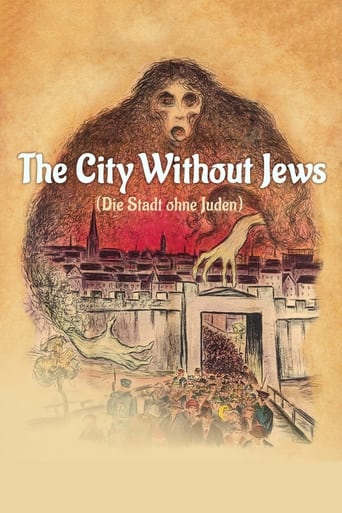
Films
1 film
About Anny Miletty
Anny Miletty worked on one surviving credit: The City without Jews (1924). Her career, though brief, coincided with a significant period in European cinema when Austria was producing socially and politically charged films. She is known to have appeared in at least one major production, the controversial Austrian silent film 'Die Stadt ohne Juden' (The City without Jews) in 1924, which was an adaptation of Hugo Bettauer's novel. The film was notable for its prescient warning about antisemitism in Europe, years before the rise of Nazi Germany. Miletty's role in this historically significant film places her among the actors who participated in early European cinema's attempts to address social issues through the medium of film. Unfortunately, like many actors from this period, especially those with brief careers, detailed records of her life and career are scarce, making her one of the many forgotten talents of early cinema.
The Craft
Milestones
- Appeared in the controversial and historically significant Austrian film 'The City without Jews' (1924)
Best Known For
Iconic Roles
Must-See Films
Working Relationships
Worked Often With
Why They Matter
Impact on Culture
Anny Miletty's contribution to cinema, while small in scope, is culturally significant due to her participation in 'The City without Jews,' a film that has gained historical importance for its early warning about the dangers of antisemitism in Europe. The film, made in Austria in 1924, was remarkably prescient about the horrors that would unfold in the following decades. Although her specific role is not well-documented, by being part of this production, she contributed to. The film itself was banned in several cities upon release and was later destroyed by the Nazis, with only fragments surviving until a complete copy was discovered in 2015.
Lasting Legacy
Anny Miletty's legacy is intrinsically tied to the rediscovery and restoration of 'The City without Jews.' While she may not have achieved lasting fame during her lifetime, her participation in this historically significant film ensures her place in cinema history. The film's survival and restoration have brought renewed attention to all the actors involved, including Miletty, who represent the many forgotten talents of early European cinema. Her story illustrates how even minor contributors to important films can gain historical significance as time passes and the cultural value of their work is reassessed.
Who They Inspired
Due to the brief nature of her career and the limited documentation of her work, it's difficult to trace Anny Miletty's direct influence on other performers. However, her participation in socially conscious cinema during the silent era contributed to the broader movement of using film as a medium for social commentary, which would influence generations of filmmakers and actors who followed.
Off Screen
Very little is known about Anny Miletty's personal life, which is typical for many supporting actors from the silent era who did not achieve major stardom. Like many performers of her time, detailed biographical information was not systematically preserved, especially for those who had brief careers in European cinema.
Did You Know?
- Appeared in 'The City without Jews' (1924), one of the earliest films to warn about the dangers of antisemitism
- The film she appeared in was based on a novel by Hugo Bettauer, who was murdered by a Nazi sympathizer in 1925
- Only fragments of 'The City without Jews' were known to exist until a complete copy was discovered at a Dutch film archive in 2015
- The film was banned in several Austrian cities upon its initial release
- Like many silent era actors, detailed biographical information about Miletty is scarce
- The film she appeared in was one of the first Austrian films to address contemporary social issues
- Her career appears to have been limited to 1924, making her a one-year wonder of silent cinema
Frequently Asked Questions
Who was Anny Miletty?
Austrian actress from the silent film era, known primarily for her appearance in the 1924 film 'The City without Jews.' Her career appears to have been brief, with most records only showing her activity in 1924.
What film is Anny Miletty best known for?
Anny Miletty is best known for her role in 'The City without Jews' (1924), an Austrian silent film that has gained historical significance for its early warning about antisemitism in Europe.
When was Anny Miletty born and when did she die?
Unfortunately, specific birth and death dates for Anny Miletty are not available in historical records, which is common for many supporting actors from the silent era who did not achieve major fame.
What awards did Anny Miletty win?
There are no records of Anny Miletty receiving any major awards or honors, which was typical for many actors in supporting roles during the silent film era.
What was Anny Miletty's acting style?
Specific details about Anny Miletty's acting style are not documented in available historical records, as she appeared to have had a very brief career in cinema.
Why is 'The City without Jews' historically significant?
'The City without Jews' is historically significant as one of the earliest films to warn about the dangers of antisemitism in Europe, made nearly a decade before the Nazis came to power in Germany. The film was remarkably prescient about the horrors to come.