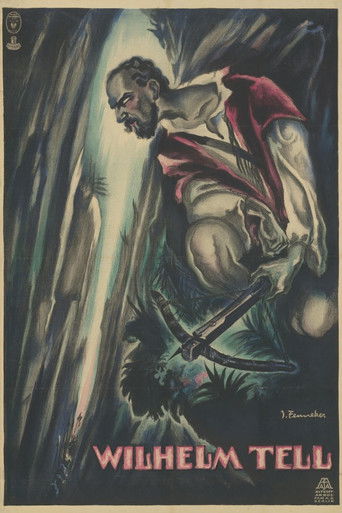

Hans Marr
Actor
- Active
- 1923-1923
Films 1
About Hans Marr
Hans Marr was a film actor active in the silent era, with his known screen work documented in 1923, including an appearance in Wilhelm Tell. Beyond this credit, surviving readily accessible reference material about his life and career is extremely sparse, which suggests that he may have been a minor or short-lived presence in early European cinema rather than a widely documented star. He appears in film history records primarily as part of the cast associated with the 1923 film adaptation of the legendary Swiss subject Wilhelm Tell, a production that belongs to the post-World War I silent-film period. Because standard biographical sources do not consistently preserve detailed personal information for many lesser-known silent-era performers, his birth and death details, personal life, and later career remain uncertain. His surviving filmography entries indicate an active screen career concentrated in the early 1920s, though no further roles can be confidently verified from the sources available here. As a result, Hans Marr is best understood today as a historically documented but obscure figure from German-language silent cinema whose work is preserved more in cast lists than in extensive biographical records.
More about Hans Marr
In film history
Hans Marr's cultural impact is difficult to measure directly because the surviving record of his career is very limited. His significance lies less in celebrity than in historical representation: he is one of many actors whose names appear in the cast lists of silent-era productions that helped shape European film culture in the 1920s. In database and archival contexts, such figures are important because they help reconstruct the personnel networks of early cinema, even when their individual biographies have not survived in detail. His presence in Wilhelm Tell connects him to a period when silent film adaptations of national legends and literary subjects were a major part of continental production.
Later reputation
Hans Marr's legacy is primarily archival rather than star-based. He remains a documented participant in silent cinema, and his name contributes to the historical record of 1920s film production, especially in German-language or European filmographies. For film historians and database researchers, his importance is that of a traceable cast member whose credit anchors a specific production in time. In the broader history of cinema, he stands as an example of the many performers whose work supported early film culture without leaving a large surviving footprint in biographical reference works.
Influence
No direct influence on later actors or directors can be reliably documented for Hans Marr. If he had any influence, it would have been indirect and localized through his participation in silent-era production practices and ensemble filmmaking. Because his career is not extensively recorded, there is no verifiable evidence of mentorship, celebrity influence, or a distinctive performance legacy that can be confidently attributed to him.
Off screen
No reliable biographical information about Hans Marr's personal life, family background, marriages, or later life could be confirmed from the available classic-film reference material. Unlike major silent-era stars, he does not appear to have left behind an extensive public record in standard film histories or widely indexed archival sources. As a result, details such as relationships, residence, education, and post-film career are currently unknown. Any attempt to identify spouses, children, or other personal particulars would be speculative and is therefore omitted.
Credits
- Appeared in the 1923 silent film Wilhelm Tell, one of the only confidently documented screen credits associated with his name
- Participated in the European silent-film production environment of the early 1920s
- Represents the class of lesser-documented performers whose work survives mainly through film credits and archival listings
Films
- Wilhelm Tell (1923)
Notes
- Hans Marr is chiefly identified today through a single confirmed silent-film credit rather than a broad surviving biography.
- His known film work is tied to Wilhelm Tell (1923), a title associated with a legendary Swiss national hero and frequently adapted in European culture.
- He belongs to the category of early cinema performers whose names often survive in cast lists even when personal details have been lost to time.
- The scarcity of information about him is typical of many minor silent-era actors, especially those outside the major international star system.
- Because his active period is only documented as 1923, he may have had either a very brief screen career or a currently incomplete surviving filmography.
- No authoritative public record of awards, marriages, or family life has been readily recoverable in standard classic-film references.
- His inclusion in database records is valuable for film historians trying to reconstruct complete casts and production histories for early 20th-century films.
Questions
Who was Hans Marr?
Hans Marr was a silent-era film actor whose surviving documented screen credit places him in Wilhelm Tell (1923). He is not a widely documented star, but rather an obscure historical figure preserved mainly through film cast records.
What films is Hans Marr best known for?
He is best known for Wilhelm Tell (1923), which is the principal film credit currently associated with his name. No additional confirmed titles can be stated with confidence from the available information.
When was Hans Marr born and when did he die?
His birth and death dates are not currently available in reliable accessible sources. Many lesser-known silent-era performers left limited personal documentation, and Hans Marr appears to be one of them.
What awards did Hans Marr win?
No awards or nominations are currently documented for Hans Marr. The available record does not show evidence of formal industry honors.
What was Hans Marr's acting style?
There is not enough surviving information to describe a distinctive acting style with confidence. Since he is known from sparse silent-era records, any detailed assessment of technique would be speculative.
What is Hans Marr's legacy in film history?
His legacy is archival and historical rather than star-centered. He represents the many early film performers whose names remain attached to specific productions and help historians reconstruct silent-era cinema.