1923 · Unknown

Also available on: Archive.org
Wilhelm Tell

Wilhelm Tell

1923 Unknown Germany
Resistance to tyrannyNational identity and liberationFatherhood and sacrificeJustice versus authorityLegend, myth, and patriotism

Plot

Set against the rugged landscape of the Swiss Alps, the film dramatizes the legendary struggle of William Tell, the peasant huntsman who becomes a symbol of resistance against Habsburg oppression. When the tyrannical Austrian bailiff Gessler demands public submission from the Swiss villagers, Tell refuses to bow before the hated authority and is punished with the famous apple-shot ordeal: he must split an apple placed on his son's head with his crossbow. Tell succeeds, but his defiance places him and his family in greater danger, forcing him into open conflict with the occupiers. As political tensions spread through the cantons, the oppression of the Swiss people deepens into collective revolt, and Tell emerges as both a personal father figure and a national hero. The story builds toward the broader uprising for Swiss freedom, using the legend as an epic patriotic drama rather than a strictly historical biography.

About the Production

Release Date 1923
Production Decla-Bioscop
Filmed In Germany

This was a late silent-era German historical adventure production made during the Weimar Republic, when large-scale prestige films about national legends and historical pageantry were popular. Surviving documentation on its exact production circumstances is limited, and detailed financial data such as budget and box office totals are not reliably documented in standard reference sources. The film is credited to Rudolf Dworsky and Rudolf Walther-Fein in some contemporary and archival references, although the user-supplied identification emphasizes Rudolf Walther-Fein; silent-era credits can vary across sources and surviving prints. As with many German films of the period, it likely relied on studio-built interiors and painted sets rather than extensive location photography, while emphasizing costumes, mass scenes, and alpine imagery through expressive silent cinema staging.

Historical Background

The film was made in 1923, a tumultuous year in Germany marked by hyperinflation, political instability, and intense social strain during the Weimar Republic. In that climate, historical and national legends offered audiences both escapism and symbolic commentary on oppression, unity, and resistance. William Tell, as a figure of Swiss freedom, had long been used in European culture as an emblem of defiance against tyranny, making him especially resonant in a period when questions of authority and national identity were acute. German cinema of the early 1920s was also in a highly creative phase, with studios developing large-scale historical spectacles alongside expressionist and realist works. This film therefore sits at the intersection of national mythmaking, prestige production, and the international rise of German silent cinema.

Why This Film Matters

Wilhelm Tell belongs to the enduring screen history of one of Europe’s most famous freedom legends, and it participates in the cultural transmission of the Tell myth from theater and literature into film. Even if it is not widely seen today, it represents how early cinema adapted canonical stories to legitimize itself as an art form capable of handling heroic history and patriotic drama. Its significance also lies in the participation of performers such as Conrad Veidt, whose silent-era work helped define German screen acting and later influenced international cinema. For scholars, the film is valuable as an example of how Weimar-era filmmakers treated legend as a medium for national identity, spectacle, and moral conflict.

Making Of

Information on the making of this specific film is limited, but it was produced in the context of the German studio system during a period of ambitious historical filmmaking. Productions of this kind typically required extensive costume work, crowd staging, and stylized sets designed to evoke medieval Switzerland while remaining economical for a studio environment. Silent historical dramas also depended heavily on visual composition and intertitles to communicate political conflict and legend, so performances had to be bold and legible in gesture. The presence of Conrad Veidt suggests the production had access to prominent talent, which would have been a selling point for domestic and export audiences alike. Exact details about shooting schedule, set designers, or surviving production anecdotes are not broadly documented in standard references for this title.

Visual Style

Specific cinematographer attribution and shot-by-shot visual analysis are not consistently documented in the readily available sources for this title, but a film of this type from the German silent era would typically emphasize strong contrasts, theatrical blocking, and carefully arranged tableau-style compositions. Historical adventure films of the period often used monumental framing for authority figures and more intimate, emotionally direct imagery for family and resistance scenes. The legend of Tell naturally lends itself to dramatic landscape imagery, archery symbolism, and sharply staged confrontations between individual conscience and public power. Even if surviving prints are scarce, the film likely reflected the era’s emphasis on visual storytelling over dialogue, with intertitles guiding the political and emotional stakes.

Innovations

The film’s main achievement lies in the silent-era handling of a large-scale historical legend through visual storytelling, costume drama, and crowd scenes rather than in a specific patented technical innovation. For a production of this kind, the challenge was to convey political oppression, heroic action, and the emotional weight of the apple-shot episode with clarity and spectacle using only image and intertitle. German cinema of the period was particularly strong at controlled mise-en-scène and expressive staging, and this film would have drawn on those strengths. Its value today is primarily historical, demonstrating the ambitious scope of Weimar-era studio production in the historical-adventure genre.

Music

As a 1923 silent film, Wilhelm Tell would originally have been shown with live musical accompaniment rather than a synchronized recorded score. No universally documented original score is reliably associated with the film in standard accessible references. Like many silent-era presentations, accompaniment may have varied by venue, with theaters using pianists, small ensembles, or compiled cue sheets where available. Any modern screenings would likely rely on reconstructed or newly commissioned accompaniment if the film survives in exhibition-quality form.

Famous Quotes

No verified surviving quote is reliably documented for this silent film.
As a silent film, its dialogue survives, if at all, only in intertitles and contemporary documentation.

Memorable Scenes

  • The legendary apple-shot sequence, in which Tell must shoot an apple from his son's head as a test of obedience and skill.
  • Tell's defiant refusal to submit to oppressive authority, a key symbolic moment in the film's patriotic narrative.
  • The buildup of communal resistance as the Swiss people unite against foreign rule.
  • The climactic movement from personal persecution to collective uprising, framing Tell as both father and national hero.

Did You Know?

  • The film retells one of the most enduring legends in Swiss national identity, centering on the oath of resistance and the famous apple-shot episode.
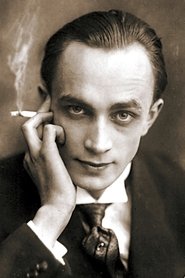
  • Conrad Veidt, one of the major international stars of German silent cinema, appears in the cast, which gives the film additional historical interest for silent-film scholars.
  • The title is often rendered in German as Wilhelm Tell, while English-language references may translate it as William Tell.
  • The film belongs to the wave of historical and literary prestige productions that German studios mounted in the early 1920s to attract domestic and export audiences.
  • Because many silent films from the era survive incompletely or in fragmentary form, complete technical and production records for this title are sparse.
  • The story had already been filmed numerous times before 1923, making this version part of a long cinematic tradition around the William Tell legend.
  • The film is associated with the Weimar Republic period, when German cinema was internationally influential in style, spectacle, and star power.
  • Historical records sometimes differ on exact crediting for silent films, so director attribution may appear with either Rudolf Walther-Fein alone or jointly with Rudolf Dworsky.
  • As a national-legend picture, it likely emphasized patriotic imagery and communal resistance more strongly than psychological realism.
  • The film is notable today mainly for its place in early German cinema and for its casting of well-known silent-era performers rather than for widespread modern circulation.

What Critics Said

Contemporary detailed reviews are not widely available in standard modern reference sources, and the film does not appear to have a large surviving body of critical commentary compared with more famous Weimar productions. As a result, its reputation today is largely historical rather than critically canonical. Modern film historians are more likely to discuss it in terms of German silent cinema, historical-adventure filmmaking, and the career of Conrad Veidt than as a widely circulated masterpiece. In preservation-minded scholarship, titles like this are often valued for what they reveal about lost or underseen strands of national cinema rather than for a continuous tradition of critical acclaim.

What Audiences Thought

Specific audience data from 1923 is not readily documented in accessible sources, so precise box-office or attendance patterns are unknown. Given the popularity of William Tell as a cultural legend and the appeal of historical spectacle in silent-era Germany, the film likely had at least a meaningful niche appeal to audiences interested in patriotic drama and star performances. Its long-term audience visibility, however, appears to have been limited by the survival status and circulation of silent German films, many of which were not regularly revived after the sound era. Today it is primarily of interest to silent-film enthusiasts, archivists, and scholars rather than a general mainstream audience.

Film Connections

Influenced By

  • Friedrich Schiller's play Wilhelm Tell
  • Earlier William Tell stage traditions and European folk legend
  • Historical costume dramas of early European cinema

This Film Influenced

  • Later William Tell film adaptations
  • Subsequent Swiss nationalist screen portrayals
  • Historical adventure films centered on folk heroes

Film Restoration

Preservation status is unclear in widely accessible reference sources; the film is not commonly available and may survive only in limited archival form or incomplete prints. It is not known to be a widely circulated restoration title.

Themes & Topics

William TellSwiss rebellionapple shottyrannymedieval legendHabsburg rule