Rudolf Walther-Fein
Director
- Active
- 1923-1923
Films directed 1
About Rudolf Walther-Fein
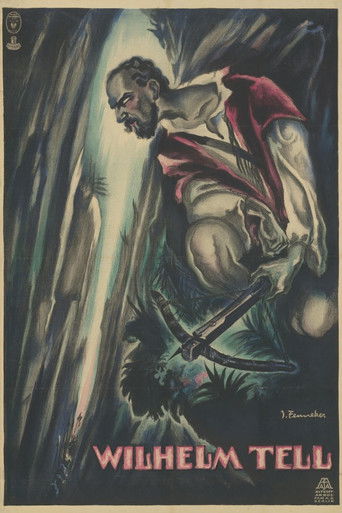
Rudolf Walther-Fein was a German film director of the silent era, active in the early 1920s and associated with the prolific post-World War I period of German cinema. He is known primarily for directing the 1923 historical adventure film Wilhelm Tell, a subject that fit well with the era's taste for literary adaptations, patriotically inflected historical drama, and visually elaborate staging. His surviving filmography is brief and appears to be concentrated in a very short span, which suggests either a limited directorial career or one that is only sparsely documented in surviving records. Because he worked in the silent period, details about his personal life, training, and later career are scarce and do not appear to be widely preserved in standard reference sources. He is one of many craftsmen of early German cinema whose names are attached to specific productions but whose broader biographies remain fragmentary. His credit on Wilhelm Tell places him among the generation of directors working in the culturally rich Weimar-era film industry, where historical subjects and national legends were frequently brought to the screen. Beyond that single identifiable title, information about his later life, professional partnerships, and death is not readily confirmed in mainstream film history references.
More about Rudolf Walther-Fein
Behind the camera
Rudolf Walther-Fein’s directing style cannot be described in detail from surviving documentation, but his known work suggests engagement with the conventions of early 1920s German silent cinema. A film such as Wilhelm Tell would have required an approach centered on strong pictorial composition, clear narrative emphasis, and expressive staging suitable for a wordless medium. Directors of this period typically relied on tableau-like scenes, location or set spectacle, and heightened visual storytelling to convey historical drama and emotional conflict. In the absence of a larger surviving body of work, it is safest to characterize his style as that of a competent silent-era craftsman working within mainstream historical production values rather than as an innovator with a clearly documented personal signature.
In film history
Rudolf Walther-Fein’s cultural impact is chiefly historical rather than widely popular, stemming from his participation in the formative years of German silent cinema. By directing Wilhelm Tell, he contributed to the adaptation of a foundational German-language cultural legend for the screen, helping preserve the era’s interest in national literature, heroic history, and prestige filmmaking. Even when a filmmaker’s full biography is obscure, such credits matter because they map the industrial and artistic ecosystem of Weimar film production. His work stands as part of the broader silent-era movement that shaped how historical narratives were visually interpreted for mass audiences.
Later reputation
Walther-Fein’s legacy is that of a minor but documented silent-era director whose name survives through film history records rather than through a large body of celebrated surviving films. For historians, figures like him are important because they reveal the breadth of personnel involved in early cinema beyond the best-known auteurs. His connection to Wilhelm Tell preserves his place in the lineage of screen adaptations of classic European literature and legend. Although he does not appear to have left a heavily studied personal canon, his credit remains a usable trace of the professional network behind Weimar-era filmmaking.
Influence
There is no strong evidence of a documented direct influence on later filmmakers, but his work belongs to a broader tradition that influenced the visual language of historical cinema in Germany. By contributing to early screen treatments of iconic national material, he participated in a mode of filmmaking that later directors would refine in more elaborate historical epics. His name is also useful to film historians as part of the forgotten workforce whose labor made the silent-era German film industry function. In that sense, his influence is indirect and archival rather than stylistically traceable through a distinctive school of direction.
Off screen
No reliably documented personal-life information about Rudolf Walther-Fein is readily available in standard film reference sources. His marriage history, family background, and private life do not appear to be widely recorded in surviving summaries of silent-era filmmakers. As a result, any detailed account of spouses, children, or personal circumstances would be speculative. He is best understood today through the limited film credit that has survived under his name.
Credits
- Directed the silent historical film Wilhelm Tell (1923)
- Worked during the early Weimar Republic period of German cinema
- Contributed to the tradition of literary and legend-based screen adaptations in silent-era Germany
- Represents a historically documented but sparsely recorded figure from the silent film industry
Films
- Wilhelm Tell (1923)
Notes
- He is specifically associated with the silent film Wilhelm Tell (1923), based on the famous Swiss legend.
- His surviving filmography appears to be extremely short, at least in commonly accessible records.
- He belongs to the Weimar Republic era, one of the most artistically significant periods in German cinema.
- Unlike many more famous contemporaries, he does not appear to have a widely documented personal biography.
- His career illustrates how many silent-era directors remain known only through a small number of production credits.
- He worked in a period when historical dramas and literary adaptations were especially popular in Europe.
- Because he was active in 1923, he was directing during the transitional years leading up to the arrival of sound film.
Questions
Who was Rudolf Walther-Fein?
Rudolf Walther-Fein was a German silent-film director best known for directing Wilhelm Tell (1923). He is a little-documented figure from the Weimar-era film industry, and most surviving references to him come from his film credit rather than from a detailed biography.
What films is Rudolf Walther-Fein best known for?
He is best known for Wilhelm Tell (1923), the one title most consistently associated with his name. His overall surviving filmography appears very limited in accessible records.
When was Rudolf Walther-Fein born and when did he die?
His birth and death dates are not readily available in standard reference sources. The currently accessible record is too sparse to confirm those details with confidence.
What awards did Rudolf Walther-Fein win?
No awards are readily documented for Rudolf Walther-Fein in the commonly available film-history sources. This is not unusual for silent-era directors whose careers were not extensively covered in later reference works.
What was Rudolf Walther-Fein's directing style?
His directing style is not well documented, but his known work fits the visual conventions of early 1920s German silent cinema. That generally meant expressive staging, strong visual storytelling, and an emphasis on historical atmosphere and dramatic tableaux.
What is Rudolf Walther-Fein's legacy in film history?
His legacy lies in being part of the early Weimar-era filmmaking community and in directing a screen version of the classic Wilhelm Tell story. Even though his biography is obscure, his credit helps document the many working directors who shaped silent-era cinema.