
Johanna Terwin
Actor
- Active
- 1918-1918
Films 1
About Johanna Terwin
Johanna Terwin was an Austrian stage and screen actress associated with the German-language silent cinema of the late 1910s. The surviving film record shows her participation in Der ewige Zweifel (1918), placing her within the final years of the First World War era when German and Austrian production was expanding despite severe material shortages. Beyond this documented screen credit, her broader career is not well preserved in standard film reference sources, which is common for many performers of the silent era whose work was incompletely archived. Her name suggests she may also have had a stage background, as many film actors of the period moved between theater and cinema, but detailed biographical documentation has not survived in accessible mainstream databases. Because of the limited record, her exact birth and death details, personal life, and full filmography remain uncertain. Even so, she represents the many early European screen performers whose careers contributed to the artistic and industrial development of silent film while leaving only fragmentary traces in the historical record.
More about Johanna Terwin
In film history
Johanna Terwin's cultural impact is best understood as part of the broader body of early Austrian and German silent-film talent that helped build the foundations of Central European cinema. Even when an actor's individual filmography is sparse or poorly documented, participation in a feature from 1918 places them within an important formative period in film history, when performance styles, production methods, and screen acting conventions were rapidly evolving. Her name also serves as a reminder of how many women working in early cinema remain underrepresented in modern scholarship simply because archival records were lost, incomplete, or never widely circulated. In that sense, her significance lies not only in the work that can be directly attributed to her, but also in what her surviving credit reveals about the broader, often invisible labor of silent-era performers.
Later reputation
Johanna Terwin's lasting legacy is archival rather than star-based: she is part of the historical record of silent European cinema, even though only a small portion of her career is currently visible. For film historians and database curators, names like hers are important because they preserve the personnel history of early productions and help reconstruct the collaborative networks of the era. Her surviving credit in Der ewige Zweifel contributes to our understanding of 1910s German-language film culture and the participation of women in its acting ranks. Her legacy is therefore one of representation and historical continuity, reminding later generations that cinema history includes many performers whose work can only be partially recovered.
Influence
Because so little biographical and critical material survives, Johanna Terwin's direct influence on later actors or directors cannot be reliably documented. Her importance lies more in the cumulative influence of early silent performers like her, who helped establish screen acting as a distinct art form separate from stage performance. The acting conventions developed by performers of her generation shaped the visual grammar of silent cinema, including expressive gesture, facial nuance, and economy of movement. Even without a detailed record, she remains part of the lineage that informed subsequent generations of Central European screen actors.
Off screen
No reliable mainstream biographical information about Johanna Terwin's personal life has been found in standard classic-cinema reference sources. Details about marriages, family background, residence, or later life are not documented in the readily available film historical record. This lack of surviving information is typical for many silent-era performers, especially those with brief or regionally documented careers. Any further claims about her private life would be speculative and are therefore not included here.
Credits
- Screen credit in the silent-era film Der ewige Zweifel (1918)
- Participation in German-language cinema during the wartime silent film period
- Representation of a largely undocumented class of early European film performers whose work survives only in partial archival records
Films
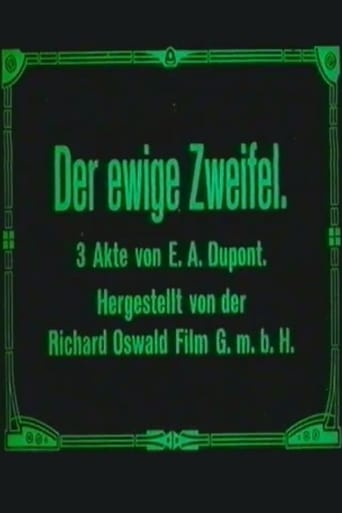
- Der ewige Zweifel (1918)
Notes
- Johanna Terwin is known to surviving film records primarily through one documented silent film credit.
- Her known screen appearance is in Der ewige Zweifel, released in 1918.
- She worked during the final year of the First World War, a difficult period for film production in Central Europe.
- Her name appears to be Austrian, but detailed civil records are not readily available in mainstream film references.
- Many silent-era actors like Terwin have fragmentary records because filmographies and personal papers were often lost.
- Her surviving credit makes her a useful reference point for historians studying lesser-known women in early German-language cinema.
Questions
Who was Johanna Terwin?
Johanna Terwin was an Austrian silent-era actress whose surviving film record includes the 1918 production Der ewige Zweifel. She belongs to the class of early European performers whose careers are only partially preserved in modern film reference sources.
What films is Johanna Terwin best known for?
She is best known for Der ewige Zweifel (1918), which is the film most consistently associated with her in surviving documentation. No broader, reliably documented feature filmography is readily available.
When was Johanna Terwin born and when did she die?
Her birth and death dates are not currently documented in the readily available mainstream historical record. As a result, both date fields remain unknown.
What awards did Johanna Terwin win?
No awards or nominations are documented for Johanna Terwin in the accessible historical record. This is not unusual for silent-era performers whose careers were not widely publicized or whose records were later lost.
What was Johanna Terwin's acting style?
Her individual acting style is not described in surviving criticism or reference sources. As a performer in silent cinema, her work would have relied on the expressive visual techniques typical of the era, but no specific stylistic analysis can be verified.
What is Johanna Terwin's legacy in film history?
Her legacy is primarily archival and historical, representing the many under-documented women who helped shape early European cinema. Even with limited surviving information, her credited work contributes to the reconstruction of silent-film production history.