Der ewige Zweifel
Plot
A man becomes entangled in a painful domestic uncertainty when a woman refuses to tell him whether he is the father of her child. The refusal turns a private relationship into a moral and emotional crisis, forcing the characters to confront trust, responsibility, shame, and the consequences of hidden truth. As the uncertainty persists, the story plays out as a melodrama of suspense and psychological tension rather than open conflict, with the title's "eternal doubt" referring to the corrosive effect of not knowing. Like many late silent-era dramas, the film appears to focus less on overt action than on the emotional damage caused by secrecy and social pressure.
About the Production
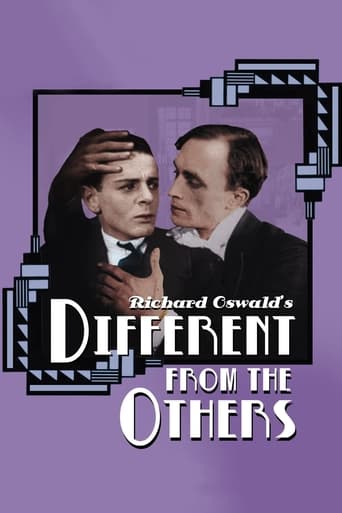
Der ewige Zweifel is a German silent drama directed by Richard Oswald and released in 1918, in the final year of World War I. Surviving documentation is limited, and many production details such as shooting dates, sets, and exact locations are not widely preserved in standard reference sources. The film is associated with Oswald's prolific work in socially charged and melodramatic subjects during the German silent era, when filmmakers often used intimate family conflicts to explore broader anxieties about morality, sexuality, and social reputation. Because of the age of the production and the scarcity of archival records, information about crew, soundtrack accompaniment, and original exhibition materials remains incomplete.
Historical Background
Der ewige Zweifel was made in 1918, at the end of World War I, when Germany was experiencing severe political, social, and economic upheaval. German cinema during this period was evolving rapidly, with filmmakers using melodrama, psychological conflict, and moral controversy to engage audiences living through uncertainty and loss. Richard Oswald was one of the directors helping to define the mature silent-era German feature film, often bringing topics of sexuality, ethics, and social judgment into popular entertainment. The film's focus on paternity uncertainty also reflects a broader cultural fascination with questions of legitimacy, family stability, and gendered trust in a period when social norms were under strain.
Why This Film Matters
Although not among the best-known German silent films, Der ewige Zweifel is culturally significant as an example of Richard Oswald's interest in emotionally and socially charged narrative material. Films like this helped establish the German cinema of the 1910s and early 1920s as a space where intimate domestic drama could carry substantial psychological weight. Its premise also reveals how silent-era filmmakers could build suspense around a single moral dilemma, turning questions of paternity, secrecy, and accountability into a potent cinematic engine. For historians, it is valuable as part of the broader map of early German melodrama and as a reminder of how many films from the period survive only in fragments of documentation.
Making Of
Little detailed behind-the-scenes information has survived in mainstream reference sources for Der ewige Zweifel, which is common for many German films from the 1910s. What is known is that the film was made under the direction of Richard Oswald, whose career during this period was characterized by rapid production and a willingness to tackle controversial themes. Oswald frequently worked with actors drawn from stage traditions, and the listed cast suggests a performance style centered on expressive facial acting and emotionally charged domestic scenes. Given the wartime context of 1918, the production would also have been shaped by the material constraints and instability of the German film industry in the closing year of the war.
Visual Style
No detailed cinematographic analysis survives in standard sources for this title, but as a German silent drama from 1918 it would likely have used carefully staged interiors, expressive close-ups, and visually legible gesture to communicate emotional conflict. The emphasis on secrecy and doubt suggests a style that could rely on framing, reaction shots, and contrasts between characters in order to heighten psychological tension. German silent filmmaking of this era often favored strong composition and theatrical clarity, especially in intimate melodramas where faces and body language carried the narrative. Any surviving prints or stills would be especially valuable for understanding the film's visual approach.
Innovations
The film does not appear to be associated with a specific technical innovation. Its significance lies more in narrative and thematic handling than in special effects or formal experimentation. Like many German silent dramas of the period, its craft would have depended on performance, editing continuity, and carefully arranged tableau composition to express emotional nuance. If a surviving print exists, its historical value would be in its representation of silent-era melodramatic technique rather than in any known technological breakthrough.
Music
As a silent film, Der ewige Zweifel did not have an original synchronized soundtrack. In its original exhibition, it would have been accompanied by live music from a pianist, small ensemble, or theater orchestra depending on the venue. Specific cue sheets or commissioned scores have not been widely documented in accessible reference sources. Any modern presentation would typically use a newly prepared accompaniment or archival-style silent-film score if the film survives and is screened today.
Famous Quotes
No widely documented surviving quotes are available from this silent film.
As a silent film, its dramatic emphasis would have been carried by intertitles rather than spoken dialogue.
Memorable Scenes
- The central dramatic confrontation in which the woman withholds the truth about whether the man is the father of her child.
- The escalating moments of silence and uncertainty that turn private suspicion into emotional crisis.
Did You Know?
- The film was directed by Richard Oswald, one of the most prolific and versatile German directors of the silent era.
- Its title translates roughly as "The Eternal Doubt" or "The Everlasting Doubt," reflecting the film's central emotional conflict.
- The known plot is built around a single devastating uncertainty: a woman does not tell a man whether he is the father of her child.
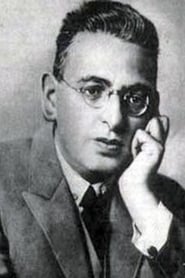
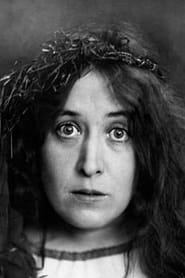
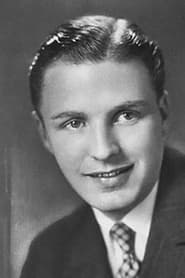
- The cast includes Leonhard Haskel, Johanna Terwin, and Nelly Guttmann, all associated with German stage and screen acting of the period.
- The film belongs to Oswald's body of socially attentive melodramas, which often dealt with taboo or morally fraught subjects.
- It was released in 1918, during the final months of Imperial Germany and amid the disruptions of wartime production and exhibition.
- Like many silent films of its era, it likely relied heavily on expressive acting, intertitles, and visual symbolism to convey emotional ambiguity.
- The film is not as widely documented as Oswald's later, better-known works, which makes it of special interest to archival researchers and silent-film historians.
- Its survival status is not clearly established in widely used public references, making it potentially rare or difficult to access today.
What Critics Said
Contemporary critical reception is not well documented in widely available modern sources, and the film does not appear to have left behind a substantial body of preserved reviews in English-language reference materials. Richard Oswald's films were often noted for their topicality and emotional directness, and Der ewige Zweifel likely fit within that reputation as a serious melodrama rather than a purely sensational work. In modern scholarship, the film is mainly of interest for its authorship, its place in wartime German production, and its thematic engagement with paternity and uncertainty. Because the film is obscure and potentially difficult to view, its current reputation is more archival than critical, with evaluation limited by access.
What Audiences Thought
Audience response from the original 1918 release is not well preserved in readily accessible records. Given Richard Oswald's popularity and the strong melodramatic premise, the film likely appealed to audiences interested in emotionally intense domestic stories and moral dilemmas. Silent-era viewers were accustomed to expressive, high-stakes narratives, and the uncertainty around fatherhood would have provided a powerful emotional hook. Today, audience reception is difficult to gauge because the film is obscure and not widely available on contemporary streaming or home-video platforms.
Film Connections
Influenced By
- German stage melodrama
- Silent-era domestic dramas
- Contemporary social problem films from the 1910s
- Richard Oswald's earlier socially conscious films
This Film Influenced
- Later paternity melodramas
- Domestic psychological dramas in silent cinema
- German family dramas of the Weimar era
More from Richard Oswald
View allFilm Restoration
The preservation status is unclear in widely available public references. The film appears to be obscure and may survive only incompletely or in limited archival holdings, but a definitive public record confirming a full surviving print is not readily available from standard sources. Researchers should consult film archives and specialized silent-film catalogs for the most current holdings information.