
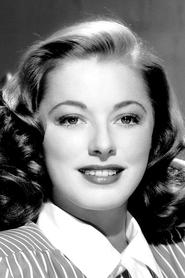
Eleanor Parker
Actor
Born: June 26, 1920 in Cedarville, Ohio, USA Died: December 9, 2013 Active: 1941-1991 Birth Name: Eleanor Jean Parker
Films
1 film
About Eleanor Parker
Versatile and highly acclaimed American actress known as 'Woman of a Thousand Faces' for her remarkable ability to transform into vastly different characters. Born in Cedarville, Ohio, she began her career after winning a contract with Warner Bros. In 1941, quickly establishing herself as a serious dramatic talent. Her breakthrough came with the film noir 'Caged' (1950), earning her first Academy Award nomination as a hardened prison inmate. Throughout the 1950s, Parker delivered powerful performances in films like 'Detective Story' (1951), 'Interrupted Melody' (1955), and 'The Man with the Golden Arm' (1955), showcasing her range from dramatic to musical roles. She received three Oscar nominations for Best Actress, cementing her status as one of Hollywood's most respected actresses of the Golden Age. Parker continued working in film and television through the 1960s and 1970s, with her final film appearance in 1991. Her legacy endures as technically skilled and emotionally resonant actresses of her generation.
The Craft
On Screen
Parker was renowned for her chameleon-like ability to completely transform into her characters, earning her the nickname 'Woman of a Thousand Faces.' She employed method acting techniques, immersing herself completely in each role through intensive character study and physical transformation. Her performances were marked by emotional authenticity, precise diction, and a remarkable ability to convey complex psychological states through subtle facial expressions and body language. Parker particularly excelled at portraying women facing extreme circumstances - from hardened criminals to delicate artists - bringing depth and humanity to even the most challenging roles.
Milestones
- Academy Award nomination for Best Actress for 'Caged' (1950)
- Academy Award nomination for Best Actress for 'Detective Story' (1951)
- Academy Award nomination for Best Actress for 'Interrupted Melody' (1955)
- Volpi Cup for Best Actress at Venice Film Festival for 'Caged'
- Star on Hollywood Walk of Fame at 6340 Hollywood Boulevard
- Leading role in controversial 'The Man with the Golden Arm' (1955)
Best Known For
Iconic Roles
Must-See Films
Accolades
Won
- Volpi Cup for Best Actress, Venice Film Festival (1950) for 'Caged'
- Golden Globe nomination for Best Actress (1951) for 'Caged'
- Golden Globe nomination for Best Actress (1952) for 'Detective Story'
- Golden Globe nomination for Best Actress (1956) for 'Interrupted Melody'
Nominated
- Academy Award nomination for Best Actress (1951) for 'Caged'
- Academy Award nomination for Best Actress (1952) for 'Detective Story'
- Academy Award nomination for Best Actress (1956) for 'Interrupted Melody'
- BAFTA nomination for Best Foreign Actress (1956) for 'Interrupted Melody'
Special Recognition
- Star on Hollywood Walk of Fame (1960)
- Golden Palm Stars on Palm Springs Walk of Stars
- Inducted into Ohio Women's Hall of Fame
Working Relationships
Worked Often With
Studios
Why They Matter
Impact on Culture
Eleanor Parker significantly influenced mid-20th century cinema through her groundbreaking portrayals of complex female characters at a time when Hollywood often limited women to stereotypical roles. Her performance in 'Caged' helped establish the women-in-prison film genre while bringing feminist themes to mainstream audiences. In 'The Man with the Golden Arm,' she tackled the controversial subject of drug addiction with remarkable nuance, helping to break taboos in American cinema. Her ability to play characters across the moral spectrum - from victims to villains - expanded the possibilities for women in film and demonstrated that actresses could carry complex, psychologically demanding roles that had previously been the domain of male actors.
Lasting Legacy
Eleanor Parker's legacy endures as one of Hollywood's most versatile and technically accomplished actresses of the Golden Age. Her three Academy Award nominations for Best Actress in five years (1950-1955) place her among the most critically recognized performers of her era. The nickname 'Woman of a Thousand Faces' has become synonymous with her remarkable range and transformative abilities. Film historians often cite her as an underrated genius whose technical precision and emotional depth influenced subsequent generations of method actors. Her performances continue to be studied in acting schools as examples of character transformation and psychological authenticity. Parker's work helped pave the way for more complex and varied roles for women in American cinema.
Who They Inspired
Parker's dedication to character transformation influenced actors like Meryl Streep and Cate Blanchett, who later became known for their own chameleon-like abilities. Her method approach to roles, particularly her willingness to undergo physical and emotional transformation for characters, helped legitimize method acting in mainstream Hollywood. Younger actresses studying her work often cite her ability to disappear completely into roles as inspiration for their own craft. Her success in both dramatic and musical roles demonstrated that serious actresses could successfully cross genre boundaries, influencing later performers like Barbra Streisand and Liza Minnelli.
Off Screen
Eleanor Parker was married four times throughout her life and had four children. Her first marriage to Fred Losee in 1943 lasted only a year. She then married producer Bert E. Friedlob in 1946, with whom she had three sons before their divorce in 1953. Her third marriage to artist Paul Clemens lasted from 1954 to 1965 and produced one adopted daughter. Her final marriage was to actor Raymond Burr in 1966, which ended in divorce in 1971. Despite her busy career, Parker was known as a devoted mother who prioritized her children's privacy and normal upbringing away from Hollywood glamour.
Education
Graduated from Cedarville High School in Ohio; studied acting at the Rice Summer Theatre on Martha's Vineyard and the Actors Lab in Los Angeles
Family
- Fred Losee (1943-1944)
- Bert E. Friedlob (1946-1953)
- Paul Clemens (1954-1965)
- Raymond Burr (1966-1971)
Did You Know?
- She was nicknamed 'Woman of a Thousand Faces' by the press for her ability to transform into completely different characters
- She learned to sing opera for her role as Marjorie Lawrence in 'Interrupted Melody' but her singing voice was dubbed by Eileen Farrell
- She was originally offered the role of Marion in 'Psycho' (1960) but turned it down, which went to Janet Leigh
- Her role in 'The Man with the Golden Arm' was one of the first mainstream Hollywood films to deal with drug addiction
- She was a trained concert pianist before becoming an actress
- She appeared in over 80 films and television shows during her career
- She was one of the few actresses to work successfully with all major Hollywood studios
- Her performance in 'Caged' was so convincing that prison officials wrote to congratulate her on her authentic portrayal
- She was a close friend of Marilyn Monroe and was one of the last people to speak with her before her death
- She turned down the role of Mrs. Robinson in 'The Graduate' (1967)
In Their Own Words
I've always believed that the less the audience knows about the real me, the more they'll believe in the characters I play on screen.
Acting is not about being someone different. It's finding the similarity in what is apparently different, then finding myself in there.
I never wanted to be a star. I wanted to be an actress. Stars have a way of burning out, but good actresses can work forever.
Every role is a new life. You have to live it, breathe it, become it. That's the only way to make it real.
The camera doesn't lie. It knows when you're faking it. That's why I always tried to find the truth in every character.
Frequently Asked Questions
Who was Eleanor Parker?
Highly versatile American actress known as 'Woman of a Thousand Faces' for her remarkable ability to transform into diverse characters. She received three Academy Award nominations for Best Actress and was particularly renowned for her performances in 'Caged,' 'Detective Story,' and 'Interrupted Melody' during Hollywood's Golden Age.
What films is Eleanor Parker best known for?
Titles linked here include Caged (1950), Detective Story (1951).
When was Eleanor Parker born and when did she die?
Born June 26, 1920; died December 9, 2013.
What awards did Eleanor Parker win?
Eleanor Parker received three Academy Award nominations for Best Actress and won the Volpi Cup for Best Actress at the Venice Film Festival for 'Caged.' She also received a star on the Hollywood Walk of Fame and multiple Golden Globe nominations throughout her career.
What was Eleanor Parker's acting style?
Parker was renowned for her method acting approach and chameleon-like ability to completely transform into her characters. She employed intensive character study, physical transformation, and emotional authenticity, earning her the nickname 'Woman of a Thousand Faces' for her versatility across dramatic, musical, and genre films.
How many times was Eleanor Parker married?
Eleanor Parker was married four times: to Fred Losee (1943-1944), producer Bert E. Friedlob (1946-1953), artist Paul Clemens (1954-1965), and actor Raymond Burr (1966-1971). She had four children - three biological sons and one adopted daughter.
What was Eleanor Parker's role in The Man with the Golden Arm?
In 'The Man with the Golden Arm' (1955), Parker played Zosh Machine, the manipulative wife of Frank Sinatra's character, a heroin addict trying to reform. Her performance was particularly notable for its complexity in portraying a woman whose own disability and emotional needs contribute to her husband's struggles.
Why was Eleanor Parker called the Woman of a Thousand Faces?
Parker earned this nickname from the press and critics for her extraordinary ability to completely transform herself for each role, often becoming unrecognizable from one film to the next. Her versatility allowed her to play everything from hardened criminals to delicate opera singers with equal authenticity.