
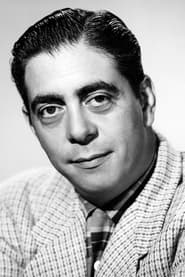
Robert Strauss
Actor
Born: November 8, 1913 in New York City, New York, USA Died: February 20, 1975 Active: 1940s-1970s
Films
1 film
About Robert Strauss
Prolific American character actor: over three decades in Hollywood's Golden Age. Born and raised in New York City, he began his entertainment career on Broadway before making the transition to film following his service in the U.S. Army during World War II. His breakthrough performance came as the scheming Sergeant 'Pinky' in Billy Wilder's acclaimed war drama 'Stalag 17' (1953), which earned him an Academy Award nomination for Best Supporting Actor and established him as one of Hollywood's most reliable character actors. Throughout the 1950s and 1960s, Strauss appeared in numerous classic films, often portraying streetwise New York types with a distinctive blend of comedy and pathos. His role in 'The Man with the Golden Arm' (1955) alongside Frank Sinatra further cemented his reputation for bringing authenticity to supporting characters. As the film industry evolved, Strauss successfully transitioned to television, appearing in popular series throughout the 1960s and early 1970s. Despite never achieving leading man status, his memorable performances and distinctive acting style made him a familiar face to generations of moviegoers and television viewers.
The Craft
On Screen
Strauss was known for his naturalistic, street-smart acting style that brought authenticity to every role. He specialized in playing working-class characters, often with a New York edge, using his distinctive voice and timing to create memorable supporting performances. His approach blended comedic timing with dramatic depth, allowing him to excel in both comic relief and serious dramatic moments. Critics often praised his ability to steal scenes with minimal dialogue, relying on facial expressions and physical comedy to convey character.
Milestones
- Academy Award nomination for 'Stalag 17' (1953)
- Memorable role as Sparrow in 'The Man with the Golden Arm' (1955)
- Extensive Broadway career before films
- Successful transition to television in the 1960s
- Over 100 film and television appearances
Best Known For
Iconic Roles
Must-See Films
Accolades
Won
- Academy Award nomination for Best Supporting Actor for 'Stalag 17' (1953)
Nominated
- Academy Award for Best Supporting Actor - 'Stalag 17' (1953)
- Golden Globe nomination for Best Supporting Actor - 'Stalag 17' (1953)
Special Recognition
- Hollywood Walk of Fame star (located at 6555 Hollywood Blvd)
Working Relationships
Worked Often With
Studios
Why They Matter
Impact on Culture
Robert Strauss made a significant impact on Hollywood's character acting tradition, helping to establish the archetype of the streetwise, comic relief character in post-war American cinema. His performance in 'Stalag 17' set a new standard for supporting roles in war films, demonstrating how secondary characters could drive narrative tension and provide crucial emotional balance. His work in film noir and dramas of the 1950s contributed to the gritty realism that defined the genre, bringing authentic urban sensibility to Hollywood productions. As television emerged as a dominant medium, Strauss successfully adapted his style for the small screen, helping to bridge the gap between film and television acting styles.
Lasting Legacy
Robert Strauss left an enduring legacy as one of Hollywood's most recognizable character actors of the mid-20th century. His Academy Award nomination for 'Stalag 17' remains. His ability to seamlessly transition between comedy and drama influenced generations of supporting actors who followed. The authenticity he brought to working-class characters helped expand the range of American film representation beyond glamorous leads. His extensive filmography serves as a valuable record of American cinema's Golden Age, with his performances providing memorable moments in dozens of classic films.
Who They Inspired
Strauss influenced numerous character actors who followed, particularly in his ability to create fully realized characters with limited screen time. His naturalistic style opposed the more theatrical approach common in earlier Hollywood films, paving the way for the method acting techniques that would dominate in the 1950s and beyond. Younger actors studied his technique for scene-stealing through subtle gestures and timing rather than overt performance. His success in both film and television demonstrated the viability of cross-medium careers for character actors, influencing how subsequent generations approached their careers in the entertainment industry.
Off Screen
Robert Strauss was married twice during his lifetime. He maintained a relatively private personal life despite his public career. His experiences serving in the U.S. Army during World War II influenced many of his later military-themed roles. He was known among his colleagues as a consummate professional who brought dedication to every performance, regardless of the size of the role.
Education
Educated in New York City public schools, attended local acting schools and workshops in the 1930s
Family
- Audrey Strauss (1936-1946)
- Virginia B. Strauss (1947-1975)
Did You Know?
- Was a decorated veteran of World War II, serving in the U.S. Army
- Began his career as a stand-up comedian in New York nightclubs
- His role in 'Stalag 17' was originally written for another actor
- Appeared in over 100 films and television shows during his career
- Was a close friend of William Holden, his co-star in 'Stalag 17'
- Often played characters named 'Sparrow' or similar bird-related names
- Was one of the first Broadway actors to successfully transition to Hollywood character roles
- His distinctive New York accent became one of his trademark features
- Continued working in television until shortly before his death
- Received a star on the Hollywood Walk of Fame for his contributions to film
In Their Own Words
In 'Stalag 17': 'I'm a born loser. I'm a born loser!'
On acting: 'You don't have to be the star to be important to the story'
On his Oscar nomination: 'It's nice to be recognized, but the work is what matters'
Frequently Asked Questions
Who was Robert Strauss?
American character with credits in this catalog. He had a prolific career spanning three decades, appearing in over 100 films and television shows, often playing streetwise New York types with a distinctive blend of comedy and drama.
What films is Robert Strauss best known for?
Titles linked here include Stalag 17 (1953), The Man with the Golden Arm (1955).
When was Robert Strauss born and when did he die?
Born November 8, 1913; died February 20, 1975.
What awards did Robert Strauss win?
Robert Strauss received an Academy Award nomination for Best Supporting Actor for his performance in 'Stalag 17' (1953) and a Golden Globe nomination for the same role. He also received a star on the Hollywood Walk of Fame for his contributions to film.
What was Robert Strauss's acting style?
Strauss was known for his naturalistic, street-smart acting style that brought authenticity to working-class characters. He specialized in blending comedic timing with dramatic depth, often using his distinctive New York accent and physical comedy to create memorable supporting performances.
Did Robert Strauss serve in the military?
Yes, Robert Strauss served in the U.S. Army during World War II, and his military experience influenced many of his later roles in war films and military-themed productions.
How did Robert Strauss transition from Broadway to Hollywood?
After establishing himself on Broadway in the 1930s and early 1940s, Strauss served in World War II and then moved to Hollywood, where his stage experience helped him secure character roles. His breakthrough came with 'Stalag 17,' which showcased his ability to translate stage presence to film.