Dallas Bower
Director
Born: November 25, 1908 in London, England Died: October 18, 1970 Active: 1930-1949
Films
1 film
About Dallas Bower
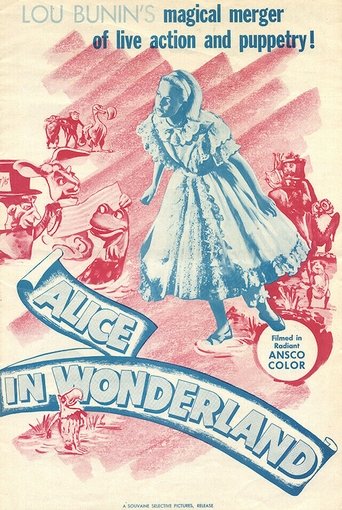
Dallas Bower (1908-1970) was a British film director, producer, and screenwriter who made significant contributions to British cinema during the 1930s and 1940s. Beginning his career as a film editor in the early 1930s, Bower quickly transitioned to directing, establishing himself as a versatile filmmaker capable of handling various genres. His early work included documentaries and feature films that showcased his technical prowess and storytelling abilities. During World War II, he contributed to the war effort by directing propaganda films, including the co-directed 'The Lion Has Wings' (1939). Bower's most celebrated achievement came in 1949 with his ambitious adaptation of Lewis Carroll's 'Alice in Wonderland,' which blended live-action with animation techniques that were innovative for the time. Despite the film's mixed critical reception, it demonstrated Bower's willingness to experiment with cinematic forms. His career, while not extensively documented, represents an important chapter in British film history, particularly in the realm of literary adaptations and technical innovation.
The Craft
Behind the Camera
Dallas Bower's directing style was characterized by technical innovation and a willingness to experiment with cinematic forms. He demonstrated particular skill in blending different media, most notably in his combination of live-action and animation in 'Alice in Wonderland.' His approach to literary adaptations was faithful yet creative, seeking to capture the essence of the source material while utilizing contemporary cinematic techniques. Bower's work often showed attention to visual detail and a understanding of how to translate complex narratives to the screen.
Milestones
- Directed the innovative 1949 adaptation of 'Alice in Wonderland'
- Co-directed wartime propaganda film 'The Lion Has Wings' (1939)
- Early work as film editor transitioning to director
- Pioneered blend of live-action and animation techniques
- Contributed to British documentary movement in the 1930s
Best Known For
Must-See Films
Accolades
Special Recognition
- Recognized for contributions to British wartime cinema
- Noted for technical innovation in film adaptation
Working Relationships
Worked Often With
Why They Matter
Impact on Culture
Dallas Bower's most significant cultural impact came through his 1949 adaptation of 'Alice in Wonderland,' which represented one of the earliest attempts to blend live-action with animation in a feature film context. This technical approach influenced subsequent filmmakers working in hybrid media formats. His wartime contributions through propaganda films helped shape British morale during World War II, demonstrating cinema's power as a tool for national unity. Bower's work in the documentary movement of the 1930s also contributed to the development of British documentary filmmaking traditions.
Lasting Legacy
Dallas Bower's legacy in film history is primarily defined by his technical innovations and his ambitious approach to literary adaptations. His 'Alice in Wonderland' remains a curiosity of cinema history, representing a unique attempt to bring Carroll's fantastical world to life using the limited technology of the late 1940s. While not as widely remembered as some of his contemporaries, Bower's work exemplifies the creativity and experimentation that characterized British cinema during its golden age. His contributions to wartime cinema and documentary filmmaking also secured his place in the broader narrative of British film history.
Who They Inspired
Bower's innovative blending of live-action and animation in 'Alice in Wonderland' prefigured later developments in hybrid filmmaking techniques. His work demonstrated the potential of combining different media forms, influencing subsequent generations of filmmakers working with mixed media. His approach to literary adaptations, balancing fidelity with cinematic innovation, provided a model for future directors tackling classic literature. While his direct influence on specific filmmakers is not extensively documented, his technical experiments contributed to the evolution of cinematic storytelling techniques.
Off Screen
Dallas Bower maintained a relatively private personal life away from the public eye. Born and raised in London, he developed an early interest in the emerging art of cinema. His career in the British film industry spanned nearly two decades, during which he worked primarily in England. Bower's dedication to his craft was evident in his diverse filmography and willingness to tackle challenging projects. He passed away in 1970 at the age of 61, leaving behind a legacy of innovative filmmaking.
Education
Educational background not extensively documented in available sources
Family
- Information not publicly available
Did You Know?
- The 1949 'Alice in Wonderland' was one of the first feature films to extensively combine live-action with animation
- Bower began his career as a film editor before transitioning to directing
- His wartime propaganda work contributed to the British war effort during WWII
- The 'Alice in Wonderland' adaptation faced distribution challenges in the United States due to competition with Disney's animated version
- Bower worked primarily with British production companies throughout his career
- His film 'The Song of the Road' (1937) was part of the British documentary movement
- Despite his technical innovations, Bower remained relatively unknown to mainstream audiences
- His directorial active years covered less than two decades but covered multiple genres
In Their Own Words
Information on famous quotes not extensively documented in available sources
Frequently Asked Questions
Who was Dallas Bower?
British on YTB.my.
What films is Dallas Bower best known for?
Titles linked here include Alice in Wonderland (1949), The Lion Has Wings (1939).
When was Dallas Bower born and when did he die?
Born November 25, 1908; died October 18, 1970.
What awards did Dallas Bower win?
While specific awards are not extensively documented, Bower was recognized for his technical innovations and contributions to British wartime cinema, particularly through his propaganda films.
What was Dallas Bower's directing style?
Bower's directing style was characterized by technical innovation, particularly his blend of live-action and animation, and his creative approach to literary adaptations that balanced fidelity with cinematic experimentation.