
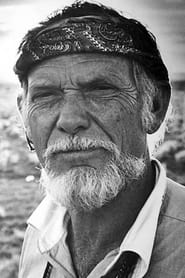
Sam Peckinpah
Director
Born: February 6, 1925 in Fresno, California, USA Died: December 28, 1984 Active: 1961-1984 Birth Name: David Samuel Peckinpah
Films
1 film
About Sam Peckinpah
Sam Peckinpah was born David Samuel Peckinpah on February 6, 1925, in Fresno, California, and would become one of American cinema's most controversial and influential directors. After serving in the Marine Corps during World War II and earning a master's degree in drama from USC, he began his career writing and directing for television series like 'Gunsmoke' and 'The Rifleman' in the late 1950s. His directorial debut came with 'The Deadly Companions' (1961), followed by 'Ride the High Country' (1962) which established his reputation for reimagining the Western genre. Peckinpah achieved international fame and notoriety with 'The Wild Bunch' (1969), a revolutionary Western known for its graphic violence and complex moral themes that challenged censorship standards. Throughout the 1970s, he directed several controversial but influential films including 'Straw Dogs' (1971), 'The Getaway' (1972), and 'Pat Garrett & Billy the Kid' (1973), cementing his reputation as 'Bloody Sam' for his unflinching portrayal of violence. His career was marked by battles with studios, alcoholism, and a reputation for being difficult to work with, yet he created some of the most visually stunning and thematically complex films of his era. Peckinpah's final film was 'The Osterman Weekend' (1983), and he died of a heart attack on December 28, 1984, leaving behind a controversial but undeniable legacy that fundamentally changed American cinema.
The Craft
Behind the Camera
Sam Peckinpah's directing style was characterized by visceral, graphic violence often presented in slow motion, which became his signature technique. He was known for his preference for natural lighting, handheld camera work, and a documentary-like realism in his action sequences. Peckinpah's films frequently explored themes of masculinity, honor, betrayal, and the violent nature of humanity, often set against the backdrop of the American West or contemporary society. His editing style was revolutionary, using rapid cuts and overlapping action to create a sense of chaos and intensity that influenced action cinema for decades. Peckinpah approached filmmaking with a poet's sensibility combined with a journalist's eye for detail, creating films that were both brutally honest and visually stunning.
Milestones
- Directed 'The Wild Bunch' (1969), considered one of the greatest Westerns ever made
- Pioneered graphic violence and slow-motion action sequences in mainstream cinema
- Created morally complex characters that challenged traditional genre conventions
- Battled studio censorship while maintaining artistic vision
- Influenced generations of action and thriller directors
- Revolutionized the Western genre with realistic, brutal portrayals of the American frontier
- Won Best Director at Cannes Film Festival for 'Bring Me the Head of Alfredo Garcia'
Best Known For
Must-See Films
Accolades
Won
- Cannes Film Festival Best Director (1974) for 'Bring Me the Head of Alfredo Garcia'
- National Board of Review Award for Best Director (1969) for 'The Wild Bunch'
Nominated
- Academy Award nomination for Best Original Screenplay (1970) for 'The Wild Bunch'
- BAFTA nomination for Best Direction (1970) for 'The Wild Bunch'
- Directors Guild of America Award nomination for Outstanding Directorial Achievement in Motion Pictures (1970) for 'The Wild Bunch'
- Writers Guild of America Award nomination for Best Original Drama (1970) for 'The Wild Bunch'
Special Recognition
- National Film Registry selection for 'The Wild Bunch' (1999)
- Hollywood Walk of Fame star (1994)
- Ranked #82 on Premiere magazine's '100 Greatest Performances of All Time' list for his cameo in 'The Wild Bunch'
- AFI's 100 Greatest American Films ranking for 'The Wild Bunch' (1998)
Working Relationships
Worked Often With
Studios
Why They Matter
Impact on Culture
Sam Peckinpah revolutionized American cinema with his unflinching portrayal of violence and complex moral themes, fundamentally challenging the censorship standards of the Production Code and helping establish the new rating system that allowed for more adult content. His depiction of the American West as a brutal, corrupt landscape rather than a romanticized frontier fundamentally altered the Western genre and influenced how violence would be portrayed in mainstream cinema. Peckinpah's editing techniques, particularly his use of slow-motion violence, became so influential that they created a new visual language for action sequences that directors worldwide would emulate. His films reflected the social upheaval of the 1960s and 1970s, questioning traditional notions of heroism, masculinity, and American identity at a time when the country was grappling with Vietnam, civil rights, and generational conflict.
Lasting Legacy
Sam Peckinpah's legacy lies in his uncompromising artistic vision and his role in pushing the boundaries of acceptable content in mainstream cinema, creating a template for the modern action film that persists to this day. He is credited with establishing the aesthetic of graphic violence and rapid editing that became staples of American action cinema, influencing countless directors from Hong Kong to Hollywood. His exploration of masculine identity, violence, and moral ambiguity paved the way for the more psychologically complex films of the 1970s New Hollywood era and beyond. Despite being controversial during his lifetime, Peckinpah is now recognized as. His work continues to spark debate about the relationship between violence and art, cementing his status as a filmmaker whose impact extends far beyond his own troubled lifetime.
Who They Inspired
Peckinpah's influence can be seen in the work of directors like Quentin Tarantino, Robert Rodriguez, John Woo, and Kathryn Bigelow, who have all cited his impact on their approach to violence and action sequences. His thematic concerns with honor, betrayal, and the nature of violence influenced filmmakers as diverse as Martin Scorsese, Clint Eastwood, and Michael Mann, who incorporated his moral ambiguity and visual style into their own work. The 'Peckinpah style' of editing and action choreography became so pervasive that it's now considered part of the visual language of action cinema, with his slow-motion violence sequences being referenced and parodied in everything from Hong Kong martial arts films to contemporary Hollywood blockbusters. His willingness to challenge censorship and studio control also inspired a generation of filmmakers to fight for artistic integrity in the face of commercial pressures, making him a hero to independent-minded directors who followed in his footsteps.
Off Screen
Sam Peckinpah's personal life was as turbulent and intense as his films, marked by alcoholism, drug use, and volatile relationships that often mirrored the themes of alienation and violence present in his work. He was married three times and had five children, with his relationships frequently ending in acrimony. Peckinpah was known for his intense personality and often clashed with actors, producers, and studio executives, earning him a reputation as one of Hollywood's most difficult directors. Despite his personal demons, many who worked with him described him as a passionate artist deeply committed to his vision, capable of extraordinary kindness and cruelty in equal measure. His struggles with addiction and the Hollywood system reflected the outsider characters he frequently portrayed in his films.
Education
Family
- Marie Selland (1947-1955)
- Begoña Palacios (1958-1960)
- Joie Gould (1965-1972)
Did You Know?
- He served as a Marine in China after World War II, an experience that influenced his later films
- His cousin was actor Robert Lansing
- He was fired from directing 'The Cincinnati Kid' (1965) and replaced by Norman Jewison
- His original cut of 'Pat Garrett & Billy the Kid' was significantly altered by the studio against his wishes
- He made cameo appearances in several of his films, most notably as a member of the Wild Bunch
- He was reportedly considered to direct 'The Godfather' before Francis Ford Coppola was chosen
- His film 'The Wild Bunch' was initially banned in several countries for its violence
- He wrote episodes for popular TV series including 'Gunsmoke' and 'The Rifleman' before moving to films
- He was known as 'Bloody Sam' due to the graphic violence in his films
- His final years were marked by declining health and a struggle to complete projects
- He was a direct descendant of the Peckinpah family who were among the early settlers of Fresno County
- His grandfather was a rancher and judge in Fresno County, giving Sam early exposure to the Western lifestyle he would later portray
In Their Own Words
I'm a professional director. If I don't make a picture, I'm not a director. I'm just a man with a lot of opinions.
Violence is a part of America. I don't think you can get away from it.
I don't want to be a star. I want to be a director.
The only thing that matters is the work. Everything else is bullshit.
I'm not interested in making pictures that entertain. I'm interested in making pictures that provoke.
There's a point where you're not making a picture anymore, you're making a statement.
I don't believe in heroes. I believe in people.
The Western is a universal frame within which it's possible to talk about good and evil and all the big subjects.
Frequently Asked Questions
Who was Sam Peckinpah?
Influential American on YTB.my. Active from 1961 to 1984, he revolutionized cinematic violence and created morally ambiguous characters that challenged traditional genre conventions, earning him the nickname 'Bloody Sam' among critics and audiences.
What films is Sam Peckinpah best known for?
Titles linked here include The Wild Bunch (1969), Straw Dogs (1971).
When was Sam Peckinpah born and when did he die?
Born February 6, 1925; died December 28, 1984.
What awards did Sam Peckinpah win?
Peckinpah won the Best Director award at the Cannes Film Festival in 1974 for 'Bring Me the Head of Alfredo Garcia' and the National Board of Review Award for Best Director in 1969 for 'The Wild Bunch.' He also received an Academy Award nomination for Best Original Screenplay for 'The Wild Bunch' in 1970, though he did not win the Oscar.
What was Sam Peckinpah's directing style?
Peckinpah's directing style was characterized by graphic violence often presented in slow motion, natural lighting, handheld camera work, and rapid editing. He explored themes of masculinity, honor, and the violent nature of humanity, creating morally complex characters that challenged traditional genre conventions. His innovative action sequences and unflinching approach to violence influenced generations of filmmakers and fundamentally changed American cinema.