
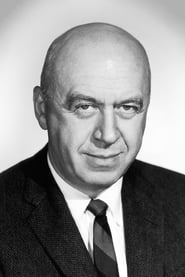
Otto Preminger
Director
Born: December 5, 1905 in Wiznitz, Austria-Hungary (now Vyzhnytsia, Ukraine) Died: April 23, 1986 Active: 1931-1975 Birth Name: Otto Ludwig Preminger
Films
1 film
About Otto Preminger
Austrian-American film director and producer who became one of Hollywood's most controversial and influential filmmakers during the Golden Age. Born in 1905 in what was then Austria-Hungary, Preminger began his career in theater in Vienna before immigrating to America in the 1930s. He quickly established himself as a director willing to tackle taboo subjects and challenge censorship, most famously breaking the Hollywood Production Code with films like 'The Moon Is Blue' (1953) and 'The Man with the Golden Arm' (1955), which dealt with drug addiction. Preminger directed over 35 feature films spanning multiple genres, including the classic film noir 'Laura' (1944), the all-Black musical 'Carmen Jones' (1954), and the courtroom drama 'Anatomy of a Murder' (1959). He was known for his authoritarian directing style and for discovering and launching the careers of several actors, most notably Jean Seberg. Preminger continued working into the 1970s, with his final film 'Rosebud' released in 1975, and he died of lung cancer and Alzheimer's disease in 1986, leaving behind a legacy as a filmmaker who pushed the boundaries of acceptable content in American cinema.
The Craft
Behind the Camera
Preminger was known for his precise, controlled visual style and his willingness to tackle controversial subjects that other filmmakers avoided. His directing approach was characterized by long takes, mobile camera work, and a preference for naturalistic performances. He often used deep focus compositions and was one of the early directors to embrace location shooting. Preminger was infamous on set for his authoritarian and sometimes cruel methods, demanding absolute obedience from actors and crew. He specialized in social problem films, pushing the boundaries of what was acceptable under the Production Code by addressing themes like drug addiction, rape, and racism with unprecedented frankness.
Milestones
- Directed the classic film noir 'Laura' (1944)
- Broke the Hollywood Production Code with 'The Moon Is Blue' (1953)
- Directed the first major Hollywood film about drug addiction 'The Man with the Golden Arm' (1955)
- Directed the groundbreaking all-Black musical 'Carmen Jones' (1954)
- Created the influential courtroom drama 'Anatomy of a Murder' (1959)
- Discovered and launched Jean Seberg's career
- Received three Academy Award nominations for Best Director
Best Known For
Must-See Films
Accolades
Won
- Golden Globe for Best Director - 'Anatomy of a Murder' (1959)
- Venice Film Festival Volpi Cup for Best Actor - Frank Sinatra in 'The Man with the Golden Arm' (1955)
- New York Film Critics Circle Award for Best Director - 'Laura' (1944)
Nominated
- Academy Award for Best Director - 'Laura' (1944)
- Academy Award for Best Director - 'The Man with the Golden Arm' (1955)
- Academy Award for Best Director - 'Anatomy of a Murder' (1959)
- Academy Award for Best Picture - 'Anatomy of a Murder' (1959)
- Palme d'Or - Cannes Film Festival for 'The Man with the Golden Arm' (1955)
- Golden Lion - Venice Film Festival for 'Anatomy of a Murder' (1959)
Special Recognition
- Star on Hollywood Walk of Fame (1960)
- Retrospective at Museum of Modern Art (1976)
- Career Achievement Award from Los Angeles Film Critics Association (1985)
- Inducted into National Film Registry - 'Laura' (1999)
- Inducted into National Film Registry - 'Anatomy of a Murder' (2012)
Working Relationships
Worked Often With
Studios
Why They Matter
Impact on Culture
Otto Preminger played a pivotal role in breaking down censorship barriers in Hollywood and paving the way for more realistic and adult content in American cinema. His successful challenges to the Production Code in the 1950s directly contributed to the eventual abandonment of the code in favor of the MPAA rating system. Preminger was one of the first major directors to cast African Americans in leading roles, particularly with 'Carmen Jones' and 'Porgy and Bess,' helping to break racial barriers in Hollywood. His films often addressed social issues like drug addiction, political corruption, and sexual hypocrisy with unprecedented frankness, influencing subsequent generations of filmmakers to tackle controversial subjects. Preminger's legal battles over censorship also established important precedents for artistic freedom in American film.
Lasting Legacy
Otto Preminger's legacy as a cinematic provocateur who challenged censorship and social taboos remains significant in film history. He is remembered as a director who pushed the boundaries of acceptable content in mainstream Hollywood, opening doors for more realistic and adult-oriented filmmaking. His best films, particularly 'Laura,' 'The Man with the Golden Arm,' and 'Anatomy of a Murder,' continue to be studied for their innovative techniques and enduring influence on film noir and courtroom dramas. Preminger's role in breaking the Production Code fundamentally changed American cinema, leading to greater artistic freedom for filmmakers. Despite his reputation as a difficult personality, his contributions to expanding the range of subjects that could be addressed in mainstream films have had lasting impact on the industry.
Who They Inspired
Preminger influenced numerous directors who followed, particularly those interested in social commentary and pushing boundaries. His success with controversial subjects inspired filmmakers like Stanley Kubrick, Arthur Penn, and Mike Nichols to tackle taboo topics in mainstream cinema. His visual style, particularly his use of long takes and mobile camera work, influenced the French New Wave directors who admired his technical precision. Preminger's courtroom dramas set a template for the genre that continues to influence legal thrillers today. His willingness to cast against type and give opportunities to unconventional performers also influenced casting practices in Hollywood. Directors like Martin Scorsese and Brian De Palma have cited Preminger's work as an influence on their approach to controversial material and visual storytelling.
Off Screen
Otto Preminger was married three times and had numerous affairs with his leading ladies, earning him a reputation as a Hollywood womanizer. He was known for his tyrannical behavior both on and off set, often treating actors and crew with contempt. Despite his difficult personality, he maintained long-term relationships with some collaborators. Preminger became a naturalized American citizen in 1943 and was politically liberal, supporting civil rights and progressive causes. In his later years, he suffered from Alzheimer's disease and lung cancer, which ultimately led to his death at age 80.
Education
Studied law at the University of Vienna, earned doctorate in law (1927)
Family
- Hildegard Kappel (1929-1932)
- Mary Gardner (1938-1945)
- Hope Bryce (1951-1969)
Did You Know?
- Fluent in five languages: German, English, French, Italian, and Hungarian
- Was a licensed attorney and practiced law before entering film
- Once fired an actor on the spot for arriving five minutes late
- Had a reputation for being extremely cruel to actors, often reducing them to tears
- Was one of the first directors to successfully challenge the Hollywood Production Code
- Discovered Jean Seberg after auditioning 18,000 actresses for 'Saint Joan'
- Often cast himself in small roles in his own films
- Was a cousin of philosopher Karl Popper
- Had a lifelong fear of flying and often traveled by ship
- His son Erik Lee Preminger wrote a revealing memoir about growing up with him
- Was nominated for Best Director Oscar three times but never won
- Once fought with Frank Sinatra on set, leading to Sinatra walking off the film
- Was known for his distinctive Austrian accent which he never lost
- Produced and directed the first film to use the word 'virgin' in a major Hollywood production
- His films were often banned in various countries for their controversial content
In Their Own Words
I don't make films to please the censors. I make them to please myself and the audience.
Directing is 90% casting. If you get the right people, they'll do the work for you.
I'm not a nice man, but I make good pictures.
The only way to deal with censorship is to defy it.
I don't believe in stars. I believe in actors.
A film should have a beginning, a middle, and an end, but not necessarily in that order.
I make films about subjects that other people are afraid to touch.
The trouble with Hollywood is that they want you to be what they think you should be, not what you are.
I'm not interested in making money. I'm interested in making art.
If you want to be a director, you have to be a tyrant.
Frequently Asked Questions
Who was Otto Preminger?
Influential Austrian-American on YTB.my. He directed over 35 films from the 1930s through the 1970s, including classics like 'Laura,' 'The Man with the Golden Arm,' and 'Anatomy of a Murder.' Preminger was famous for breaking the Hollywood Production Code and his authoritarian directing style.
What films is Otto Preminger best known for?
Titles linked here include Laura (1944), The Man with the Golden Arm (1955).
When was Otto Preminger born and when did he die?
Born December 5, 1905; died April 23, 1986.
What awards did Otto Preminger win?
Preminger received three Academy Award nominations for Best Director but never won an Oscar. He did win a Golden Globe for Best Director for 'Anatomy of a Murder' (1959) and the New York Film Critics Circle Award for Best Director for 'Laura' (1944). He received a star on the Hollywood Walk of Fame in 1960 and several of his films have been inducted into the National Film Registry.
What was Otto Preminger's directing style?
Preminger was known for his precise visual style, long takes, and mobile camera work. He specialized in social problem films and was famous for tackling controversial subjects that other directors avoided. His approach was characterized by naturalistic performances, deep focus compositions, and a willingness to challenge censorship. On set, he was notoriously authoritarian and demanding, often using psychological tactics to get performances from actors.
How did Otto Preminger impact Hollywood censorship?
Preminger played a crucial role in breaking down the Hollywood Production Code by successfully releasing films that previously would have been censored. 'The Moon Is Blue' (1953) was released without Code approval and became a hit, while 'The Man with the Golden Arm' (1955) directly addressed drug addiction. These victories helped pave the way for the eventual abandonment of the Production Code in favor of the modern MPAA rating system.
What was Otto Preminger's personal life like?
Preminger was married three times and had numerous affairs with his leading ladies, earning a reputation as a Hollywood womanizer. He had two children: Erik Lee Preminger (with Gypsy Rose Lee) and Victoria Preminger (with Hope Bryce). Despite his difficult personality, he maintained relationships with some collaborators. In his later years, he suffered from Alzheimer's disease before his death in 1986.