
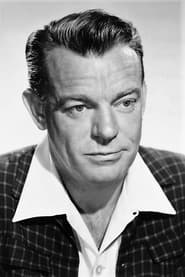
Dennis O'Keefe
Actor
Born: March 29, 1908 in New York City, New York, USA Died: August 31, 1968 Active: 1931-1968 Birth Name: Edward Vance Flanagan
Films
2 films

About Dennis O'Keefe
Dennis O'Keefe, born Edward Vance Flanagan, was a versatile American actor who rose from humble beginnings as a stockboy to become a prominent leading man in Hollywood's Golden Age. After graduating from Fordham University, he began his entertainment career as a model and radio performer before transitioning to film work as an extra at MGM. His breakthrough came when he was given a contract at Paramount in the late 1930s, where he developed his trademark suave, confident screen persona. O'Keefe became particularly adept at film noir, starring in classics like 'T-Men' (1947) and 'Raw Deal' (1948), where his cynical yet charismatic performances perfectly captured the genre's dark atmosphere. Later in his career, he expanded into directing, most notably helming 'The Bigamist' (1953), which featured Ida Lupino and Joan Fontaine. Despite his talent and popularity, O'Keefe's career was cut short when he died of lung cancer at age 60, leaving behind a legacy of memorable performances in over 80 films.
The Craft
On Screen
O'Keefe was known for his smooth, sophisticated delivery and naturalistic acting style that made him equally effective in comedy and drama. He possessed a quick wit and effortless charm that translated well to both screwball comedies and hard-boiled film noir. His performances were characterized by a confident, sometimes cynical demeanor that audiences found both relatable and compelling, particularly in his noir roles where he often played characters operating in moral gray areas.
Milestones
- Signed first studio contract with Paramount Pictures (1937)
- Starred in hit comedy 'Topper Returns' (1941)
- Became a leading film noir actor with 'T-Men' (1947)
- Directed and starred in 'The Bigamist' (1953)
- Hosted television show 'The Dennis O'Keefe Show' (1959-1960)
Best Known For
Iconic Roles
Must-See Films
Accolades
Won
- Photoplay Award for Best Performance (1945)
Nominated
- Academy Award nomination for Best Original Screenplay for 'The Bigamist' (1953)
Special Recognition
- Hollywood Walk of Fame star at 6536 Hollywood Boulevard
- Inducted into the Film Noir Hall of Fame
Working Relationships
Worked Often With
Studios
Why They Matter
Impact on Culture
Dennis O'Keefe made significant contributions to the film noir genre, helping define the archetypal noir protagonist with his performances in 'T-Men' and 'Raw Deal.' His ability to convey moral ambiguity while maintaining audience sympathy influenced subsequent generations of actors in crime dramas. O'Keefe also broke ground as one of the few actors of his era to successfully transition to directing, paving the way for other actor-directors. His work in both comedy and drama demonstrated remarkable versatility that challenged the typecasting common in Hollywood's studio system.
Lasting Legacy
Dennis O'Keefe's legacy endures through his influential film noir work, which continues to be studied by film scholars and appreciated by classic cinema enthusiasts. His performances in 'T-Men' and 'Raw Deal' are considered exemplars of the genre, frequently cited in film studies and retrospectives. As one of the few actors of his generation to successfully direct films, he inspired future actor-directors. His star on the Hollywood Walk of Fame serves as a permanent tribute to his contributions to American cinema, while his films remain in circulation through classic movie channels and home media releases.
Who They Inspired
O'Keefe's naturalistic acting style influenced later noir actors like Robert Mitchum and Sterling Hayden, who adopted similar approaches to portraying morally ambiguous characters. His transition to directing inspired other actors to take control behind the camera, including Ida Lupino, with whom he collaborated. Film noir directors often cited his performances as benchmarks for the genre's protagonists, particularly his ability to balance toughness with vulnerability. His work in both comedy and drama demonstrated that actors could successfully cross genre boundaries, influencing more flexible casting practices in later decades.
Off Screen
Dennis O'Keefe led a colorful personal life marked by high-profile relationships and a battle with cancer in his later years. He was briefly married to Mexican film star Lupe Vélez in the 1930s, a relationship that ended in annulment but generated significant publicity. He later found lasting happiness with Hungarian actress Steffi Duna, with whom he had two children. O'Keefe was known for his wit and charm off-screen, maintaining friendships with many Hollywood contemporaries. He was an avid reader and intellectual who enjoyed discussing politics and philosophy, setting him apart from many of his contemporaries.
Education
Fordham University (graduated with degree in economics)
Family
- Lupe Vélez (1934-1934, annulled)
- Steffi Duna (1940-1968, until his death)
Did You Know?
- Began his career as a stockboy at Macy's department store
- Changed his name to Dennis O'Keefe because studio executives thought his real name was too ethnic
- Was a talented amateur boxer before entering films
- Served in the US Army Air Corps during World War II, making training films
- Was one of the first actors to successfully transition from leading man to character roles
- Wrote several screenplays under pseudonyms
- Was an accomplished chess player who often played between takes
- Hosted his own television show in the late 1950s
- Was considered for the role of Sam Spade in 'The Maltese Falcon' before Humphrey Bogart
- Spoke fluent Hungarian from his marriage to Steffi Duna
In Their Own Words
Hollywood is a place where they'll pay you a thousand dollars for a kiss and fifty cents for your soul.
I never wanted to be a star. I just wanted to be a good actor and make a living.
The best films are made when everyone forgets they're making a film and just tells a story.
Noir isn't about darkness, it's about the light that refuses to go out.
Comedy is just tragedy happening to someone else.
Frequently Asked Questions
Who was Dennis O'Keefe?
American actor and on YTB.my. Born Edward Vance Flanagan, he appeared in over 80 films and later became one of the few actors of his era to successfully transition to directing.
What films is Dennis O'Keefe best known for?
Titles linked here include T-Men (1947), Raw Deal (1948).
When was Dennis O'Keefe born and when did he die?
Born March 29, 1908; died August 31, 1968.
What awards did Dennis O'Keefe win?
While Dennis O'Keefe received a Photoplay Award for Best Performance in 1945, his most significant recognition came posthumously with a star on the Hollywood Walk of Fame. He also received an Academy Award nomination for Best Original Screenplay for 'The Bigamist' in 1953.
What was Dennis O'Keefe's acting style?
O'Keefe was known for his naturalistic, sophisticated acting style that made him equally effective in both comedy and drama. His performances were characterized by smooth delivery, quick wit, and a confident demeanor that perfectly suited both screwball comedies and hard-boiled film noir roles.
Did Dennis O'Keefe direct films?
Yes, Dennis O'Keefe successfully transitioned to directing later in his career, most notably helming 'The Bigamist' (1953), which he also co-wrote and starred in. This made him one of the few actors of his era to achieve success behind the camera.
Who was Dennis O'Keefe married to?
Dennis O'Keefe was married twice: first to Mexican actress Lupe Vélez in 1934 (annulled the same year), and then to Hungarian actress Steffi Duna from 1940 until his death in 1968. He had two children with Duna.