
Frank Clarke
Actor
Born: December 29, 1898 in Paso Robles, California, USA Died: June 12, 1948 Active: 1920-1948 Birth Name: Frank Clark
Films
1 film
About Frank Clarke
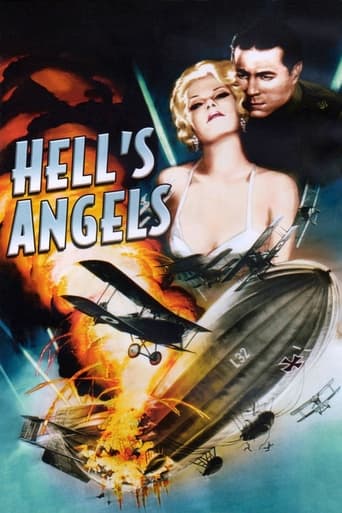
Hollywood stunt pilot and actor who became prominent aerial daredevils during the Golden Age of Hollywood. Born on a ranch near Paso Robles, California, he was a 6-foot-2 former cowboy who transitioned into aviation after being inspired by barnstormers at a 1915 county fair. Clarke gained national fame in 1920 when he performed a death-defying stunt for the film 'Stranger Than Fiction,' flying a Curtiss Jenny off the roof of a ten-story building in downtown Los Angeles. His expertise led him to become the chief pilot for Howard Hughes' aviation epic 'Hell's Angels' (1930), where he not only performed stunts but also played the role of Lieutenant von Bruen. Throughout the 1930s and 1940s, he was the 'undisputed king' of stunt pilots, doubling for stars like James Cagney and appearing in numerous aviation-themed films. During World War II, he served as a Major in the U.S. Army Air Forces, teaching advanced flight techniques to young pilots. Tragically, Clarke died in 1948 in a non-work-related plane crash near Isabella, California, while attempting a playful aerial maneuver for a friend.
The Craft
On Screen
Clarke was known for his rugged, 'tall and handsome' screen presence, often playing aviators or military officers. His acting was deeply rooted in his real-life persona as a daredevil, bringing an authentic, 'seat-of-the-pants' intensity to his roles. He frequently insisted on performing his own stunts, which lent a visceral realism to his performances that few traditional actors could match.
Milestones
- Performed the world's first mid-air transfer from one aircraft to another in 1919
- Flew a Curtiss JN-4 biplane off the roof of a 10-story building for 'Stranger Than Fiction' (1921)
- Served as Chief Pilot and aerial coordinator for Howard Hughes' 'Hell's Angels' (1930)
- Starred as the lead in the 10-chapter aviation serial 'Eagle of the Night' (1928)
- Charter member of the Associated Motion Picture Pilots (AMPP)
- Attained the rank of Major in the U.S. Army Air Forces during WWII
Best Known For
Iconic Roles
Must-See Films
Accolades
Special Recognition
- Charter Member of the Associated Motion Picture Pilots
- Recognized as one of the 'Big Three' Hollywood stunt pilots alongside Paul Mantz and Al Wilson
Working Relationships
Worked Often With
Studios
Why They Matter
Impact on Culture
Frank Clarke was instrumental in defining the 'heroic aviator' archetype in early Hollywood. By performing stunts that were previously thought impossible—such as landing on moving trains or flying off buildings—he helped transform aviation from a novelty into a central pillar of action cinema. His work on 'Hell's Angels' set the gold standard for aerial cinematography and stunt coordination that influenced decades of war films.
Lasting Legacy
Clarke's legacy is preserved in the breathtaking aerial sequences of the 1920s and 30s that still hold up today. He is remembered as a pioneer who risked his life to advance the technical capabilities of film production. His contribution to the First Motion Picture Unit during WWII also highlights his role in using cinema and aviation for the national effort, bridging the gap between entertainment and military training.
Who They Inspired
He influenced a generation of stunt performers and pilots, including Paul Mantz and Frank Tallman, who would go on to dominate the industry in later decades. His 'no-parachute' philosophy and precision flying established the professional standards for the Associated Motion Picture Pilots union.
Off Screen
Clarke was of Irish and Cherokee descent and grew up on a ranch, which contributed to his 'cowboy' persona in Hollywood. He was briefly engaged to actress Elinor Fair, though she eventually left him to marry another aviator, Thomas Daniels. He was known for his sense of humor and love for high-stakes practical jokes, one of which ultimately led to his fatal accident.
Education
Learned to fly at Venice Field (De Lay Field) under the tutelage of Al Wilson and Swede Meyerhofer.
Did You Know?
- He added the 'e' to his last name (Clark) later in his career for professional flair.
- He once 'accidentally' flew a plane off a 10-story building roof with only a 100-foot runway.
- Clarke and his partner Al Wilson never wore parachutes during their early stunts, calling them 'for sissies.'
- He was a bitter rival of fellow pilot Paul Mantz; they competed for the most prestigious and dangerous jobs in Hollywood.
- He died while trying to drop a bag of manure on a friend's barn as a joke; the bag got stuck in the plane's controls.
- He was a 6-foot-2 'ex-cowboy' who soloed his first flight the same day he started lessons.
- He doubled for James Cagney in several flying sequences.
- He was a founding member of the Associated Motion Picture Pilots, the first union for movie flyers.
In Their Own Words
Parachutes are for sissies. (Attributed to his early barnstorming days with Al Wilson)
I'm a born pilot. (Reflecting on his rapid solo flight in 1918)
Frequently Asked Questions
Who was Frank Clarke?
Premier Hollywood stunt pilot and with credits in this catalog. He is best known for his daring aerial stunts in films like 'Hell's Angels' and 'Wings'.
What films is Frank Clarke best known for?
Titles linked here include Hell's Angels (1930), Wings (1927).
When was Frank Clarke born and when did he die?
Born December 29, 1898; died June 12, 1948.
What awards did Frank Clarke win?
While he did not win individual acting awards, the films he contributed to, such as 'Wings,' won major accolades including the first-ever Academy Award for Best Picture.
What was Frank Clarke's acting and stunt style?
Clarke was known for a rugged, authentic style, often performing suicidal stunts like landing on moving trains or flying off buildings to ensure maximum realism on screen.