
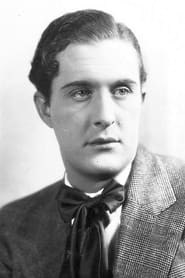
Douglas Gilmore
Actor
Born: June 25, 1903 in Boston, Massachusetts, USA Died: July 26, 1950 Active: 1925-1943 Birth Name: Harris Augustin Gilmore
Films
1 film
About Douglas Gilmore
Douglas Gilmore, born Harris Augustin Gilmore, was a prominent American actor of the late silent era and early sound period. Born in Boston in 1903, he initially pursued a career on the New York stage after a chance meeting with producer John Golden. His Broadway experience was extensive, appearing in notable productions such as 'White Cargo' and 'The Bad Man' alongside stars like Helen Hayes. Transitioning to Hollywood in the mid-1920s, he quickly became a sought-after leading man and sophisticated villain, often cast in high-society dramas. His career reached its zenith in 1930 with a significant role in Howard Hughes's aviation epic 'Hell's Angels'. Despite his early success and striking physical presence, his screen career tapered off in the early 1930s, and he passed away in New York City at the age of 47.
The Craft
On Screen
Gilmore was known for his 'tall, dark, and handsome' screen presence, typically portraying sophisticated urbanites, military officers, or polished villains. His transition from stage to screen allowed him to bring a more disciplined, theatrical delivery to early talkies, though he was primarily valued for his physical stature (standing 6'2") and leading-man looks.
Milestones
- Broadway debut in 'Lightnin' with Frank Bacon
- Signed a contract with MGM in 1926 following stage success
- Cast in the high-profile Howard Hughes production 'Hell's Angels' (1930)
- Starred opposite Myrna Loy in 'Cameo Kirby' (1930)
- Featured in the early talkie 'The Naughty Flirt' (1930) with Alice White
Best Known For
Iconic Roles
Must-See Films
Accolades
Special Recognition
- Featured in the Sayre Collection of theatrical photographs at the University of Washington
Working Relationships
Worked Often With
Studios
Why They Matter
Impact on Culture
Douglas Gilmore represented the quintessential 'matinee idol' of the late 1920s, a period when Hollywood was transitioning from the silent era's pantomime to the vocal requirements of the talkies. His involvement in 'Hell's Angels' connects him to. As a frequent co-star to rising legends like Joan Crawford and Myrna Loy, he played a supporting role in the development of the 'flapper' and 'sophisticate' archetypes in American cinema.
Lasting Legacy
While not a household name today, Gilmore remains a figure of interest for historians of early Hollywood and pre-code cinema. His filmography serves as a record of the industry's shift in the late 1920s, and his personal life provides a window into the celebrity culture and studio-driven publicity of the Golden Age. He is often cited in biographies of Tom Mix and Howard Hughes due to his professional and personal connections to those figures.
Who They Inspired
His polished, theatrical style influenced the 'heavy' roles of the early 1930s, bridging the gap between silent film melodrama and the more naturalistic dialogue-driven acting of the sound era.
Off Screen
Gilmore's personal life was frequently the subject of tabloid interest due to his high-profile marriages. He was married three times, most notably to Ruth Mix, the daughter of legendary cowboy star Tom Mix. Their elopement caused a minor scandal as Ruth was underage at the time, leading her father to attempt to block the union. Gilmore also faced a bizarre publicity incident in 1925 when a press agent falsely announced his engagement to actress Renee Adoree while he was still married to his first wife.
Education
Studied acting and began his career in New York theater under the mentorship of producer John Golden.
Family
- Gladys Frazin (1924-1925)
- Ruth Mix (1930-1932)
- Katherine 'Kay' Kenny (1933-1950)
Did You Know?
- He was discovered by producer John Golden after a chance meeting on a train where Golden handed him a business card.
- His marriage to Ruth Mix was so controversial that Tom Mix reportedly threatened to 'shoot him on sight'.
- He stood 6 feet 2 inches tall, which was exceptionally tall for leading men of that era.
- In 1925, a false report claimed he was marrying Renee Adoree, which shocked his actual wife, Gladys Frazin.
- He appeared in 'The Taxi Dancer' (1927) alongside a young Joan Crawford.
- He was known for playing villains who often got slapped or beaten by the heroes, once joking that 'a villain's life is quite a paying one' despite the physical toll.
- He is buried in the famous Woodlawn Cemetery in the Bronx, New York.
In Their Own Words
Being a screen villain for Fox has been anything but a gentle life. A villain's life is quite a paying one, notwithstanding the blows.
Frequently Asked Questions
Who was Douglas Gilmore?
American with credits in this catalog. He is best remembered for his roles in 'Hell's Angels' and for his high-profile marriage to the daughter of western star Tom Mix.
What films is Douglas Gilmore best known for?
Titles linked here include Hell's Angels (1930), Cameo Kirby (1930).
When was Douglas Gilmore born and when did he die?
Born June 25, 1903; died July 26, 1950.
Was Douglas Gilmore related to Tom Mix?
He was Tom Mix's son-in-law for a brief and tumultuous period after eloping with Mix's daughter, Ruth Mix, in 1930.
What was Douglas Gilmore's acting style?
He was a versatile performer who transitioned from Broadway to film, known for playing sophisticated leading men and polished villains with a commanding physical presence.