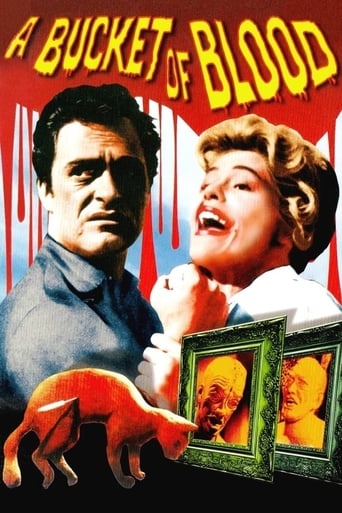

Films
1 film
About Julian Burton
American character actor who appeared briefly during the late 1950s, primarily known for his role as Leonard in Roger Corman's cult classic 'A Bucket of Blood' (1959). As part of the ensemble cast, Burton portrayed one of the beatnik characters who frequented the coffee house where the protagonist Walter Paisley worked. His performance captured the essence of the beatnik counter-culture movement that was gaining prominence in American society during that era. Burton's character Leonard was part of the artistic circle that initially celebrated Walter's sculptural 'talents' before discovering the dark secret behind his creations. Despite his memorable screen presence in this influential B-movie, Burton's acting career appears to have been limited to this single film credit, making him a one-film wonder in the classic cinema landscape. His contribution, though brief, remains part of the fabric of one of Roger Corman's most enduring and culturally significant works.
The Craft
On Screen
Burton's acting style embodied the beatnik persona of the late 1950s, delivering lines with the characteristic cool detachment and philosophical pretentiousness that defined the counter-culture movement. His performance captured the intellectual yet rebellious nature of beatnik artists, contributing authentically to the film's satirical take on the art world.
Milestones
- Appeared as Leonard in Roger Corman's 'A Bucket of Blood' (1959)
- Part of the beatnik ensemble cast that defined the film's counter-culture atmosphere
Best Known For
Iconic Roles
Must-See Films
Working Relationships
Worked Often With
Studios
Why They Matter
Impact on Culture
Julian Burton's contribution to cinema, though limited to a single role, became part of the enduring legacy of 'A Bucket of Blood,' which has since been recognized as an important cultural artifact of the beatnik era and a significant work in Roger Corman's filmography. The film's satirical take on art, fame, and the beatnik counter-culture has been studied by film scholars for decades, with Burton's performance as Leonard contributing to the authentic portrayal of this unique American subculture.
Lasting Legacy
While Julian Burton may not have achieved lasting fame as an actor, his performance remains preserved in. 'A Bucket of Blood' has gained cult status over the decades, ensuring that Burton's work continues to be seen by new generations of film enthusiasts interested in Roger Corman's prolific career and the representation of beatnik culture in American cinema.
Who They Inspired
As a supporting actor in a film that has influenced countless horror and comedy filmmakers, Burton indirectly contributed to the cinematic language that would later be adopted by directors working in similar genres. The authentic beatnik atmosphere he helped create in 'A Bucket of Blood' set a standard for counter-culture representation in film that would be referenced in subsequent decades.
Off Screen
Very little is publicly documented about Julian Burton's personal life, as his brief appearance in cinema history left minimal biographical records. Like many character actors of the era who appeared in single films, details about his family, relationships, and life outside of his one film credit remain largely unknown to film historians and researchers.
Did You Know?
- Julian Burton's entire known filmography consists of just one film: 'A Bucket of Blood' (1959)
- He played Leonard, a beatnik character who was part of the coffee house crowd
- His character was among those who initially praised Walter's 'sculptures' before discovering the dark truth
- Despite being in only one film, Burton's performance has been preserved in a movie that has gained significant cult status
- The film he appeared in was shot in just five days on a budget of $50,000
- Director Roger Corman was known for discovering talent in his low-budget productions, though Burton did not appear in subsequent Corman films
- Beatnik culture, which Burton's character embodied, was a significant American counter-culture movement of the late 1950s and early 1960s
In Their Own Words
(As Leonard in 'A Bucket of Blood') 'Man, that's the wildest thing I've ever seen!' - reacting to Walter's first 'sculpture'
Frequently Asked Questions
Who was Julian Burton?
American character with credits in this catalog. His career appears to have been limited to this single film credit, where he portrayed one of the beatnik characters central to the story's counter-culture setting.
What film is Julian Burton best known for?
Julian Burton is known exclusively for his role in 'A Bucket of Blood' (1959), where he played Leonard, a beatnik patron of the coffee house where the film's protagonist works. This Roger Corman-directed film has since become a cult classic and represents Burton's entire documented film career.
When was Julian Burton born and when did he die?
Unfortunately, specific birth and death dates for Julian Burton are not publicly documented. Like many supporting actors from B-movies of the 1950s, detailed biographical information about him remains scarce in film archives and historical records.
What awards did Julian Burton win?
There are no records of Julian Burton receiving any major awards or nominations for his acting work. His brief film career, consisting of a single role in 1959, did not result in formal recognition from industry awards organizations.
What was Julian Burton's acting style?
Burton's acting style in 'A Bucket of Blood' embodied the beatnik persona of the late 1950s, characterized by cool detachment, intellectual pretentiousness, and counter-cultural attitudes. His performance contributed authentically to the film's satirical portrayal of the beatnik art scene and coffee house culture of the era.