Charles Miller
Director
- Active
- 1917-1917
Films directed 1
About Charles Miller
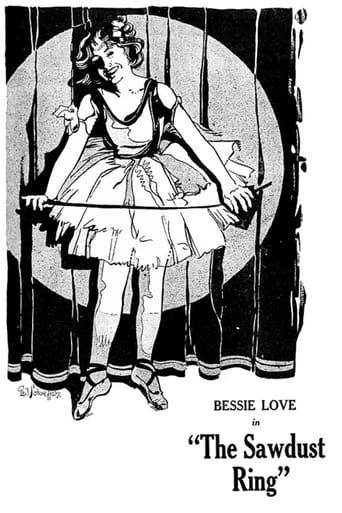
Charles Miller was an early American film director active during the silent era, with his known screen credit including the 1917 feature The Sawdust Ring. Surviving reference sources on classic cinema indicate that he worked in the formative years of the motion picture industry, when directors were often learning the language of film through short subjects and quickly produced features. Beyond the credit attached to The Sawdust Ring, detailed biographical information about his life, training, and later career is scarce in readily available historical records. That scarcity is not unusual for lesser-documented silent-era personnel, many of whom left only fragmentary traces in studio paperwork, trade announcements, and surviving filmographies. Because of the limited available evidence, it is difficult to reconstruct a full career arc or to separate him cleanly from other contemporaries with the same name without risking confusion. What can be stated confidently is that he belongs to the generation of filmmakers who helped establish the narrative and production conventions that would define American cinema in the 1910s. His surviving legacy is therefore primarily his contribution to early film history as a director whose work is preserved in filmographic reference rather than in an extensive body of extant titles.
More about Charles Miller
Behind the camera
No detailed critical description of Charles Miller's directing style survives in widely accessible sources. Given the era in which he worked, his approach would have been shaped by silent-film storytelling conventions, emphasizing clear visual action, expressive staging, and efficient scene construction. As with many 1910s directors, his work likely relied on strong melodramatic structure, readable performances, and economical coverage suited to the technical limits of the period. However, without substantial surviving reviews or a larger confirmed filmography, any more precise stylistic characterization would be speculative.
In film history
Charles Miller's cultural impact is best understood as part of the broader foundation of silent-era filmmaking rather than through a single widely celebrated auteur persona. Directors like Miller helped shape the emerging feature film form at a time when American cinema was consolidating its industrial and artistic identity. Even when a director's surviving filmography is small or fragmentary, the work still contributes to the historical record of how studios, crews, and production methods evolved in the 1910s. His presence in film history underscores how much of early cinema was built by working directors whose names are preserved in catalogs and credits even when their personal biographies have largely disappeared.
Later reputation
Miller's legacy lies in his place within the first generation of film directors who helped establish the vocabulary of screen storytelling before sound. For historians, he is a reminder that silent-era cinema was created not only by the marquee names now widely remembered, but also by many professionals whose careers are visible only in scattered documentation. The surviving credit for The Sawdust Ring connects him to a crucial period of film development and preserves his role in the medium's early institutional history. His name remains relevant primarily to archival researchers, film scholars, and database compilers interested in reconstructing the full ecosystem of early Hollywood and American silent production.
Influence
There is no well-documented direct line of influence from Charles Miller to later directors that can be responsibly asserted from the available evidence. Nonetheless, as an early silent-era director, he participated in the craft traditions that informed later filmmakers' understanding of visual continuity, staging, and feature-length narrative construction. The broader influence of directors from his era was substantial: they established working methods that later generations refined, standardized, and expanded. Miller's contribution is therefore historical and foundational rather than individually traceable in the manner of a major auteur with a well-preserved oeuvre.
Off screen
Reliable public information about Charles Miller's personal life is not readily available in standard classic-cinema reference sources. His birth, family background, marriages, children, and later life have not been firmly established in the historical record accessible for this identification. This is common for many early film workers whose careers were brief or only partially documented. As a result, any detailed personal biography would require archival research in trade papers, census records, studio documents, or local historical records to verify.
Credits
- Directed The Sawdust Ring (1917), the principal film credit associated with his known career
- Worked during the transitional period when American feature filmmaking was rapidly developing its visual and narrative grammar
- Represents the body of lesser-documented silent-era directors whose names survive mainly in historical filmographies
- Contributed to early studio-era production practice in the 1910s, when directors often handled fast-moving and highly collaborative projects
Films
- The Sawdust Ring (1917)
Notes
- His best-known surviving credit is The Sawdust Ring (1917).
- He is associated with the silent era, when many filmographies are incomplete and personal records are often fragmentary.
- Because his documentation is sparse, he is easy to confuse with other people named Charles Miller, making source verification especially important.
- He appears in film history mainly as a director rather than as a performer or studio executive.
- His known activity falls within a single year in the available filmography, suggesting either a very brief screen career or a highly incomplete record.
- He represents the many early filmmakers whose contributions are preserved in catalogues even when biographical details are lost.
Questions
Who was Charles Miller?
Charles Miller was an early silent-era film director known from surviving filmography records, including his credit for The Sawdust Ring (1917). He appears to have been active during the formative years of American cinema, but detailed personal and professional documentation is limited.
What films is Charles Miller best known for?
He is primarily known for directing The Sawdust Ring (1917), which is the confirmed title most closely associated with his name. No broader, reliably documented feature list is readily available in standard classic-cinema references.
When was Charles Miller born and when did he die?
His birth and death dates are not clearly documented in the readily accessible historical record for this specific director. Because the name is common and the surviving film history is sparse, any exact dates would need verification from archival sources.
What awards did Charles Miller win?
No awards or formal honors are documented for Charles Miller in the available sources. This is not unusual for early silent-era directors whose work predates the modern awards culture and whose careers were often only partially recorded.
What was Charles Miller's directing style?
A precise critical description of his directing style is not available from surviving reference material. As a 1910s silent-film director, his work would likely have depended on visual clarity, expressive staging, and efficient storytelling, but anything more specific would be speculative.
What is Charles Miller's legacy in film history?
His legacy is primarily historical: he is part of the generation of early directors who helped define silent-era feature filmmaking. Even though his biography is poorly documented, his surviving credit shows his participation in the development of American cinema's early production culture.