1917 · Approximately 50-60 minutes, exact surviving running time unknown

Also available on: Archive.org
The Sawdust Ring

The Sawdust Ring

1917 Approximately 50-60 minutes, exact surviving running time unknown United States
Family separation and reunionMistaken identity and hidden parentageThe circus as a site of spectacle and emotional laborRomantic loyalty and personal self-discoveryTruth, memory, and reconciliation

Plot

Janet, a young woman determined to learn the truth about her family, sets out in search of her father, a circus ringleader whom her mother left years earlier believing him to be unfaithful. Accompanied by her friend Peter, she joins Colonel Simmonds's traveling circus, where Janet works as a trick horse rider and Peter takes on the role of a clown. As she settles into circus life, Janet becomes increasingly unsettled by the uncanny familiarity she feels toward Simmonds, sensing that his connection to her own past may be more direct than she first imagined. The story unfolds as a melodrama of mistaken identity, family separation, and romantic loyalty, with the circus setting providing both spectacle and emotional danger. The film builds toward the revelation of Janet's true parentage and the resolution of the long-suppressed misunderstandings that tore her family apart.

About the Production

Release Date 1917
Production Fine Arts Film Company, Triangle Film Corporation
Filmed In United States, California

The Sawdust Ring was produced as a feature-length silent circus melodrama during the height of the 1910s studio system, when Triangle and its associated Fine Arts productions were packaging prestige features with popular stars and strong genre appeal. Like many films of its era, it was mounted with emphasis on visual performance, equestrian spectacle, and the romanticized travel-circus atmosphere that silent audiences found especially attractive. No complete production records, budget figures, or detailed shooting logs survive in common reference sources, and the original feature-length release is believed lost. Because the film is no longer known to survive, much of what is understood today comes from contemporary advertising, cast lists, and plot descriptions rather than from direct viewing.

Historical Background

The Sawdust Ring was released in 1917, during a pivotal period in American cinema when feature-length storytelling had become dominant and the studio system was consolidating its power. The United States had entered World War I that same year, but the domestic film market still produced a steady stream of melodramas, romances, and sensational entertainments meant to provide escapism and emotional immediacy. Circus pictures were especially resonant in this period because they offered a mix of travel, performance, danger, and family drama that translated well into silent visual storytelling. The film also belongs to the broader Fine Arts/Triangle era, when producers sought to elevate silent pictures through well-known casts and carefully marketable subjects. Its loss is historically significant because it represents the kind of mainstream entertainment that shaped audience taste in the 1910s but is now absent from the surviving film record.

Why This Film Matters

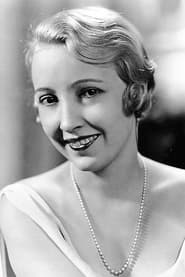
Although not widely cited as a landmark title, The Sawdust Ring is culturally important as an example of early American circus melodrama and of the kind of popular silent feature that helped define the era's narrative conventions. Films like this contributed to the long association between the circus and cinematic spectacle, establishing visual tropes of the traveling show, the heroic performer, and the emotionally fractured family. The presence of Bessie Love also gives the film importance in star studies, since her early career helped define the screen image of lively, sympathetic, modern young women in the 1910s. Its status as a lost film adds to its significance for preservationists, who often view lost titles as reminders of how much of silent cinema's everyday output has vanished. As a surviving title only in documentation, it remains part of the historical texture of early Hollywood rather than a work available for direct reassessment.

Making Of

The Sawdust Ring was created in the era when silent features often relied on star personalities and high-contrast emotional situations rather than elaborate physical production records that later filmmakers would leave behind. Bessie Love's casting was a major asset, since she could play youthful innocence, determination, and emotional vulnerability with strong visual expressiveness suited to silent performance. The circus material likely required staging and animal-related sequences that would have been impressive to contemporary audiences, though specific production anecdotes have not survived in widely available sources. As with many Triangle and Fine Arts releases, the film appears to have been designed as a commercially attractive mid-length feature with broad appeal rather than an avant-garde or technically experimental work. The lack of surviving prints means that behind-the-scenes details are necessarily sparse and reconstruction depends on catalog descriptions, publicity material, and trade references.

Visual Style

Specific cinematographer credit and detailed visual analysis are not firmly established in the information commonly available for this title, and no surviving print allows direct assessment of its imagery. As a 1917 silent circus melodrama, the film would likely have relied on clear tableau composition, expressive staging, and dynamic outdoor or performance-space scenes to communicate action and emotion without dialogue. Circus settings in silent film often emphasized wide framings to accommodate crowds, animals, and motion, contrasted with closer views for emotional recognition and melodramatic revelation. The presumed use of practical circus environments or convincing set reconstructions would have supported the film's spectacle. Because the film is lost, its cinematography is known only in broad genre terms rather than through shot-by-shot analysis.

Innovations

The Sawdust Ring does not appear to be associated with any specific pioneering technical innovation. Its value lies more in the effectiveness of its silent-era storytelling conventions: visual clarity, performance-driven emotion, and the staging of circus action in a way that could be understood instantly by audiences. Circus films of this period often demanded careful coordination of live animals, performers, and camera placement, which was itself a production challenge even if not a formal technological breakthrough. The film's feature-length structure also reflects the period's maturation of narrative technique, when filmmakers were learning to sustain character-driven plots over a longer running time. No known special effects or unusual technical processes are firmly attached to the title.

Music

As a silent film, The Sawdust Ring would originally have been exhibited with live musical accompaniment, typically improvised or assembled by the theater's musician or orchestra. No original cue sheet or composed score is commonly documented for this title in standard surviving references. The music would likely have followed the emotional shifts of the melodrama, supporting suspense, circus excitement, and tender reunion scenes. In many theaters, exhibitors tailored accompaniment to the local audience and venue, so the film's actual musical experience could vary substantially from screening to screening. No synchronized sound elements are known to survive.

Memorable Scenes

  • Janet joining Colonel Simmonds's circus as a trick horse rider, entering the world of the sawdust ring from the outside.
  • Peter taking work as a clown, adding comic contrast to Janet's more emotionally charged journey.
  • Janet's repeated sense that Colonel Simmonds seems strangely familiar, a quiet recognition motif that drives the mystery.
  • The circus performance sequences, which would have provided the film's principal visual spectacle for 1917 audiences.

Did You Know?

  • The film is currently considered lost in its original feature-length form, meaning no complete copy is known to survive.
  • Bessie Love was one of the best-known young actresses of the silent era and later became a celebrated survivor of early Hollywood's transition from silents to sound.
  • The story uses the circus not just as a backdrop but as the central dramatic world, a common but especially vivid setting in silent-era melodrama.
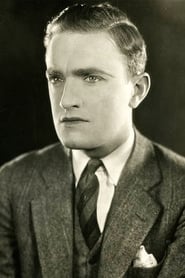
  • Harold Goodwin was a frequent juvenile lead in silent films, often playing earnest or comic supporting roles opposite rising stars.
  • The title refers to the sawdust spread on circus performance rings, a phrase that became shorthand for circus life itself.
  • Because the film is lost, it is studied largely through surviving documentation rather than through direct preservation viewing.
  • The production reflects Triangle's strategy of combining accessible popular stories with polished presentation and recognizable talent.
  • Circus films were particularly effective in silent cinema because they allowed for action, emotion, visual variety, and easily readable spectacle without dialogue.

What Critics Said

Contemporary critical response is not extensively documented in the surviving sources commonly consulted today, and no comprehensive modern critical reassessment is possible because the film is lost. At the time of release, films of this type were generally reviewed in trade journals and local newspapers according to their emotional effectiveness, the appeal of the cast, and the quality of the circus presentation. The involvement of recognized names such as Bessie Love would likely have helped the film's visibility with exhibitors and audiences. Modern discussion tends to focus less on artistic evaluation and more on the film's status as a lost example of 1910s circus melodrama and on its place within the careers of the credited performers and director. In the absence of a surviving print, its critical reputation is necessarily based on archival documentation rather than film analysis.

What Audiences Thought

No reliable box-office figures or audience surveys survive for this specific title, so public reception can only be inferred from its production by a major commercial concern and its release in the feature-film market of the period. Circus stories were broadly popular with silent-era audiences because they offered glamour, suspense, and visual novelty, especially when paired with a young star like Bessie Love. The film's premise of a daughter seeking her father through the circus world would have provided a highly accessible emotional hook for viewers of the time. Its continued inclusion in film databases and archival references suggests that it was at least sufficiently notable to be documented, though not so famous that it escaped the general fate of many lost silent features. Present-day audience interest is largely among silent-film enthusiasts, historians, and preservation advocates.

Film Connections

Influenced By

  • Early 20th-century circus melodramas
  • Stage melodrama traditions
  • Popular silent-era romance and adventure serial storytelling

This Film Influenced

  • Circus melodramas and performance-centered silent films that followed in the late 1910s and 1920s

Film Restoration

Lost. The original feature-length release is not known to survive in any complete form, and no complete print is currently documented as extant in major public sources. Any surviving material would be fragmentary at best, and the film is primarily known through catalog records, plot summaries, and reference listings.

Themes & Topics

circusmelodramalost filmfamily secretidentityringleadertrick ridingclownsearch for father