K.T. Stevens
Actor
- Born
- July 20, 1907, Seattle, Washington, USA
- Died
- June 13, 1981
- Active
- 1921-1959
- Birth name
- Gloria Wood
Films 1
About K.T. Stevens
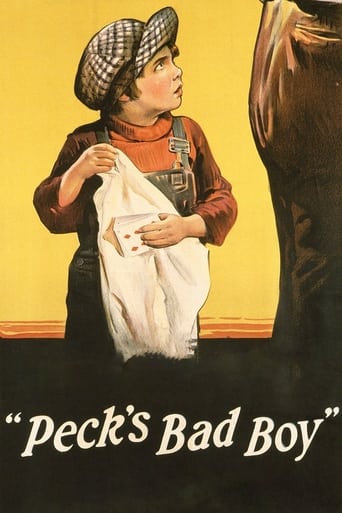
K. T. Stevens was an American actress whose career stretched from childhood stardom in the silent era into the early television age, making her one of the rare performers to bridge so many phases of screen history. Born Gloria Wood on July 20, 1907, in Seattle, Washington, she entered films as a child and was billed for years as Baby Gloria Wood before later adopting the professional name K. T. Stevens, a change that helped distinguish her as an adult performer. She appeared in the silent western Peck's Bad Boy (1921), one of the early screen credits that places her squarely in the vintage cinema era, and she continued working steadily in motion pictures through the 1930s and 1940s. Stevens built a reputation as a dependable character actress, often cast in supporting roles in studio-era films and later in television dramas, where her polished screen presence translated well to the more intimate medium. Her career is notable not for a single breakthrough star turn, but for longevity, adaptability, and the unusual trajectory from child actress to mature supporting player. In later life she became known to classic-film fans as the daughter of producer Sam Wood and actress Clara Williams, which connected her to Hollywood's silent and early sound lineage. She died on June 13, 1981, in Woodland Hills, Los Angeles, leaving behind a long but often under-credited career in American screen entertainment.
More about K.T. Stevens
On screen
K. T. Stevens was best suited to polished supporting character work rather than broad melodrama, and her style emphasized clarity, composure, and natural screen presence. As a child performer in silents, she would have relied on expressive physicality and direct emotional readability; as an adult, her performances became more restrained and conversational, matching the expectations of early sound cinema. She often projected intelligence, poise, and a certain urbane smoothness that made her effective in domestic dramas, comedies, and television roles. Her screen persona was versatile rather than flamboyant, which helped her blend into ensemble casts and sustain a long career across changing styles of performance.
In film history
K. T. Stevens occupies an important but modest place in classic Hollywood history as part of the generation of child performers who adapted to changing screen technologies and performance styles. Her career demonstrates how many actors built durable working lives outside the marquee-star system, contributing to the texture and realism of studio-era and television storytelling. Because she came from an established film family, she also represents the continuity between silent-era Hollywood and later decades of American screen culture. For film historians, her value lies in the way her career helps document the less glamorous but essential layer of Hollywood labor: the reliable supporting actor whose presence anchored countless productions. Her early appearance in Peck's Bad Boy is especially valuable for silent-film scholarship, since it places her in the surviving record of early 1920s child acting.
Later reputation
Her legacy rests on endurance, adaptability, and historical continuity rather than on celebrity alone. K. T. Stevens is remembered by classic-film enthusiasts as a working actress whose career began in the silent era and extended into the television age, making her a living link between two major entertainment revolutions. She is also part of a notable Hollywood family history through Sam Wood and Clara Williams, which gives her life added significance in studies of intergenerational film dynasties. While not a major star, she remains an important example of the many skilled character performers who helped sustain classical American cinema. Her filmography is especially useful to researchers tracing the careers of child actors who successfully transitioned into adult roles and later media.
Influence
K. T. Stevens influenced cinema less through celebrity imitation and more through the example of professional longevity and adaptability. Her career path showed that a former child actress could continue working credibly in sound films and eventually television without being trapped by her early screen image. For later supporting actors, she exemplifies the value of versatility, discipline, and a controlled on-camera style that could serve many genres. Her presence in both silent-era and mid-century screen entertainment makes her a small but meaningful figure in the continuity of American performance traditions.
Off screen
K. T. Stevens was born Gloria Wood into a highly film-connected family, as the daughter of director Sam Wood and actress Clara Williams. Her background placed her near the center of early Hollywood from childhood, and that family connection likely eased her introduction to the screen business. She was married to actor Hugh Marlowe, another Hollywood performer, though details of their relationship are not widely documented in standard classic-cinema references. Publicly available information about her private family life is limited compared with better-known stars of her era, which is typical for many supporting players of the period. She spent her later years away from the spotlight and died in Los Angeles in 1981.
Education
Specific formal education details are not widely documented in standard classic-cinema references; as a child performer, her early life was closely tied to the film industry.
Credits
- Appeared as a child actress in the silent film Peck's Bad Boy (1921), one of her earliest known screen credits.
- Worked under multiple professional names, including Baby Gloria Wood and later K. T. Stevens, across different phases of her career.
- Built a long career in supporting roles in studio-era films during the 1930s and 1940s, demonstrating unusual longevity for a former child actress.
- Transitioned successfully into television work in the 1950s, remaining active as the industry moved away from the classic studio system.
- Maintained a notable Hollywood lineage as the daughter of director Sam Wood and actress Clara Williams.
- Is remembered by classic-cinema historians as a performer whose career linked silent-era child acting to postwar screen character work.
Roles
- Baby Gloria Wood in Peck's Bad Boy (1921)
- Supporting character roles in 1930s and 1940s studio films
- Television guest roles in 1950s dramatic series
Films
- Peck's Bad Boy (1921)
- Selected studio-era supporting appearances in the 1930s and 1940s
- Selected television dramatizations from the 1950s
Collaborators
- Sam Wood (father, director)
- Clara Williams (mother, actress)
- Hugh Marlowe (actor and spouse)
Studios
- Silent-era and early studio productions
- Various Hollywood studios across the 1930s and 1940s
- Television production companies in the 1950s
Family
- Hugh Marlowe (marriage dates not reliably confirmed in standard references)
Notes
- She was born Gloria Wood and later used the stage name K. T. Stevens.
- She began acting as a child in silent films, making her one of the many early Hollywood performers who started before the advent of synchronized sound.
- Her father was director Sam Wood, a major Hollywood filmmaker known for directing numerous studio-era features.
- Her mother was actress Clara Williams, linking her to another important branch of silent-era film history.
- She appeared in Peck's Bad Boy (1921), an early credit that anchors her in classic silent cinema.
- She had a long career that extended from film into television, which was relatively common for adaptable character actors of her generation.
- She was married to actor Hugh Marlowe, another familiar name to classic film and television audiences.
- Despite her long career, she is often overlooked in favor of better-known stars, making her a rewarding figure for film historians and database researchers.
Questions
Who was K. T. Stevens?
K. T. Stevens was an American actress who began her career as a child in silent films and later worked in studio-era features and television. Born Gloria Wood, she is especially notable for linking the silent era to later Hollywood entertainment through a long, adaptable career.
What films is K. T. Stevens best known for?
She is best remembered for Peck's Bad Boy (1921), one of her earliest screen appearances, and for a range of supporting roles in later Hollywood films. She also appeared in television work during the 1950s, which broadened her screen presence beyond cinema.
When was K. T. Stevens born and when did she die?
She was born on July 20, 1907, in Seattle, Washington, USA. She died on June 13, 1981, in Woodland Hills, Los Angeles, California.
What awards did K. T. Stevens win?
No major awards or widely documented industry honors are commonly listed for K. T. Stevens in standard references. Her significance lies more in her long career and historical position than in formal award recognition.
What was K. T. Stevens's acting style?
As a child in silent films, she would have depended on expressive physical acting, while her adult roles emphasized restraint, poise, and clear line delivery suited to sound films and television. She was especially effective as a dependable supporting actress rather than a flamboyant star.
What is K. T. Stevens's legacy in classic cinema?
Her legacy is that of a durable character actress who helped bridge silent cinema, the studio era, and television. She is also remembered as part of a significant Hollywood family and as a useful figure for studying child actors who successfully matured within the industry.