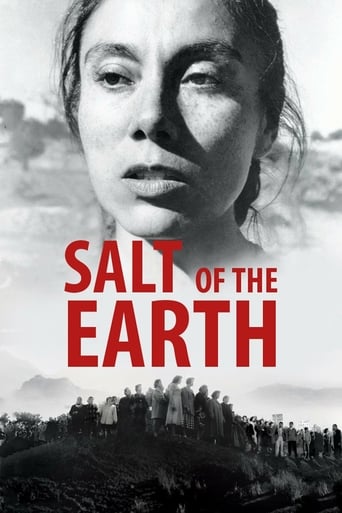
Films
1 film
About David Sarvis
David Sarvis worked on 1954 film 'Salt of the Earth. ' He was one of several non-professional actors cast in this controversial production, which was made during the height of McCarthyism and faced significant blacklisting in Hollywood. Sarvis, like many of his fellow cast members, was likely recruited from the actual mining communities in New Mexico where the film was set, bringing authentic realism to his performance. His participation in this film placed him among the brave artists who defied the Hollywood blacklist to create what would become a cinematic landmark. The film, which dealt with labor strikes and civil rights issues, was directed by Herbert Biberman, one of the Hollywood Ten, and featured a mix of professional and non-professional actors. Sarvis's appearance in this film represents his only known credited work in cinema, making him part of a unique chapter in American film history where ordinary working people stepped into film roles to tell their own stories.
The Craft
On Screen
Naturalistic and authentic, typical of non-professional actors from the mining community brought realism to his role
Milestones
- Appeared in the landmark film 'Salt of the Earth' (1954)
Best Known For
Iconic Roles
Must-See Films
Working Relationships
Worked Often With
Studios
Why They Matter
Impact on Culture
David Sarvis contributed to. His participation, along with other non-professional actors from the mining community, brought unprecedented authenticity to American cinema by featuring real working people telling their own stories. The film became a landmark of independent filmmaking and proof of artistic resistance against political persecution. Though his individual contribution was small, Sarvis was part of a collective effort that demonstrated the power of cinema to address social justice issues during a period of intense political repression.
Lasting Legacy
David Sarvis's legacy is tied to his participation in 'Salt of the Earth,' a film that has gained recognition over the decades as a masterpiece of socially conscious cinema. The film was selected for preservation in the National Film Registry in 1993 for its cultural, historical, and aesthetic significance. While Sarvis himself remained an obscure figure in film history, his contribution to this groundbreaking work represents the important role that non-professional actors have played in bringing authenticity and social relevance to American cinema.
Who They Inspired
As a non-professional actor in a landmark film, David Sarvis's influence lies in his contribution to the tradition of authentic casting in socially relevant cinema. His work in 'Salt of the Earth' helped pave the way for future filmmakers who sought to use real people from the communities they were depicting, a practice that would become more common in documentary and independent filmmaking in subsequent decades.
Off Screen
Very limited information is available about David Sarvis's personal life. As a non-professional actor who appeared in only one film, he likely returned to his regular occupation after the production of 'Salt of the Earth.' Like many of the film's cast members, he was probably a member of the mining community in New Mexico where the film was shot.
Did You Know?
- David Sarvis was one of several non-professional actors cast in 'Salt of the Earth'
- The film was blacklisted and most theaters refused to show it during its initial release
- Many cast members, including Sarvis, were actual miners or their family members from New Mexico
- The film was directed by Herbert Biberman, who was imprisoned for contempt of Congress for refusing to testify before HUAC
- Salt of the Earth was the only American film blacklisted during the McCarthy era for its political content
- The film was preserved in the National Film Registry in 1993
- Despite being blacklisted in the US, the film won awards internationally
- The production faced constant harassment from local authorities and anti-communist groups during filming
Frequently Asked Questions
Who was David Sarvis?
Screen credits include the 1954 film 'Salt of the Earth.' He was one of several non-professional actors recruited from the mining communities of New Mexico to bring authenticity to this controversial and politically significant film.
What films is David Sarvis best known for?
Titles linked here include Salt of the Earth (1954).
When was David Sarvis born and when did he die?
Specific birth and death dates for David Sarvis are not publicly available. As a non-professional actor who appeared in only one film, detailed biographical information about him is limited.
What awards did David Sarvis win?
David Sarvis did not receive any individual awards or nominations. However, the film 'Salt of the Earth' won several international awards and was later selected for preservation in the National Film Registry in 1993.
What was David Sarvis's acting style?
David Sarvis's acting style was naturalistic and authentic, typical of non-professional actors who brought real-life experience to their roles. His performance contributed to the film's documentary-like realism and emotional authenticity.