Harold D. Schuster
Director
- Born
- March 20, 1902, Chicago, Illinois, USA
- Died
- September 19, 1986
- Active
- 1920s-1956
- Birth name
- Harold David Schuster
Films directed 1
About Harold D. Schuster
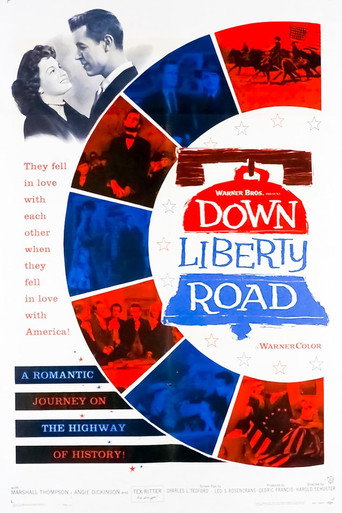
Harold D. Schuster was an American film director and editor whose career extended across the late silent era, the classical studio period, and into the 1950s. He was born Harold David Schuster and began in the film industry as an editor, a background that strongly informed the precise, efficient way he handled scene construction and pacing as a director. Schuster worked on a wide range of studio productions and eventually moved into directing, where he became a dependable craftsman rather than a flamboyant auteur, usually assigned mid-budget genre pictures, adventures, westerns, and programmers. His directing credit on Down Liberty Road (1956) fits the late stage of a long career spent working steadily behind the camera. Although he never became a major name to the general public, he was part of the professional backbone of Hollywood, contributing to the smooth operation of studio filmmaking for decades. His film career is notable for the way it bridged the craftsmanship of the silent and early sound eras with postwar genre cinema. Because much of his work was carried out within studio systems and on routine productions, his name is often less familiar than those of headline directors, but his contribution is historically important to classic American cinema.
More about Harold D. Schuster
Behind the camera
Schuster’s directing style appears to have been practical, economical, and editor-informed, with an emphasis on clear storytelling, clean continuity, and efficient scene progression. He was not known for ostentatious visual flourishes or highly personal stylistic signatures; instead, he worked in the classical Hollywood tradition of invisible craftsmanship. Like many studio directors who emerged from editing, he likely favored tightly structured scenes, disciplined shot selection, and strong narrative momentum. His work seems tailored to the needs of genre and program pictures, where reliability, pacing, and clarity were especially important. In that sense, his style represents the professional, workmanlike side of mid-century American film direction.
In film history
Harold D. Schuster’s cultural impact lies less in celebrity or auteurist distinction than in the sustaining force of classical studio craftsmanship. Directors like Schuster helped Hollywood produce a vast number of efficiently made pictures that filled double bills, supported stars, and kept genre cinema alive for mass audiences. His career illustrates how many important figures in classic cinema worked outside the spotlight, contributing the continuity and professionalism that made the studio era function. Because he came from editing, his work also reflects the close relationship between editorial discipline and directing practice in early and mid-century Hollywood. His career is a useful reminder that the history of cinema is not only shaped by marquee auteurs but also by reliable craftsmen who made the system work.
Later reputation
Schuster’s legacy is that of a skilled studio professional whose career bridges several phases of American film history. He represents the generation of filmmakers whose names are less remembered by the public but whose labor shaped the look, rhythm, and reliability of classic Hollywood storytelling. His transition from editing to directing is historically significant because it reflects how technical expertise could lead to creative responsibility within the studio system. While he is not commonly cited in auteurist discussions, his body of work contributes to the historical fabric of American genre cinema, especially in the decades when studios relied on capable directors to turn out efficient, watchable features. For film historians, Schuster stands as an example of the many craftspeople whose careers illuminate how classical Hollywood actually operated behind the scenes.
Influence
Schuster influenced cinema primarily through professional example rather than through a clearly identifiable school of disciples. As an editor turned director, he embodied a production model that valued narrative clarity, economy, and continuity, qualities that later directors in studio and television production also prized. His work belongs to a tradition that helped define the pacing of American commercial filmmaking, especially in lower-budget and genre-oriented projects. While there is no widely documented list of major protégés, his career reflects the broader influence of editorial thinking on directing practice in Hollywood. His approach would have reinforced the idea that successful filmmaking depended on structure, clarity, and control rather than on spectacle alone.
Off screen
Publicly available biographical information about Harold D. Schuster’s personal life is limited. He is chiefly documented through his film work rather than through an extensively recorded private biography, and standard references do not widely preserve detailed accounts of his marriages, family life, or off-screen activities. As a result, his private life remains comparatively obscure in film history. He appears to have maintained a low public profile, which was not uncommon for studio craftsmen whose reputations were built within the industry rather than in celebrity culture.
Education
No widely documented formal educational background is readily available in standard film references; his professional formation appears to have come through practical studio work, especially editing.
Credits
- Built his early career as a film editor before moving into directing, giving him a strong foundation in pacing and visual continuity.
- Worked steadily within the Hollywood studio system across multiple decades, contributing to both silent-era and sound-era production practices.
- Directed a variety of genre films, including westerns, adventures, and other commercial features that reflected the dependable craftsmanship of studio-era directors.
- Directed Down Liberty Road (1956), one of his later-screen credits and the one most directly associated with his directing work in the 1950s.
- Served as part of the largely unsung professional class of editors-turned-directors who helped maintain the efficiency of classical Hollywood filmmaking.
- Worked on productions that demonstrated his ability to deliver polished, economical storytelling within studio constraints.
Films
- Down Liberty Road (1956)
Collaborators
- Studio-era producers and craftspeople associated with mid-budget genre filmmaking
- Editors and technicians working within the Hollywood production system
Studios
- Hollywood studio system
- Universal Pictures
- Paramount Pictures
- Warner Bros.
- Republic Pictures
Notes
- He was born Harold David Schuster, but is usually credited professionally as Harold D. Schuster.
- Schuster began as a film editor before becoming a director, a career path that gave him an unusual amount of control over pacing and structure.
- He worked across multiple decades of Hollywood history, spanning the transition from silent-era practices to postwar genre cinema.
- His directing career was largely associated with practical, commercially minded productions rather than prestige films.
- Down Liberty Road (1956) is one of his late directing credits and the one specifically associated with his name in many film references.
- He is an example of a behind-the-scenes Hollywood craftsman whose importance is clearer to historians than to casual viewers.
- Much of his documented career emphasizes studio professionalism rather than star-driven celebrity.
- His career illustrates how editors could move into directing during the classical studio era.
Questions
Who was Harold D. Schuster?
Harold D. Schuster was an American film director and editor who worked within the Hollywood studio system for several decades. He is best understood as a skilled behind-the-scenes craftsman whose career bridged editing and directing in classic cinema.
What films is Harold D. Schuster best known for?
He is best known for his work as a director on studio-era genre films, with Down Liberty Road (1956) being one of his identified late directing credits. He is also remembered more broadly for his contributions as an editor and as a dependable Hollywood craftsman.
When was Harold D. Schuster born and when did he die?
He was born on March 20, 1902, in Chicago, Illinois, USA, and died on September 19, 1986. His life spanned much of the classic Hollywood era.
What awards did Harold D. Schuster win?
No major awards or widely documented nominations are readily associated with Harold D. Schuster in standard reference sources. His career is more notable for steady studio work than for major industry honors.
What was Harold D. Schuster's directing style?
His directing style was practical, economical, and shaped by his background as an editor. He appears to have favored clear storytelling, smooth continuity, and efficient pacing, which suited the studio genre films he worked on.
What is Harold D. Schuster's legacy in film history?
His legacy lies in the professional craftsmanship that helped sustain classical Hollywood filmmaking. He represents the important but often overlooked editors and directors who made studio-era cinema run smoothly and consistently.