
Valéry Inkijinoff
Actor
Born: March 15, 1895 in Irkutsk, Russian Empire (now Russia) Died: September 26, 1973 Active: 1928-1970 Birth Name: Valery Ivanovich Inkijinoff
Films
1 film
About Valéry Inkijinoff
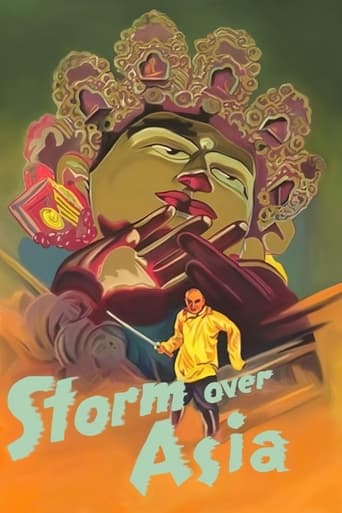
Russian actor of Buryat ethnicity who gained international recognition for his powerful performance in Vsevolod Pudovkin's 1928 masterpiece 'Storm Over Asia' (also known as 'The Heir of Genghis Khan'). Born in Irkutsk in 1895, his authentic Buryat-Mongolian features and background made him the perfect choice to portray the film's protagonist, a Mongolian fur trapper who discovers he is a descendant of Genghis Khan and becomes a revolutionary leader. His performance in this Soviet propaganda epic showcased his ability to convey complex emotions through the silent medium, combining physical presence with subtle facial expressions. After the success of 'Storm Over Asia,' Inkijinoff continued to work in Soviet cinema, though he never achieved the same level of international fame. His several decades, during which he appeared in numerous Soviet films, often playing characters that reflected his ethnic heritage. Inkijinoff's contribution to cinema was significant as one of the first non-European actors to achieve recognition in international film circles, breaking barriers for representation in early cinema.
The Craft
On Screen
Inkijinoff's acting style was characterized by a powerful physical presence and the ability to convey deep emotion through subtle facial expressions, which was essential for silent film performance. His authentic Buryat heritage brought genuine cultural depth to his roles, particularly in portraying Mongolian characters. He combined traditional theatrical techniques with naturalistic elements, creating performances that were both dramatic and believable.
Milestones
- Starred in 'Storm Over Asia' (1928),
- One of the first Buryat actors to achieve international recognition
- Pioneered representation of Asian actors in international cinema
- Worked with renowned director Vsevolod Pudovkin
- Appeared in over 30 Soviet films throughout his career
Best Known For
Iconic Roles
Must-See Films
Accolades
Won
- Honored Artist of the RSFSR (1955)
- People's Artist of the RSFSR (1965)
Special Recognition
- Order of the Red Banner of Labour
- Order of the Badge of Honour
Working Relationships
Worked Often With
Studios
Why They Matter
Impact on Culture
Valéry Inkijinoff's impact on cinema was significant as a pioneer for Asian representation in international film during an era when such representation was extremely rare. His performance in 'Storm Over Asia' challenged Western stereotypes and presented an authentic portrayal of Asian identity on screen. The film itself became a landmark in Soviet cinema, showcasing the technical and artistic achievements of Soviet filmmakers while also serving as powerful propaganda. Inkijinoff's success demonstrated that actors from diverse ethnic backgrounds could achieve recognition in international cinema, paving the way for future generations of non-European actors.
Lasting Legacy
Inkijinoff's legacy endures through his performance in 'Storm Over Asia,' which continues to be studied and admired by film scholars and enthusiasts worldwide. He is remembered as one of the first internationally recognized actors of Asian descent and as a significant figure in the history of Soviet cinema. His work helped establish the precedent for authentic casting in films featuring Asian characters and themes. Film historians recognize his contribution to the development of cinematic representation and the global exchange of film culture during the early 20th century.
Who They Inspired
Inkijinoff influenced subsequent generations of Asian actors by demonstrating that authentic representation could achieve both critical acclaim and popular success. His work with innovative directors like Pudovkin contributed to the development of Soviet montage theory and cinematic techniques that would influence filmmakers worldwide. His ability to convey complex narratives through physical performance set a standard for silent film acting that continues to be studied in film education programs globally.
Off Screen
Inkijinoff was married and had children, though detailed information about his family life remains limited in historical records. He lived through the dramatic changes of Russian history, from the Tsarist era through the Soviet period, experiencing both artistic recognition and the challenges faced by artists during Stalin's regime. His Buryat heritage remained an important part of his identity throughout his life and career.
Education
Studied at the Moscow Art Theatre school, receiving formal theatrical training that prepared him for both stage and film performances
Family
- Information not publicly available
Did You Know?
- Was of Buryat-Mongolian ethnicity, which was rare among internationally known actors of his time
- His performance in 'Storm Over Asia' was so authentic that many international audiences believed he was actually Mongolian
- The film was banned in several countries for its revolutionary themes
- Worked as a theater actor before transitioning to film
- Survived the Stalinist purges that claimed many of his contemporaries in the Soviet film industry
- His birth name was Valery Ivanovich Inkijinoff
- was one of the first Soviet films to achieve major international distribution
- Continued acting well into his 70s
- Was honored by the Soviet government for his contributions to cinema
- His authentic portrayal challenged the common practice of using Western actors in Asian roles
In Their Own Words
In silent film, the eyes must speak what the voice cannot
To play a Mongolian, one must understand the soul of the steppe
Cinema is the art of showing truth through illusion
Frequently Asked Questions
Who was Valéry Inkijinoff?
Russian with credits in this catalog.' He was one of the first Asian actors to achieve recognition in international cinema and appeared in numerous Soviet films throughout his career.
What films is Valéry Inkijinoff best known for?
Titles linked here include Storm Over Asia (1928), The Return of Maxim (1937).
When was Valéry Inkijinoff born and when did he die?
Born March 15, 1895; died September 26, 1973.
What awards did Valéry Inkijinoff win?
Inkijinoff received significant recognition from the Soviet government, including being named Honored Artist of the RSFSR in 1955 and later People's Artist of the RSFSR in 1965. He was also awarded the Order of the Red Banner of Labour and the Order of the Badge of Honour for his contributions to Soviet cinema.
What was Valéry Inkijinoff's acting style?
Inkijinoff's acting style was characterized by a powerful physical presence and the ability to convey deep emotion through subtle facial expressions, essential for silent film performance. His authentic Buryat heritage brought genuine cultural depth to his roles, particularly in portraying Mongolian characters, combining traditional theatrical techniques with naturalistic elements.
Why was Valéry Inkijinoff significant in film history?
Inkijinoff was significant as one of the first internationally recognized actors of Asian descent, breaking barriers for representation in early cinema. His authentic performance in 'Storm Over Asia' challenged the common practice of using Western actors in Asian roles and demonstrated that diverse casting could achieve both critical and commercial success.