Films
1 film
About Zygmunt Chmielewski
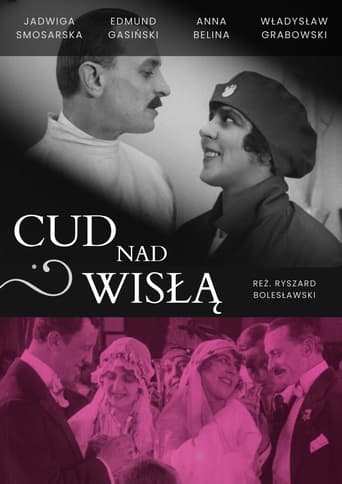
Zygmunt Chmielewski is credited on a single production — The Miracle at the Vistula (1921). His known film work consists of a single appearance in the 1921 historical drama 'The Miracle at the Vistula' (Cud nad Wisłą), which depicted the pivotal Battle of Warsaw during the Polish-Soviet War. As with many actors from this period of Polish cinema, detailed records of his career and personal life are scarce due to the destruction of many archives during World War II. His brief appearance in this significant nationalistic film places him among the generation of Polish film actors who helped establish the country's cinematic tradition during its re-emergence as an independent nation. The film itself was directed by Richard Boleslawski, who would later become a prominent Hollywood director, suggesting Chmielewski worked with some of the most talented figures of early Polish cinema. His career appears to have been extremely brief or perhaps limited to this single production, which was not uncommon for actors in the very early days of Polish film when the industry was still developing and opportunities were limited.
The Craft
On Screen
Likely employed the exaggerated, theatrical acting style typical of silent film era performers, emphasizing physical expression and dramatic gestures to convey emotion without dialogue
Milestones
- Appeared in 'The Miracle at the Vistula' (1921), one of the earliest Polish historical epic films
Best Known For
Iconic Roles
Must-See Films
Working Relationships
Worked Often With
Studios
Why They Matter
Impact on Culture
Zygmunt Chmielewski's contribution to Polish cinema, while minimal in scope, represents the foundational period of Poland's film industry during its renaissance as an independent nation following World War I. His participation in 'The Miracle at the Vistula' places him within the context of early Polish filmmakers who used cinema as a medium for national storytelling and cultural preservation. The film itself was significant as one of the first major Polish historical epics, depicting a crucial moment in Polish history and helping to establish a national cinema that could compete with European productions. Though his individual impact was small, actors like Chmielewski formed the backbone of the emerging Polish film industry, providing the human element needed to bring national stories to life on screen during a formative period for the country's cultural identity.
Lasting Legacy
Zygmunt Chmielewski's legacy is primarily that of a representative figure from the dawn of Polish cinema, embodying the countless actors whose contributions to early film have been largely lost to history. His appearance in 'The Miracle at the Vistula' ensures his place in the historical record of Polish film, even if details of his life and career remain obscure. The film itself survives as an important artifact of early Polish cinema, and all who participated in its creation, including Chmielewski, are part of its historical significance. His story illustrates the ephemeral nature of fame for many early film actors, whose work was crucial to establishing cinema as an art form but whose individual contributions have been largely forgotten over time.
Who They Inspired
Given the brevity of his known film career, Zygmunt Chmielewski's direct influence on subsequent generations of actors and filmmakers appears to be minimal or undocumented. However, as part of the ensemble cast of an early Polish historical epic, he contributed to the development of acting styles and techniques that would evolve in Polish cinema throughout the 20th century. The theatrical, expressive acting style common in silent films that he likely employed would gradually give way to more naturalistic performances as cinema technology advanced, making actors of his generation pioneers in the transition from stage to screen acting.
Off Screen
Very little is documented about Zygmunt Chmielewski's personal life, which is common for many supporting actors from early Polish cinema whose records were lost or never extensively documented. The lack of available biographical information suggests he may have been a stage actor who briefly ventured into film or someone whose acting career was limited to this single production.
Did You Know?
- 'The Miracle at the Vistula' was one of the first Polish films to depict the Polish-Soviet War, making Chmielewski a participant in early Polish historical cinema
- The film's director, Richard Boleslawski, later became a successful Hollywood director, working with stars like Greta Garbo and Marlene Dietrich
- Many records of early Polish cinema were destroyed during World War II, making information about actors like Chmielewski extremely scarce
- The Battle of Warsaw depicted in the film was considered
- Polish cinema in the 1920s was still in its infancy, with most actors coming from theater backgrounds
- Silent films required actors to have strong physical presence and expressive abilities, as dialogue could not be used to convey emotion
- Early Polish films often focused on nationalistic themes and historical events to help build Polish cultural identity
Frequently Asked Questions
Who was Zygmunt Chmielewski?
Screen credits include the 1921 film 'The Miracle at the Vistula.' His known film career appears to be limited to this single production, which was one of the earliest Polish historical epic films depicting the Polish-Soviet War.
What films is Zygmunt Chmielewski best known for?
Titles linked here include The Miracle at the Vistula (1921).
When was Zygmunt Chmielewski born and when did he die?
Specific birth and death dates for Zygmunt Chmielewski are not documented in available historical records, which is common for many supporting actors from early Polish cinema whose information was lost over time or never extensively recorded.
What awards did Zygmunt Chmielewski win?
There are no documented awards or nominations for Zygmunt Chmielewski, which is typical for actors from the very early period of Polish cinema when formal award systems for film achievements had not yet been established.
What was Zygmunt Chmielewski's acting style?
While specific details about his acting style are not documented, he likely employed the theatrical, exaggerated style common in silent films, using physical expression and dramatic gestures to convey emotion in the absence of dialogue.