
The Miracle at the Vistula
"Bolshevik troops descend on a manor at the Polish border."
Keys: Space play/pause · ←/→ 10s · F fullscreen · M mute · </> speed
About this film
Eastern Borderlands, 1919. The Bolsheviks, taking part in the Polish-Russian war, appear at the Granowski manor house. It's a story based on the war of 1920, which ended with the Battle of Warsaw going down in history as the "Miracle on the Vistula". The film was commissioned by the Propaganda Department of the Ministry of Military Affairs and has survived only in fragments (just 53 minutes out of the 2-hour-long film).
Cast & crew
More films like this
More Drama films
View all →







More from Richard Boleslawski
View all →
More about this film
About the production
Release date1921
Box officeUnknown
ProductionFilm 'Miracle' Production Company, Ministry of Military Affairs Propaganda Department
Filmed inWarsaw, Poland, Eastern Borderlands region (Kresy)
Commissioned specifically by the Propaganda Department of the Ministry of Military Affairs as a patriotic film to commemorate the Polish victory in the Polish-Soviet War. The film was produced during a period of great national pride following the Miracle at the Vistula. Richard Boleslawski, who would later become a prominent Hollywood director, utilized his theatrical background to create dramatic scenes. The production faced significant challenges due to the post-war economic conditions and limited technical resources available in the newly independent Poland. The film was shot on location and in studios around Warsaw, with battle scenes requiring extensive coordination and extras.
Themes
Patriotism and National IdentityClass and AristocracyWar and Its Impact on CiviliansRomance Amidst ConflictResistance Against Invasion
Themes & topics
Polish-Soviet WarBattle of WarsawBolshevik RevolutionEastern BorderlandsManor HouseMilitary OccupationPatriotic PropagandaHistorical DramaWar RomanceNational Independence
Historical background
The Miracle at the Vistula (1921) survives in catalogs and archives as a record of late silent cinema.
Why this film matters
Scholars and collectors reference The Miracle at the Vistula when discussing how late silent cinema filmmakers addressed popular themes.
Making of
The production of 'The Miracle at the Vistula' took place during a crucial period in Polish cinema history, when the newly independent nation was establishing its film industry. Richard Boleslawski, born Ryszard Bolesławski, had extensive theater experience before turning to film, which influenced his directorial approach. The film was rushed into production to capitalize on the patriotic fervor following the Polish victory at the Battle of Warsaw. The Ministry of Military Affairs provided significant support, including military personnel and equipment for the battle sequences. The cast included some of Poland's most popular actors of the era, with Jadwiga Smosarska being particularly beloved by audiences. The production faced numerous technical challenges, including limited film stock and primitive equipment by international standards. Despite these limitations, the filmmakers managed to create impressive battle scenes and dramatic moments. The film's score, typical of silent era productions, would have been performed live in theaters, with patriotic Polish music likely featured prominently.
What critics said
Later retrospectives treat The Miracle at the Vistula (1921) as representative late silent cinema fare valued by archivists and genre historians.
Did you know?
- The film is one of the earliest surviving Polish feature films depicting the Polish-Soviet War
- Only 53 minutes of the original 2-hour film survive today, making it a partial lost film
- Director Richard Boleslawski later emigrated to Hollywood and directed films like 'The Garden of Allah' (1936)
- The film was commissioned as government propaganda to promote national unity and pride
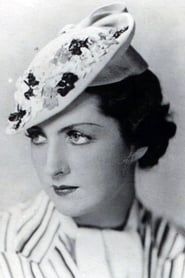
- Jadwiga Smosarska, who starred in the film, was one of the biggest Polish film stars of the 1920s and 1930s
- The original negative was likely destroyed during World War II, along with many other Polish film treasures
- The surviving fragments were discovered and preserved by Polish film archives in the post-war period
- The film's title refers to the miraculous Polish victory at the Battle of Warsaw (August 1920)
- It was one of the first Polish films to depict contemporary historical events rather than historical epics
- The production coincided with the third anniversary of Polish independence after 123 years of partitions
Awards & recognition
- No documented awards from 1921
Visual style
The cinematography of 'The Miracle at the Vistula' reflects the techniques and aesthetics of early 1920s European cinema. The film employed static camera positions typical of the period, with careful composition of shots to emphasize dramatic moments and character relationships. Battle sequences utilized wide shots to convey the scale of military conflict, while intimate scenes at the manor house used medium shots and close-ups to focus on character emotions. The cinematographer made effective use of natural light for exterior scenes, while studio sequences employed the dramatic lighting techniques popular in German Expressionist cinema of the era. The surviving footage shows a sophisticated understanding of visual storytelling, with careful attention to period details in costumes and set design. The film's visual style balanced realistic depiction of war with romanticized elements appropriate to its patriotic purpose. The black and white photography demonstrates good contrast and clarity, considering the technical limitations of the time.
Innovations
For its time and place of production, 'The Miracle at the Vistula' demonstrated several notable technical achievements. The film successfully combined location shooting in Warsaw and the Eastern Borderlands with studio work, creating a convincing historical setting. The battle sequences, while modest by international standards, represented an ambitious undertaking for the nascent Polish film industry. The production utilized actual military personnel and equipment provided by the Ministry of Military Affairs, adding authenticity to the war scenes. The film's makeup and costume design effectively recreated the appearance of 1919-1920 Poland, from military uniforms to aristocratic attire. The surviving footage shows competent use of editing techniques to build dramatic tension and maintain narrative flow. The film's two-hour original runtime was ambitious for Polish cinema of the period, requiring substantial resources and technical expertise. While not groundbreaking in terms of cinematic innovation, the film represented a significant technical achievement for the Polish film industry of 1921.
Music
As a silent film, 'The Miracle at the Vistula' would have featured live musical accompaniment during theatrical screenings. The original score was likely composed by a Polish musician and would have incorporated patriotic themes and folk melodies to enhance the film's nationalistic message. Typical of the period, the music would have been performed by a theater orchestra or pianist, with specific musical cues synchronized to key dramatic moments in the narrative. Battle scenes would have been accompanied by martial music and dramatic crescendos, while romantic moments would have featured more lyrical melodies. The soundtrack likely included arrangements of popular Polish patriotic songs and military marches of the period. No recording of the original musical score survives, as was common for silent films of this era. Modern screenings of the surviving fragments typically feature newly composed scores or period-appropriate classical music.
Famous quotes
No specific quotes have survived from the film due to its fragmentary state and the nature of silent cinema
Memorable scenes
- The arrival of Bolshevik forces at the Granowski manor house, creating tension between the Polish family and invaders
- The climactic battle sequence depicting the Miracle at the Vistula, combining military spectacle with patriotic symbolism
- Romantic scenes between the lead characters set against the backdrop of war and occupation
- The family's secret resistance activities within the occupied manor
- The final victory celebration sequence celebrating Polish independence and military success
What audiences thought
The film was well-received by Polish audiences in 1921, who were still experiencing the euphoria of their recent military victory and independence. The patriotic themes resonated strongly with viewers who had lived through the Polish-Soviet War. Jadwiga Smosarska's star power drew significant crowds to theaters, as she was especially beloved actresses of the era. The film's combination of romance, drama, and military spectacle appealed to a broad audience base. Contemporary accounts suggest that audiences responded emotionally to the depiction of Polish resistance against the Bolshevik invasion. The film's success at the box office helped establish the viability of historical and patriotic subjects in Polish cinema. Modern audiences, primarily film historians and cinema enthusiasts, view the surviving fragments with interest as historical artifacts, though the incomplete nature limits full appreciation of the original viewing experience.
Film connections
Influenced by
- German Expressionist Cinema
- Russian Historical Epics
- Polish Romantic Literature
- Contemporary War Reportage
- Theatrical Melodrama
This film influenced
- Later Polish films about the Polish-Soviet War
- Polish patriotic cinema of the 1920s-1930s
- Government-sponsored historical films
Film restoration
The film survives only in fragments, with approximately 53 minutes remaining from the original 120-minute runtime. The surviving material is preserved in the Polish Film Archive (Filmoteka Narodowa) in Warsaw. The incomplete state is due to the loss of the original negative and most distribution prints, likely destroyed during World War II. The existing fragments have been restored and digitized for preservation purposes. While incomplete, the surviving footage provides valuable documentation of early Polish cinema and the immediate cultural response to the Polish-Soviet War. The film is classified as partially lost, with no known complete copies existing anywhere in the world. Film historians continue to search for additional fragments in archives and private collections, though the possibility of finding a complete version is extremely remote.
Where to watch
- The surviving fragments are occasionally screened at Polish film festivals and cinema history retrospectives
- Digitized fragments may be available for viewing at the Polish Film Archive in Warsaw
- Some excerpts may be included in documentary programs about early Polish cinema
- Academic institutions with film studies programs may have access to the preserved footage for research purposes
- The film is not commercially available on home video or streaming platforms due to its fragmentary state