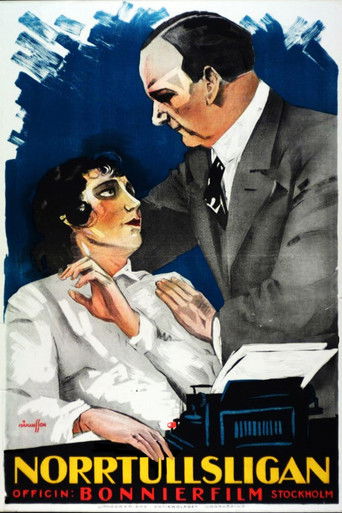

Margit Manstad
Actor
- Active
- 1923-1923
Films 1
About Margit Manstad
Margit Manstad was a Swedish film actress of the silent era and early sound period, best remembered today by historians and cinephiles for her work in Scandinavian cinema during the 1920s. She is associated with the 1923 silent film The Norrtull Gang, one of the better-known titles from her surviving filmography, and her career places her within the important generation of Scandinavian performers who helped shape Nordic screen acting in the transition from stage-influenced performance to more naturalistic film styles. Available records about her life are relatively sparse compared with major international stars of the period, which is not unusual for actors whose careers were centered in regional film industries and whose work was documented less thoroughly than Hollywood performers. She appears to have been active primarily in the 1920s and early sound years, a period when Swedish cinema was internationally admired for its literary adaptations and restrained, psychologically informed acting. Because much of her biography has not been widely preserved in standard English-language reference sources, detailed personal information such as her later life, family background, and complete professional chronology is difficult to confirm with certainty. Even so, her presence in early Swedish film history gives her lasting value as part of the silent-era ensemble of actors who brought novels, plays, and contemporary stories to the screen in a distinctly Nordic style. Her surviving film credits suggest a career rooted in character work rather than global stardom, but that does not lessen her importance as a representative figure from a formative period in Scandinavian cinema.
More about Margit Manstad
On screen
No detailed contemporary critical description of Margit Manstad's acting style is widely preserved in accessible reference sources, but as a silent-era Swedish actress she would have been expected to work with restrained facial expression, clear gesture, and emotionally legible physical movement. Swedish silent cinema generally favored naturalistic, interior performances over exaggerated melodrama, and performers of her generation often adapted stage-trained technique to camera intimacy. Based on the era and production context, her style was likely shaped by ensemble realism and the literary tone common to Scandinavian screen drama.
In film history
Margit Manstad's cultural significance lies in her place within early Swedish cinema rather than in international celebrity status. Performers like her helped sustain the national film industry during the silent period, when Sweden was internationally respected for its literary adaptations, location shooting, and emotionally nuanced performances. Even when individual biographical details are scarce, actors from this era remain important because they embodied the aesthetic transition from theatrical presentation to screen realism. Her association with The Norrtull Gang connects her to the broader cultural memory of Scandinavian silent film as a serious artistic tradition. In that sense, she contributes to the historical texture of cinema as a collaborative art form in which even lesser-documented performers played essential roles.
Later reputation
Her legacy is primarily archival and historical: she survives in the record as one of the many silent-era Scandinavian actresses whose work helps define early Nordic film culture. While she may not be among the most famous names of Swedish cinema, her inclusion in surviving filmographies ensures that she remains part of discussions of 1920s screen performance and the social history of film production in Sweden. For researchers and film databases, she represents the importance of preserving the names of supporting and lesser-known actors whose contributions are otherwise easy to overlook. Her work is also a reminder that film history extends beyond internationally famous stars and includes regional performers who shaped audience experience in their own national cinemas.
Influence
Because so little detailed documentation survives about her career, her direct influence on later actors or directors cannot be confidently traced. Her broader influence is best understood indirectly: as part of the Swedish silent-era acting community, she participated in the performance traditions that helped establish a Nordic model of understated, psychologically grounded screen acting. That approach influenced perceptions of Scandinavian film well beyond the 1920s and remains one of the hallmarks of the region's cinema heritage.
Off screen
Publicly accessible biographical detail about Margit Manstad's personal life is limited, and reliable English-language sources do not provide a well-documented account of marriages, children, or family background. As a result, any attempt to identify spouses or descendants would risk conflating her with similarly named individuals or introducing unsupported claims. Her surviving profile in film history is therefore primarily professional rather than personal, centered on her work as a Swedish actress in the silent era. This lack of extensive documentation is common for many regional performers of the 1920s whose careers were recorded only in fragmentary filmographies and period publicity materials.
Education
No verified information is readily available in standard reference sources regarding her formal education or acting training.
Credits
- Appeared in the silent film The Norrtull Gang (1923), a notable Swedish production from the silent era
- Worked during a formative moment in Swedish cinema when filmmakers were developing a sophisticated national screen style
- Represents the generation of Scandinavian actors who bridged stage traditions and more subtle film acting in the 1920s
- Participated in early Swedish silent filmmaking that contributed to the international reputation of Nordic cinema
- Maintained a screen presence during the transition period leading toward sound cinema, as far as surviving records indicate
Roles
- Cast member in The Norrtull Gang (1923)
Films
- The Norrtull Gang (1923)
Notes
- She is specifically associated in surviving film records with the 1923 silent film The Norrtull Gang.
- Her career falls within the silent-era period when Swedish cinema had a strong international reputation.
- Detailed personal information about her life is scarce in widely available English-language sources.
- She is representative of many regional European actors whose careers are remembered mainly through filmographies rather than celebrity press.
- Her surviving record makes her important to researchers interested in Scandinavian silent film history.
- She likely worked in a performance environment that emphasized naturalism and emotional restraint, characteristic of Swedish silent cinema.
- Her name appears in historical film records even though she is not widely covered in mainstream popular biographies.
Questions
Who was Margit Manstad?
Margit Manstad was a Swedish actress from the silent-film era, remembered mainly for her appearance in The Norrtull Gang (1923). She belongs to the generation of Scandinavian screen performers who helped define early Swedish cinema, even though detailed personal records about her are limited.
What films is Margit Manstad best known for?
She is best known for The Norrtull Gang (1923), the main title surviving in her accessible film record. Because her documented filmography is sparse in widely available sources, that film remains the clearest point of reference for her career.
When was Margit Manstad born and when did she die?
Her birth and death dates are not readily confirmed in standard accessible reference sources. The historical record available for her is limited, so reliable biographical databases should be checked for any newly preserved archival information.
What awards did Margit Manstad win?
No awards or nominations are currently documented for her in the accessible historical record. This is common for many silent-era regional actors, whose work was not tracked with the award systems used in later cinema.
What was Margit Manstad's acting style?
As a silent-era Swedish actress, her style would have been shaped by expressive but restrained physical performance, clear emotional communication, and a naturalistic approach suited to the Scandinavian screen tradition. Swedish silent cinema often valued subtlety and realism, so performers like Manstad typically worked with understated gestures and facial expression rather than broad melodrama.
What is Margit Manstad's legacy in film history?
Her legacy lies in her role as part of the silent-era Swedish film community and in the historical record of early Scandinavian cinema. Even with limited surviving biographical detail, she remains significant as one of the many performers who helped build the artistic reputation of Swedish film in the 1920s.