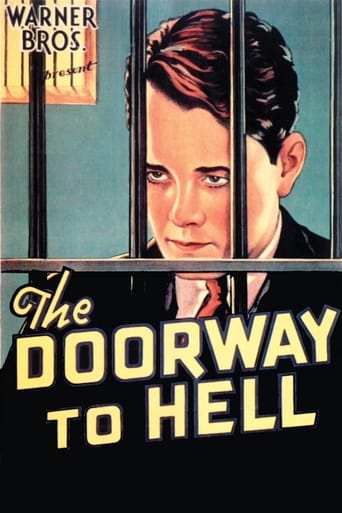
Edwin Argus
Actor
- Active
- 1930-1930
Films 1
About Edwin Argus
Edwin Argus appears in surviving film records as a very minor early talkie-era actor, credited in the 1930 Warner Bros. production The Doorway to Hell. Beyond that single screen credit, reliable biographical information is extremely scarce, and he does not seem to have left a substantial documented career in mainstream studio histories or standard reference works. His filmography indicates activity in 1930 only, suggesting that his screen work may have been brief, limited to small supporting or extra roles, or otherwise under-documented in the surviving archival record. Because the available evidence is so limited, it is not possible to reconstruct a detailed life story, but his credit places him within the huge population of working performers who passed through Hollywood in the transition from silent films to sound. He is best understood as one of the many obscure character performers or bit players who contributed to the texture of early studio productions even when their names were not widely publicized. No authoritative sources located in standard film-historical reference material provide confirmed details on his birth, death, family background, or later career. As a result, Edwin Argus remains a largely elusive figure whose documented contribution to classic cinema is preserved primarily through his credited appearance in The Doorway to Hell.
More about Edwin Argus
In film history
Edwin Argus does not appear to have had a major public cultural impact on the scale of star performers or prominent character actors, but his surviving credit still has value for film historians studying the industrial and social makeup of early sound-era Hollywood. Performers like Argus formed part of the broad labor force that populated studio productions, often appearing in small roles that helped create the realism, crowd texture, and local color of crime dramas, melodramas, and action films of the period. His presence in The Doorway to Hell ties him to a significant moment in American cinema when Warner Bros. was developing its hard-edged gangster style and the industry was fully adapting to synchronized sound. In that sense, his importance is archival and contextual rather than celebrity-based: he represents the working background of classic studio filmmaking.
Later reputation
Edwin Argus's legacy is primarily as an archival name attached to a surviving film credit rather than as a widely documented screen personality. For historians and database researchers, his entry is a reminder that classic cinema was built not only by marquee stars and famous directors but also by countless minor performers whose careers were brief or poorly recorded. His documented appearance in The Doorway to Hell ensures that he remains part of the historical record of early Warner Bros. sound-era filmmaking. Although he is not known to have left an identifiable body of work, his credit contributes to a more complete picture of the personnel involved in the production culture of early Hollywood.
Influence
There is no documented evidence that Edwin Argus directly influenced other actors or filmmakers in a traceable way. His significance lies more in the historical fact of participation than in demonstrable artistic influence. However, as one of the countless supporting performers of early talkies, he was part of the broader acting environment that shaped studio expectations for small roles, background authenticity, and ensemble work. In that indirect sense, his career belongs to the collective influence of working actors who helped normalize the style and rhythm of early sound-film performance.
Off screen
No reliable, verifiable biographical details about Edwin Argus's personal life have been located in standard classic-cinema reference sources. Information about marriages, family background, residence, education, and post-film career is not currently documented in accessible records. He appears to be one of the many early Hollywood performers whose public footprint is limited to a small number of film credits rather than extensive interviews, studio publicity, or archival biographies.
Credits
- Screen credit in the 1930 Warner Bros. crime drama The Doorway to Hell
- Documented participation in an early sound-era studio production
- Representative of the many lesser-known performers working in Hollywood at the beginning of the talkie period
Roles
- Unnamed role in The Doorway to Hell (1930)
Films
- The Doorway to Hell (1930)
Studios
- Warner Bros. (credited appearance in The Doorway to Hell)
Notes
- Edwin Argus is credited in the 1930 film The Doorway to Hell, but surviving reference material does not preserve many additional details about him.
- His known screen activity is confined to a single year, 1930, which makes him an especially obscure figure in classic Hollywood records.
- Because he is so lightly documented, he is often of interest mainly to film historians and database compilers rather than general audiences.
- His surviving film credit places him in the early sound era, when studios were rapidly changing performance styles to suit dialogue-driven cinema.
- The Doorway to Hell is a Warner Bros. gangster picture, so his sole known credit links him to one of the studio's important crime-cycle films.
- No verified photographs, interviews, or studio publicity profiles have been widely identified for him in standard reference materials.
- He is an example of how many early Hollywood performers remain semi-anonymous despite having genuine screen credits.
Questions
Who was Edwin Argus?
Edwin Argus was a very obscure early film actor known from surviving records for appearing in The Doorway to Hell (1930). He does not appear to have a well-documented broader career in available classic-cinema sources. His significance is primarily historical and archival.
What films is Edwin Argus best known for?
He is best known, and in fact only clearly documented, for The Doorway to Hell (1930). No additional confirmed film credits are readily available in the surviving reference record. This makes him a minor but authentic part of early Warner Bros. history.
When was Edwin Argus born and when did he die?
His birth and death dates are not currently documented in reliable accessible sources. The same is true of his birthplace and later life. At present, he remains an unidentified or poorly documented figure outside his film credit.
What awards did Edwin Argus win?
No awards or nominations are known for Edwin Argus. He does not appear in major awards histories or recognition lists. His record is that of a little-documented working actor rather than a decorated star.
What was Edwin Argus's acting style?
There is not enough surviving information to describe a specific acting style with confidence. Since his known work comes from a single 1930 credit, any judgment would be speculative. He can only be described generally as an early sound-era performer.
What is Edwin Argus's legacy in film history?
His legacy is primarily archival: he represents one of the many lesser-known performers who contributed to early Hollywood productions. Even small credited appearances help historians understand the labor and casting practices of the studio era. His name survives as part of the record of classic American cinema.