Maya Deren
Actor & Director
Born: April 29, 1917 in Kiev, Russian Empire (now Kyiv, Ukraine) Died: October 13, 1961 Active: 1943-1961 Birth Name: Eleanora Derenkowskaia
Films
1 film
About Maya Deren
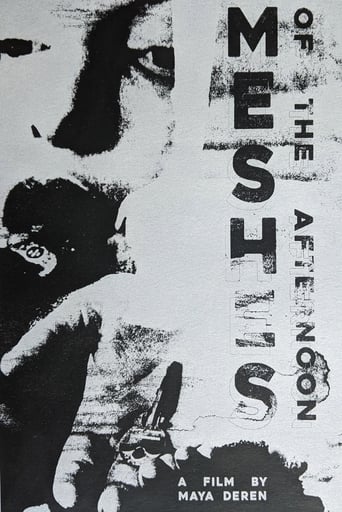
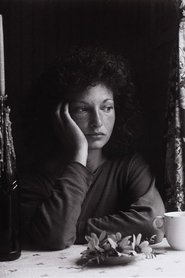
Maya Deren, born Eleanora Derenkowskaia, was a Ukrainian-American experimental filmmaker, dancer, and film theorist who revolutionized avant-garde cinema in the 1940s and 1950s. After immigrating to the United States as a child, she studied journalism, political science, and literature before becoming deeply involved in dance and theater. Her breakthrough came with 'Meshes of the Afternoon' (1943), co-directed with Alexander Hammid, which established her as a leading figure in American experimental cinema. Deren continued to create films including 'At Land' (1944), 'A Study in Choreography for Camera' (1945), and 'Ritual in Transfigured Time' (1946), each exploring themes of time, space, and consciousness through innovative cinematic techniques. She was also a prolific writer and theorist, publishing influential essays about film as an art form. Later in her career, she became deeply involved in studying Voodoo practices in Haiti, documenting her experiences in what would become 'Divine Horsemen: The Living Gods of Haiti.' Her work received critical acclaim and established her as the mother of American avant-garde cinema before her untimely death at age 44 from a brain hemorrhage.
The Craft
On Screen
Deren appeared in her own films in dreamlike, symbolic roles that blurred the boundaries between reality and the subconscious. Her performances were characterized by a detached, almost ethereal quality that served the surreal and psychological nature of her films. Rather than traditional character development, her acting focused on embodying abstract concepts and psychological states, often using repetitive movements and gestures to create hypnotic visual rhythms.
Behind the Camera
Maya Deren's directing style was revolutionary, combining surrealist imagery with innovative editing techniques to explore psychological landscapes. She pioneered the use of jump cuts, superimposition, and reverse motion to create dreamlike narratives that defied conventional storytelling. Her films often featured repetitive imagery and circular structures to examine themes of time, space, and consciousness. Deren emphasized the camera as an active participant in creating meaning, using movement and perspective to transform ordinary spaces into psychological environments.
Milestones
- Directed 'Meshes of the Afternoon' (1943), her most influential work
- Received first Guggenheim Fellowship for creative filmmaking (1946)
- Founded the Creative Film Foundation to support experimental filmmakers
- Published influential film theory essays including 'An Anagram of Ideas on Art, Form and Film'
- Documented Voodoo rituals in Haiti during the 1950s
- Created groundbreaking dance films integrating choreography with camera movement
- Established film as a serious art form through theoretical writings and lectures
Best Known For
Iconic Roles
Must-See Films
Accolades
Won
- Guggenheim Fellowship for Creative Arts (1946)
- First prize for experimental film at the Cannes Film Festival for 'At Land' (1947)
- International Experimental Film Competition prize (1947)
Nominated
- Posthumous recognition by Anthology Film Archives (1970)
- National Film Registry induction for 'Meshes of the Afternoon' (1990)
- Village Voice Critics' Poll recognition (multiple years)
Special Recognition
- Maya Deren Award for Independent Film named in her honor
- National Film Registry induction for 'Meshes of the Afternoon' (1990)
- Anthology Film Archives archive dedicated to preserving her work
- Retrospectives at major museums including MoMA and Whitney Museum
- Subject of documentary 'In the Mirror of Maya Deren' (2002)
- Featured in 'Avant-Garde' series of American postage stamps (1995)
Working Relationships
Worked Often With
Studios
Why They Matter
Impact on Culture
Maya Deren fundamentally transformed the perception of experimental cinema in America, elevating it from mere technical experimentation to a serious art form with profound theoretical depth. Her films challenged Hollywood conventions and introduced new ways of thinking about time, space, and consciousness in cinema. Deren's work bridged the gap between European avant-garde traditions and American experimental film, creating a uniquely American approach to avant-garde cinema. Her writings and lectures established a theoretical framework for understanding film as an art form, influencing both academic and practical approaches to filmmaking. The techniques she pioneered, including jump cuts, superimposition, and subjective camera movement, would later be adopted by mainstream filmmakers and music video directors.
Lasting Legacy
Maya Deren's legacy as the mother of American avant-garde cinema continues to influence filmmakers, artists, and scholars worldwide. Her films remain essential viewing in film schools and are regularly screened at museums and festivals. The annual Maya Deren Award honors independent filmmakers who continue her tradition of artistic innovation. Her theoretical writings, particularly 'An Anagram of Ideas on Art, Form and Film,' remain foundational texts in film studies. Deren's integration of dance, ritual, and cinema opened new possibilities for interdisciplinary artistic expression. Her work documenting Haitian Voodoo preserved important cultural practices while demonstrating film's potential as anthropological and spiritual documentation.
Who They Inspired
Maya Deren's influence extends far beyond experimental cinema into mainstream filmmaking, music videos, and contemporary art. Her editing techniques, particularly the use of jump cuts and superimposition, influenced filmmakers from Jean-Luc Godard to David Lynch. The dreamlike quality of her films can be seen in countless psychological thrillers and art house productions. Her integration of dance and camera movement pioneered the dance film genre and influenced music video directors. Deren's theoretical approach to cinema inspired generations of film scholars and critics, establishing new ways of analyzing and understanding film as art. Her work with ritual and performance anticipated later developments in performance art and installation art.
Off Screen
Maya Deren was married twice, first to Gregory Bardacke (divorced), then to Czech filmmaker Alexander Hammid from 1942 to 1948. Her marriage to Hammid was both personal and professional, as they collaborated on several films including 'Meshes of the Afternoon.' She had no children. Deren was deeply involved in the New York arts scene, associating with figures like Marcel Duchamp, John Cage, and Anaïs Nin. Her later years were marked by intense study of Voodoo practices in Haiti, where she spent considerable time documenting rituals and ceremonies.
Education
Studied at Syracuse University (journalism), New York University (literature), and Smith College (political science). She also attended the New School for Social Research and studied dance with Hanya Holm and Martha Graham. Her diverse educational background influenced her multidisciplinary approach to filmmaking.
Family
- Gregory Bardacke (1930s-1940)
- Alexander Hammid (1942-1948)
Did You Know?
- Born Eleanora Derenkowskaia, she changed her name multiple times before settling on Maya Deren
- Her family fled Kiev to escape anti-Semitic pogroms when she was a child
- She was a published poet before becoming a filmmaker
- 'Meshes of the Afternoon' was filmed in just 3 days on a budget of $275
- She received the first Guggenheim Fellowship specifically for creative filmmaking
- Her film equipment was stolen while studying Voodoo in Haiti
- She founded the Creative Film Foundation to support experimental filmmakers
- Her films were made on extremely low budgets, often with borrowed equipment
- She was fluent in Russian, French, and English
- Her work influenced the development of music videos decades later
- She died at age 44 from a brain hemorrhage while working on multiple projects
- Her films have been preserved and restored by Anthology Film Archives
In Their Own Words
I make my pictures for what Hollywood spends on lipstick.
The function of film, the way it is structured, is to create a reality which is not the same as the world we live in.
Art is a means of discovering the world.
The film is a medium which is particularly suited to reveal the nature of reality.
I am at once the instrument and the artist, the subject and the object of my own creation.
The creative process is a process of surrender, not control.
Cinema is a language. It can say things abstract, surreal, or poetic that cannot be said in words.
Frequently Asked Questions
Who was Maya Deren?
Ukrainian-American experimental filmmaker, dancer, and film theorist who revolutionized avant-garde cinema in the 1940s and 1950s. She is best known for her groundbreaking film 'Meshes of the Afternoon' (1943) and is considered the mother of American experimental cinema.
What films is Maya Deren best known for?
Titles linked here include Meshes of the Afternoon (1943), At Land (1944).
When was Maya Deren born and when did she die?
Born April 29, 1917; died October 13, 1961.
What awards did Maya Deren win?
Maya Deren received the first Guggenheim Fellowship for creative filmmaking in 1946, won prizes at the Cannes Film Festival and International Experimental Film Competition in 1947. Her film 'Meshes of the Afternoon' was inducted into the National Film Registry in 1990, and the Maya Deren Award for Independent Film is named in her honor.
What was Maya Deren's directing style?
Maya Deren's directing style combined surrealist imagery with innovative editing techniques including jump cuts, superimposition, and reverse motion. She created dreamlike narratives that defied conventional storytelling, using repetitive imagery and circular structures to explore themes of time, space, and consciousness through a psychological lens.
How did Maya Deren influence cinema?
Maya Deren influenced cinema by techniques later adopted by mainstream filmmakers, establishing film as a serious art form through her theoretical writings, and creating a foundation for American experimental cinema. Her editing techniques influenced filmmakers from Godard to Lynch, and her work anticipated music videos and performance art.
What was Maya Deren's connection to Haiti?
Maya Deren spent several years in Haiti studying Voodoo rituals, documenting ceremonies and practices that would become the basis for her film 'Divine Horsemen: The Living Gods of Haiti.' Her anthropological work, though controversial in some circles, preserved important cultural practices and demonstrated film's potential as spiritual documentation.