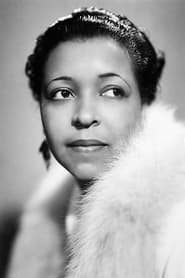
Ethel Waters
Actor
Born: October 31, 1896 in Chester, Pennsylvania, USA Died: September 1, 1977 Active: 1917-1977
Films
1 film
About Ethel Waters
African American entertainer who broke significant racial barriers in music, theater, and film during the early-to-mid 20th century. Beginning her career as a blues singer in Baltimore clubs during the 1920s, she quickly rose to prominence with hits like 'Stormy Weather' and 'Am I Blue?' Her transition to Broadway in the 1930s marked her as a serious dramatic actress, particularly in her role as Hagar in 'The Member of the Wedding.' Waters made history as the first African American woman to star in her own television show with 'The Ethel Waters Show' in 1939. Her film career, while not as extensive as her stage work, included memorable performances in 'Cabin in the Sky' (1943) and 'Pinky' (1949), for which she received an Academy Award nomination for Best Supporting Actress. Throughout her career, Waters faced and overcame tremendous racial discrimination while maintaining her dignity and artistic integrity. Her later years saw her return to her gospel roots and continued performing until her health declined in the 1970s.
The Craft
On Screen
Ethel Waters possessed a naturalistic and deeply emotional acting style that drew from her musical background. Her performances were characterized by remarkable authenticity and the ability to convey complex emotions through subtle facial expressions and vocal modulation. Waters brought a unique blend of vulnerability and strength to her roles, often portraying characters who endured hardship with dignity. Her background in blues and jazz informed her rhythmic delivery and timing, giving her performances a distinctive musicality even in non-singing roles. She was particularly adept at portraying maternal figures and women of great moral conviction.
Milestones
- First African American to star in her own television show (1939)
- Academy Award nomination for Best Supporting Actress for 'Pinky' (1949)
- Broadway success in 'The Member of the Wedding' (1950)
- Hit recordings including 'Stormy Weather' and 'Am I Blue?'
- role in breaking racial barriers in entertainment
- Transition from blues and jazz to gospel music in later career
Best Known For
Iconic Roles
Must-See Films
Accolades
Won
- New York Film Critics Circle Award for Best Actress for 'The Member of the Wedding' (1952)
- Donaldson Award for Best Performance by a Leading Actress (1950)
Nominated
- Academy Award nomination for Best Supporting Actress for 'Pinky' (1949)
- Golden Globe nomination for Best Supporting Actress for 'Pinky' (1949)
Special Recognition
- Inducted into the Blues Hall of Fame (2004)
- Inducted into the Jazz Hall of Fame (2004)
- Star on the Hollywood Walk of Fame
- Grammy Hall of Fame for 'Stormy Weather' (2003)
- United States Postal Service commemorative stamp (1994)
Working Relationships
Worked Often With
Studios
Why They Matter
Impact on Culture
Trailblazer who fundamentally changed the landscape of American entertainment for African American performers. As one of the first Black women to achieve mainstream success across multiple mediums, she challenged racial stereotypes and opened doors for future generations. Her success in 'On with the Show!' (1929) made her one of the first African American women to appear in a talking motion picture. Waters' Academy Award nomination for 'Pinky' was groundbreaking at a time when Black actors rarely received recognition for serious dramatic roles. Her television show 'The Ethel Waters Show' in 1939 made her the first African American to have her own TV program, decades before the civil rights movement. Waters' ability to transition from blues and jazz to Broadway and film demonstrated the versatility and talent of Black performers, helping to dismantle the limited roles available to them in mainstream entertainment.
Lasting Legacy
Ethel Waters' legacy extends far beyond her performances; she stands as a monumental figure in American cultural history who helped transform racial attitudes through her artistry. Her achievements paved the way for countless African American entertainers who followed, from Lena Horne to Diana Ross to Beyoncé. Waters' recordings of songs like 'Stormy Weather' have become timeless standards, covered by generations of artists. Her dramatic performances, particularly in 'The Member of the Wedding,' expanded the possibilities for Black actors in serious theatrical roles. The dignity and professionalism with which she conducted herself in the face of constant discrimination set a standard for all performers facing prejudice. Waters' influence can be seen in the careers of artists who successfully crossed musical genres and entertainment mediums, and her story remains an inspiration for artists overcoming adversity.
Who They Inspired
Ethel Waters influenced generations of performers through her groundbreaking career and artistic innovations. Her naturalistic acting style influenced later African American actresses who sought to move beyond stereotypical roles. Musically, her interpretations of blues and jazz standards set new standards for emotional authenticity and vocal technique. Waters' ability to maintain her artistic integrity while working within the constraints of Hollywood's racial limitations inspired future performers to demand better representation. Her success on Broadway demonstrated that African American performers could carry major dramatic productions, influencing the casting of Black actors in serious roles. Many later entertainers, including Lena Horne and Dorothy Dandridge, acknowledged Waters as a trailblazer who made their careers possible. Her transition from secular to gospel music in her later years also influenced the career paths of artists who found spiritual renewal in their later years.
Off Screen
Ethel Waters had a difficult childhood, born to a teenage mother who was raped at age 13. She was raised in poverty and experienced abuse, leaving home at age 13 to work as a maid. Waters married three times: to Merritt 'Buddy' Purnsley (briefly in 1910), to Clyde E. Matthews (1921-1923), and to Edward Mallory (1932-1933). She had no biological children but was close to her godson, the writer and social activist Lewis H. Michaux. In her later years, Waters experienced financial difficulties despite her successful career and was supported by her friend and evangelist Billy Graham. She converted to evangelical Christianity in the late 1950s and incorporated gospel music into her performances.
Education
Limited formal education due to poverty; left school early to work and support her family
Family
- Merritt 'Buddy' Purnsley (1910, briefly)
- Clyde E. Matthews (1921-1923)
- Edward Mallory (1932-1933)
Did You Know?
- Was the first African American woman to be nominated for an Academy Award in a competitive category (Best Supporting Actress for 'Pinky')
- Her song 'Stormy Weather' has been covered by over 200 artists and is considered one of the greatest American songs
- Measured 5'8½" tall, unusually tall for a female performer of her era
- Was a close friend of evangelist Billy Graham in her later years and performed at his crusades
- Her autobiography 'His Eye Is on the Sparrow' (1951) became a bestseller and was later adapted into a one-woman show
- Was discovered while singing in a Baltimore nightclub at age 17
- Performed for President Franklin D. Roosevelt at the White House in 1938
- Her recording active years covered from 1921 to 1963, covering blues, jazz, pop, and gospel genres
- Was the first African American to sell a million records with her 1925 hit 'Dinah'
- Refused to perform for segregated audiences, helping to integrate venues across America
In Their Own Words
I'm not concerned with your liking or disliking me. All I ask is that you respect me as a human being.
I never was a child. I never was coddled, or liked, or understood by my family.
I don't sing songs about people. I sing songs about life.
You can't get to the top by sitting on your bottom.
I've been a woman with a man inside me, and I've been a man with a woman inside me.
Frequently Asked Questions
Who was Ethel Waters?
African American singer, actress, and entertainer who broke racial barriers in music, theater, and film during the early-to-mid 20th century. She was the first Black woman nominated for an Academy Award and starred in the first Broadway play written by an African American to win the New York Drama Critics' Circle Award.
What films is Ethel Waters best known for?
Titles linked here include Pinky (1949), Cabin in the Sky (1943).
When was Ethel Waters born and when did she die?
Born October 31, 1896; died September 1, 1977.
What awards did Ethel Waters win?
Ethel Waters received an Academy Award nomination for Best Supporting Actress for 'Pinky' (1949), won the New York Film Critics Circle Award for 'The Member of the Wedding' (1952), and was inducted into both the Blues Hall of Fame and Jazz Hall of Fame. She also received a Donaldson Award for her Broadway performance.
What was Ethel Waters' acting style?
Ethel Waters' acting style was naturalistic and deeply emotional, drawing from her musical background. She brought authenticity and vulnerability to her roles, with a distinctive musicality in her delivery. Waters was particularly effective at portraying complex maternal figures and women facing adversity with dignity.
How did Ethel Waters impact racial barriers in entertainment?
Ethel Waters broke numerous racial barriers as the first African American woman to star in her own television show, one of the first to receive an Oscar nomination, and a pioneer in integrated Broadway productions. Her success challenged stereotypes and opened doors for future generations of Black performers in mainstream entertainment.