
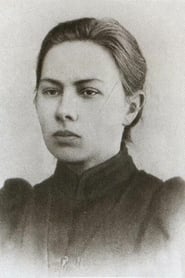
Nadezhda Krupskaya
Actor
Born: February 26, 1869 in Saint Petersburg, Russian Empire Died: February 27, 1939 Active: 1934-1934 Birth Name: Nadezhda Konstantinovna Krupskaya
Films
1 film
About Nadezhda Krupskaya
Nadezhda Konstantinovna Krupskaya was not a professional actor but rather a prominent Bolshevik revolutionary and the wife of Vladimir Lenin, whose archival footage appeared in Soviet cinema. Born into a noble family in Saint Petersburg, she became involved in revolutionary circles in the 1890s and met Lenin while both were involved in Marxist study groups. After marrying Lenin in 1898, she became his closest political collaborator, working alongside him in exile and during the revolutionary period. Following the 1917 Revolution, Krupskaya dedicated herself to educational reform, serving as Deputy Minister of Education and playing a crucial role in developing Soviet educational policy. She was a prolific writer on educational theory and Marxist pedagogy, authoring numerous books and articles. Her appearance in 'Three Songs About Lenin' (1934) was through archival footage rather than a professional acting role, as the documentary incorporated historical materials to honor Lenin's legacy. Krupskaya remained an influential figure in Soviet politics until her death in 1939, maintaining her commitment to revolutionary ideals and educational advancement throughout her life.
The Craft
Milestones
- Met and married Vladimir Lenin (1898)
- Participated in the 1905 and 1917 Revolutions
- Served as Deputy Minister of Education (1929-1939)
- Authored numerous works on educational theory
- Appeared in archival footage for 'Three Songs About Lenin' (1934)
- Member of the Communist Party Central Committee
- Developed Soviet adult education programs
Best Known For
Iconic Roles
Must-See Films
Accolades
Won
- Order of Lenin (1933)
- Order of the Red Banner of Labor (1938)
Special Recognition
- Numerous Soviet educational institutions named in her honor
- Krupskaya Pedagogical Institute in Moscow named after her
- Multiple schools and libraries throughout the USSR bore her name
Working Relationships
Worked Often With
Studios
Why They Matter
Impact on Culture
Nadezhda Krupskaya's impact on Soviet culture was primarily through her revolutionary activities and educational reforms rather than cinema. As Lenin's wife and closest political companion, she became an iconic figure in Soviet history, symbolizing the role of women in the revolution. Her appearance in 'Three Songs About Lenin' helped cement her place in the Soviet cultural pantheon, making her image recognizable to millions of Soviet citizens. The film, directed by Dziga Vertov, was part of the Soviet cult of personality surrounding Lenin, and Krupskaya's presence in it reinforced her status as a keeper of Lenin's legacy. Her educational theories and practices fundamentally shaped Soviet literacy campaigns and adult education programs, contributing to the transformation of Russian society.
Lasting Legacy
Krupskaya's legacy in film history is minimal but significant as a historical figure whose image was preserved and disseminated through Soviet cinema. Her true legacy lies in Soviet education, where she pioneered methods for adult literacy, workers' education, and the integration of Marxist ideology into curriculum. Numerous institutions bore her name throughout the Soviet era, and her writings on education continued to influence pedagogical theory for decades. In the context of cinema, her archival appearance represents how Soviet documentary filmmaking served political and ideological purposes, creating visual records of revolutionary history for posterity.
Who They Inspired
Krupskaya influenced generations of Soviet educators and educational administrators through her theoretical writings and practical reforms. Her approach to education emphasized practical application, political consciousness, and accessibility for working people. While she didn't directly influence filmmakers, her inclusion in Soviet documentaries influenced how historical figures were portrayed in cinema, establishing a pattern of using authentic archival footage to lend authenticity to political narratives. Her life story also influenced how Soviet women's roles in the revolution were represented in film and literature.
Off Screen
Nadezhda Krupskaya was born into a noble but impoverished family. She met Vladimir Lenin in 1894 at a Marxist discussion group and they married in 1898. The couple had no children together. After Lenin's death in 1924, she continued her political and educational work, though she faced increasing political pressure during Stalin's rise to power. She maintained her revolutionary principles until her death from a heart attack in 1939.
Education
Bestuzhev Courses (Saint Petersburg, 1886-1889) - Advanced education for women where she studied teaching and became involved in revolutionary circles
Family
- Vladimir Lenin (1898-1924)
Did You Know?
- She was not a professional actor but appeared in film through archival footage
- Her father was a Polish nobleman who worked as a military officer
- She and Lenin were arrested together in 1895 and later exiled to Siberia
- Krupskaya was one of the few people who could read Lenin's notoriously difficult handwriting
- She suffered from Graves' disease (thyroid condition) for much of her adult life
- Despite being Lenin's wife, she was initially opposed to the October Revolution timing
- She was instrumental in creating the Soviet library system
- Her mother was also involved in revolutionary activities
- She outlived Lenin by 15 years, dying on the eve of World War II
- Multiple cities in the Soviet Union had streets named after her
In Their Own Words
Education is a weapon whose effects depend on who holds it in his hands and at whom it is aimed.
The struggle for emancipation of women is inseparably bound up with the struggle for the emancipation of the working class as a whole.
Without the participation of women in public life, the building of socialism is impossible.
Frequently Asked Questions
Who was Nadezhda Krupskaya?
Prominent Bolshevik revolutionary, educational theorist, and the wife of Vladimir Lenin. She played a significant role in the Russian Revolution and later served as Deputy Minister of Education in the Soviet Union, where she helped shape the country's educational system.
What films is Nadezhda Krupskaya best known for?
Titles linked here include Three Songs About Lenin (1934).
When was Nadezhda Krupskaya born and when did she die?
Born February 26, 1869; died February 27, 1939.
What awards did Nadezhda Krupskaya win?
Krupskaya received several Soviet honors including the Order of Lenin (1933) and the Order of the Red Banner of Labor (1938). Numerous educational institutions were also named in her honor throughout the Soviet Union.
What was Nadezhda Krupskaya's role in Soviet education?
As Deputy Minister of Education from 1929 to 1939, Krupskaya was instrumental in developing Soviet educational policy, implementing literacy campaigns, and creating adult education programs. She authored numerous works on Marxist educational theory and helped establish the Soviet library system.