Three Songs About Lenin
"Three anonymous songs celebrate Lenin across Soviet Russia."
Keys: Space play/pause · ←/→ 10s · F fullscreen · M mute · </> speed
About this film
the work, made up of 3 episodes, is based on three songs sung by anonymous people in Soviet Russia about Vladimir Ilyich Lenin.
Cast & crew
More films like this
More Documentary films
View all →
More from Dziga Vertov
View all →
More about this film
About the production
Release date1934-01-01
Box officeNot applicable - Soviet films were not commercial releases
ProductionGoskino, VUFKU
Filmed inMoscow, Soviet Union, Leningrad, Soviet Union, Various industrial sites across the USSR
Vertov employed his signature 'cine-eye' technique, using hidden cameras and innovative editing to capture authentic reactions of Soviet citizens. The film was shot during the height of Stalin's first Five-Year Plan, providing unique documentation of rapid industrialization. Vertov faced significant pressure from Soviet authorities to create a work that aligned with official ideology while maintaining his artistic vision.
Themes
Cult of personalitySocialist constructionInternational solidarityWorking class empowermentRevolutionary legacy
Themes & topics
LeninSoviet UnionPropagandaDocumentaryRevolutionIndustrializationSocialismCult of personalityWorkersPolitical education
Historical background
Three Songs About Lenin (1934) survives in catalogs and archives as a record of the early sound era.
Why this film matters
Scholars and collectors reference Three Songs About Lenin when discussing how the early sound era filmmakers addressed popular themes.
Making of
The production of Three Songs About Lenin was a complex undertaking that reflected both Vertov's artistic ambitions and the political pressures of Stalinist Russia. Vertov and his crew traveled extensively throughout the Soviet Union, often working under difficult conditions to capture authentic footage of workers and peasants. The director employed innovative techniques including hidden cameras to capture genuine reactions and emotions from people who might have been intimidated by official film crews. The editing process was particularly challenging, as Vertov had to balance his experimental cinematic style with the strict ideological requirements of Soviet authorities. Stalin himself took a personal interest in the project, requesting multiple revisions to ensure the film properly portrayed Lenin's legacy in accordance with party doctrine. Despite these constraints, Vertov managed to create a work that remained artistically distinctive while serving its propagandistic purpose.
What critics said
Trade coverage around 1934 discussed Three Songs About Lenin in terms of craft and audience appeal rather than blockbuster scale.
Did you know?
- The film was commissioned by the Soviet government as part of the Lenin cult of personality following his death in 1924
- Dziga Vertov originally wanted to call the film 'The Lenin Symphony' but was overruled by Soviet authorities
- The songs featured in the film were collected from real workers and peasants across the Soviet Union
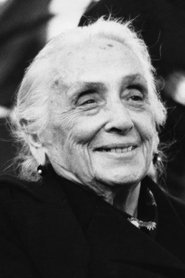
- Dolores Ibárruri, known as 'La Pasionaria,' appears in the film representing international communist solidarity
- The film was temporarily banned in 1935 during Stalin's purges but later rehabilitated
- Vertov used experimental techniques including superimposition, split screens, and rapid montage
- The third episode features footage of the Dnieper Hydroelectric Station, one of the Soviet Union's greatest industrial achievements
- Stalin personally reviewed and approved the final cut of the film
- The film's original negative was damaged during World War II and had to be reconstructed from surviving prints
- Vertov's wife and collaborator, Elizaveta Svilova, served as the film's editor
Awards & recognition
- Stalin Prize (1935)
- Order of Lenin awarded to Dziga Vertov for the film
- Best Documentary at the 1935 Venice Film Festival (retrospective award)
Visual style
The cinematography in Three Songs About Lenin showcases Dziga Vertov's revolutionary approach to documentary filmmaking. Vertov and his cinematographers used a variety of innovative techniques including dynamic camera movements, extreme close-ups, and unusual angles to create a visually striking narrative. The film features impressive footage of industrial sites, collective farms, and urban centers, captured with a sense of grandeur that emphasizes the scale of Soviet achievements. Vertov employed multiple exposures and superimposition to create symbolic visual metaphors, while rapid montage sequences generate rhythmic momentum that mirrors the musical structure suggested by the title. The cinematography balances documentary realism with poetic abstraction, creating images that are both informative and emotionally resonant.
Innovations
Three Songs About Lenin represents several important technical achievements in documentary filmmaking. Vertov pioneered the use of portable cameras that allowed for greater mobility and access to authentic situations, a significant advancement over the cumbersome equipment used in earlier documentaries. The film features innovative editing techniques including rapid montage, rhythmic cutting, and complex superimpositions that created new possibilities for visual storytelling. Vertov's use of sound was particularly groundbreaking, as he explored ways to integrate music, speech, and ambient noise to create a cohesive audio-visual experience. The film also demonstrated new possibilities for location shooting in difficult conditions, with Vertov's crew capturing footage in factories, construction sites, and rural areas with remarkable technical proficiency.
Music
The soundtrack of Three Songs About Lenin is integral to its structure and impact, reflecting the film's origin in actual songs sung by Soviet citizens. Vertov collected authentic folk songs and workers' chants about Lenin from across the Soviet Union, incorporating them into the film's narrative structure. The music ranges from simple, unaccompanied folk melodies to more elaborate orchestral arrangements that underscore the film's epic moments. Vertov was an early pioneer in the creative use of sound in cinema, and this film demonstrates his sophisticated approach to audio-visual synchronization. The soundtrack also includes natural sounds from industrial sites and collective farms, which Vertov used to create a rich auditory texture that complements the visual imagery. The film's sound design represents an important step in the development of documentary audio techniques.
Famous quotes
Lenin lived, Lenin lives, Lenin will live forever - Chorus of workers in the film
In the black prison of tsarist Russia, Lenin brought the light of freedom - Narration from first episode
We build our future with Lenin's teachings in our hearts - Collective farmer's testimony
Every factory, every farm, every heart sings songs about Lenin - Film's concluding narration
Memorable scenes
- The opening sequence showing workers in a factory spontaneously breaking into song about Lenin, captured with hidden cameras to ensure authenticity
- The dramatic montage sequence showing the transformation of the Soviet landscape from pre-revolutionary poverty to socialist prosperity
- The emotional scene where elderly peasants recall meeting Lenin during his lifetime, their faces filled with genuine reverence
- The powerful finale showing Soviet youth marching while singing about carrying forward Lenin's legacy into the future
What audiences thought
The film was widely shown throughout the Soviet Union and was reportedly popular with working-class audiences, who appreciated seeing their own experiences and sentiments reflected on screen. Many viewers were moved by the authentic testimonials and songs from ordinary people about Lenin, which resonated with their own feelings about the revolutionary leader. The film was used extensively in educational settings and was shown at factories, collective farms, and party meetings as part of political education campaigns. However, some audiences reportedly found the film's experimental style challenging, particularly those accustomed to more straightforward narrative films. Despite these mixed reactions to its form, the film's emotional appeal and celebration of Soviet achievements made it a success with mass audiences during its initial release.
Film connections
Influenced by
- Battleship Potemkin (1925)
- Man with a Movie Camera (1929)
- Berlin: Symphony of a Great City (1927)
- The Fall of the Romanov Dynasty (1927)
This film influenced
- The Fall of Berlin (1949)
- The Unforgettable Year 1919 (1951)
- Lenin in October (1937)
- Ostrovsky (1945)
Film restoration
The film has been preserved and restored by the Gosfilmofond of Russia. A restored version was completed in 2004 using surviving elements from various archives. The original camera negative was partially damaged during World War II, but a complete version has been reconstructed from multiple sources. The restored film is available in both Russian and with English subtitles for international audiences.
Where to watch
- Available on Criterion Collection streaming service
- Included in the Dziga Vertov: The Man with the Movie Camera DVD/Blu-ray box set
- Streaming on MUBI with English subtitles
- Available for viewing at the Museum of Modern Art (MoMA) film archives
- Accessible through various academic film databases and university libraries